What Happens When You Stare At A Screen For 24 Hours? ft. TheOdd1sOut
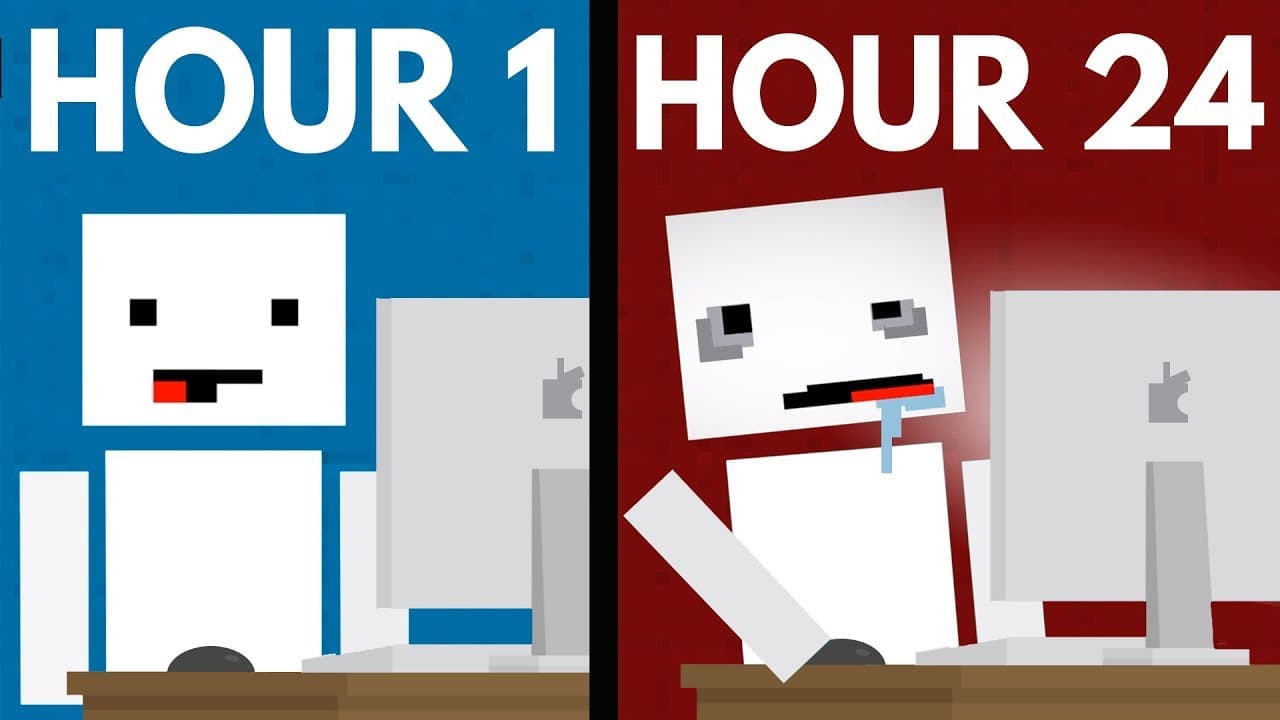
TL;DR
Prolonged screen time can lead to Computer Vision Syndrome, causing eye strain, headaches, and back pain.
Transcript
Hey there and welcome to Life Noggin. On average, we spend nearly 10 hours each day looking at digital screens., These include computers, tablets, TVs, and cell phones. I mean, I get it. They have a lot to offer. What’s not to love? [tense orchestral music plays] Oh hey James! ...James?… Blocko: Oh wow! James! What happened? James: What? This is ju... Read More
Key Insights
- 🥺 Prolonged screen time can lead to Computer Vision Syndrome, causing various eye and back-related issues.
- 😃 Decreased blinking rates from screen use can result in dry eyes and fatigue.
- ⌛ Following the 20-20-20 rule and maintaining proper posture can help alleviate the negative effects of excessive screen time.
- ❓ Staying up for extended periods can impact cognitive function and productivity.
- ⌛ Computer-viewing glasses and night settings can help reduce eye strain during screen time.
- 😃 Proper screen positioning and distance are crucial to avoid neck strain and eye muscle overuse.
- 😣 Ensuring breaks and rest while using screens is essential for maintaining overall health and productivity.
Install to Summarize YouTube Videos and Get Transcripts
Explore YouTube Video Summarizer or Get YouTube Transcript Extractor
Questions & Answers
Q: What is Computer Vision Syndrome, and how does it result from excessive screen time?
Computer Vision Syndrome is a condition that arises from prolonged screen use, causing symptoms like eyestrain, headaches, and back pain due to the eyes overworking and being exposed to harsh lights.
Q: How does prolonged screen use affect eye blinking rates and eye health?
Prolonged screen use decreases blinking rates, leading to dry eyes and fatigue, as the eyes are exposed to more light and strain, impacting visual functions and causing eye discomfort.
Q: What are some tips to combat the negative effects of screen time?
Following the 20-20-20 rule, using computer-viewing glasses, and maintaining proper posture and screen positioning can help alleviate eye strain and reduce the negative effects of excessive screen time.
Q: How does staying up for extended periods affect cognitive function and productivity?
Staying up for a full 24 hours can decrease cognitive function, limiting productivity and affecting work quality, emphasizing the importance of rest and breaks during screen time usage.
Summary & Key Takeaways
-
Spending excessive time staring at digital screens can result in Computer Vision Syndrome, causing eyestrain, headaches, and blurred vision.
-
Screen time can lead to decreased blinking rates, leading to dry eyes and fatigue.
-
Following the 20-20-20 rule and maintaining proper posture and screen positioning can help combat the negative effects of screen time.
Read in Other Languages (beta)
Share This Summary 📚
Summarize YouTube Videos and Get Video Transcripts with 1-Click
Try YouTube Summary with ChatGPT & Claude or YouTube Transcript Generator
Explore More Summaries from Life Noggin 📚






Summarize YouTube Videos and Get Video Transcripts with 1-Click
Try YouTube Summary with ChatGPT & Claude or YouTube Transcript Generator