What Is Quantum Marketing and Its Impact on Society?
TL;DR
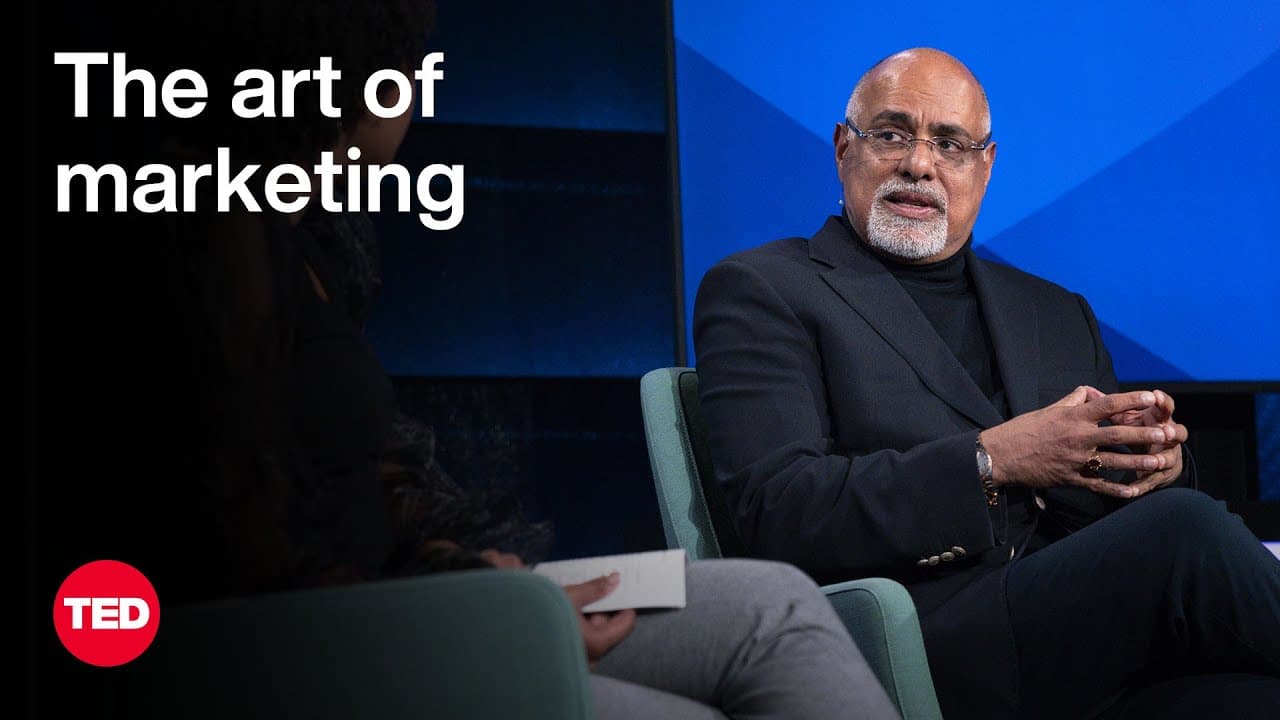
Quantum marketing redefines marketing by emphasizing brand-building, business advancement, and societal good. Raja Rajamannar explains that purpose-driven marketing not only fosters trust and loyalty among consumers but also drives profitability. Notable examples from Mastercard include the True Name card for transgender individuals and an aid app for Ukrainian refugees, demonstrating how empathy and innovation can lead to meaningful change.
Transcript
Whitney Pennington Rodgers: Thank you for being here with us, Raja. Raja Rajamannar: Delighted to be here. WPR: You are the chief marketing officer for Mastercard, which is a fintech company, as we all know. But the way that you and your team positioned Mastercard out in the world is far different from what I think anyone would expect from a fintec... Read More
Key Insights
- 👨💼 Marketing serves three essential purposes: brand nurturing, business advancement, and differentiation in competitive markets.
- ❓ Rajamannar’s "quantum marketing" prompts a reevaluation of outdated marketing principles to better fit contemporary contexts.
- 🥺 A strong purpose can enhance trust among consumers and lead to greater business profitability.
- 💁 Mastercard’s True Name card exemplifies how empathy and societal needs can inform product design and development.
- 🎴 Innovations like the braille notches on cards enhance accessibility for visually impaired individuals, showcasing inclusive design.
- 😀 The refugee employment app developed for Ukrainians demonstrates the potential of technology to address humanitarian crises effectively.
- ❓ Rajamannar stresses that both companies and individuals should prioritize authenticity and integrity in their pursuits.
Install to Summarize YouTube Videos and Get Transcripts
Explore YouTube Video Summarizer or Get YouTube Transcript Extractor
Questions & Answers
Q: What does Raja Rajamannar identify as the three main purposes of marketing?
Rajamannar identifies three key purposes of marketing: first, it reflects the company's values through brand building; second, it drives business advancement beyond mere aesthetics; and third, it creates differentiation in a competitive landscape. By aligning marketing with overarching business goals, companies can leverage their brand to make a meaningful impact.
Q: Can you explain the concept of "quantum marketing" introduced by Rajamannar?
"Quantum marketing" is a term coined by Rajamannar to describe a marketing approach that challenges outdated principles established over sixty years ago. He asserts that while some marketing fundamentals are enduring, many current strategies are ineffective or counterproductive. This concept encourages marketers to rethink and innovate to thrive in a rapidly changing environment.
Q: How does purpose in marketing influence business outcomes, according to Rajamannar?
Rajamannar asserts that a company’s purpose should transcend mere profit-making. By focusing on larger societal benefits, companies can build invaluable consumer trust that ultimately drives profitability. He believes that a genuine commitment to "doing good" leads to better outcomes for both the brand and its consumers.
Q: What is the True Name card, and how did it originate?
The True Name card is a Mastercard innovation allowing individuals undergoing gender transition to choose the name displayed on their payment card, regardless of legal name changes. It emerged from recognizing the challenges faced by the transgender community when businesses questioned their identity based on mismatched names and appearances, thereby fostering inclusivity and empathy.
Q: What was the objective behind the AI-powered app developed for Ukrainian refugees?
The AI-powered app was designed to help Ukrainian refugees settle in Poland by matching their profiles with job opportunities, living conditions, and educational resources. This initiative helped streamline their integration process during a time of crisis, showcasing Mastercard's commitment to social responsibility and enhancing the well-being of displaced individuals.
Q: How does Rajamannar suggest individuals can apply marketing principles to themselves?
Rajamannar encourages individuals to think of themselves as brands, emphasizing authenticity in self-promotion. He highlights the importance of differentiating oneself from others and maintaining a "decency quotient," where individuals act with integrity. This approach fosters stronger connections and long-term success in personal and professional endeavors.
Summary & Key Takeaways
-
Raja Rajamannar, CMO of Mastercard, lays out marketing's three main purposes: brand building, business advancement, and differentiation, highlighting their importance in modern competition.
-
He introduces the concept of "quantum marketing," which challenges outdated principles and emphasizes the need for contextual relevance in today's fast-evolving landscape of technology and consumer behavior.
-
Examples of Mastercard's impactful initiatives include the True Name card for transgender individuals and an app aiding Ukrainian refugees, demonstrating how purpose-driven actions can lead to both societal benefits and business success.
Read in Other Languages (beta)
Share This Summary 📚
Summarize YouTube Videos and Get Video Transcripts with 1-Click
Try YouTube Summary with ChatGPT & Claude or YouTube Transcript Generator
Explore More Summaries from TED 📚





Summarize YouTube Videos and Get Video Transcripts with 1-Click
Try YouTube Summary with ChatGPT & Claude or YouTube Transcript Generator