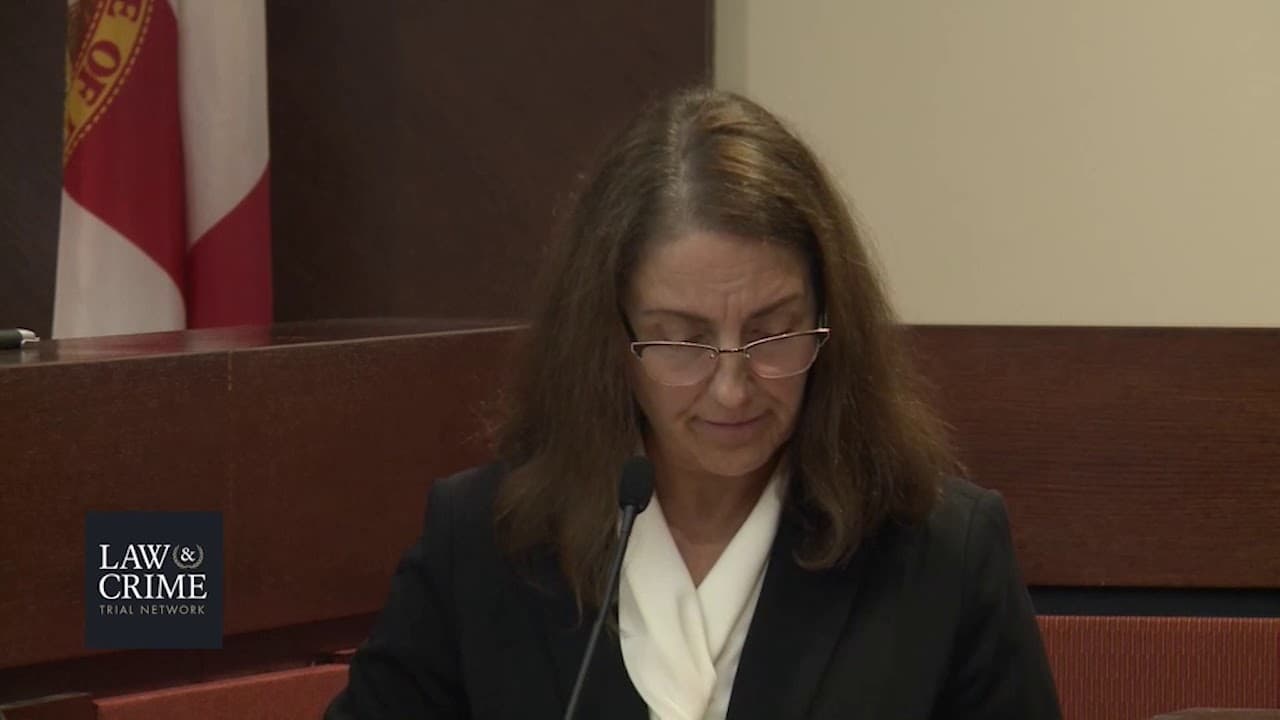
FSU Law Professor Murder Trial Day 1 Witnesses Forensic Specialists Joanne Maltese, Kerri Rosana
TL;DR
Forensic experts analyze DNA swabs, trajectory, and bullet path to determine shooter's height in a crime scene investigation.
Transcript
I may dress something okay yesterday your honor before the the motion hearing I brought up the issue of the conversations we have having to state about what witnesses they'll be calling this makes the process go a lot smoother allows us to be a lot more efficient but also allows us to print all the gear that we need for the individual witnesses we ... Read More
Key Insights
- 😨 Limited DNA results from car door handle swabs posed challenges for forensic comparisons.
- ⚾ Trajectory analysis indicated a taller individual as the likely shooter based on entry angle and victim's injuries.
- 🎑 Extensive training in DNA testing and forensic analysis was crucial for accurate crime scene examinations.
- ❓ Forensic experts' collaboration provided valuable insights into the shooter's height and positioning during the incident.
- 😥 Bullet path documentation and trajectory analysis helped determine the most probable point of origin for the projectile.
- 🕳️ Factors like the height of the bullet hole and the victim's position aided in reconstructing the shooting scenario.
- 🖐️ Forensic specialists' expertise in DNA swabs, trajectory, and bullet path analysis played a vital role in the investigative process.
Install to Summarize YouTube Videos and Get Transcripts
Explore YouTube Video Summarizer or Get YouTube Transcript Extractor
Questions & Answers
Q: How did the presence of limited DNA results impact the forensic analysis of the crime scene?
Limited DNA results from car door handle swabs hindered comparison, indicating the challenges in identifying DNA profiles for analysis and potential attributions.
Q: What factors determine the trajectory analysis to ascertain the shooter's height in the investigation?
Trajectory analysis considered the angle of entry through the window, the height of the bullet hole, and assumptions about the shooter's position to deduce a taller individual as the likely shooter.
Q: What training and experience did the forensic specialists possess to perform comprehensive crime scene examinations?
The forensic specialists underwent extensive training in DNA analysis, bullet path documentation, trajectory analysis, and various forensic disciplines to conduct thorough crime scene examinations and evidence collection.
Q: How did the forensic supervisor contribute to the analysis of the crime scene evidence?
The forensic supervisor reviewed reports, medical examiner findings, and evidence to offer expertise in bullet path analysis, aiding in determining the shooter's likely height and angle of fire.
Summary & Key Takeaways
-
Forensic specialists collected DNA swabs from car door handles but found limited results, hindering comparisons.
-
Trajectory analysis suggested a taller individual fired the fatal shot based on the angle of entry through a window.
-
Expertise in DNA testing, trajectory analysis, and forensic examination were crucial in analyzing the crime scene evidence.
Read in Other Languages (beta)
Share This Summary 📚
Summarize YouTube Videos and Get Video Transcripts with 1-Click
Try YouTube Summary with ChatGPT & Claude or YouTube Transcript Generator
Explore More Summaries from Law&Crime Network 📚


Summarize YouTube Videos and Get Video Transcripts with 1-Click
Try YouTube Summary with ChatGPT & Claude or YouTube Transcript Generator