How Benjamin Franklin tried—and failed—to form a union | Richard Kreitner | Big Think
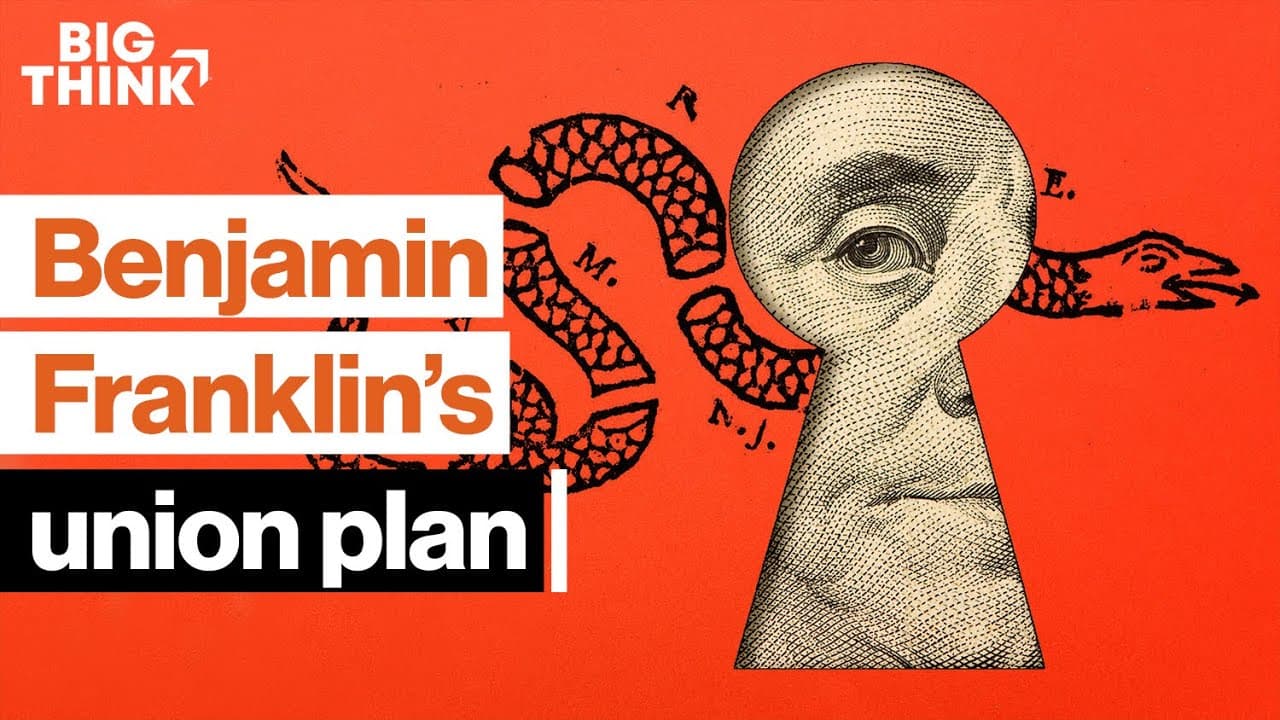
TL;DR
The Iroquois Confederation inspired colonial union formation, leading to key issues around land, representation, and foreign interference.
Transcript
RICHARD KREITNER: One of the things I was interested in about the colonial era is, ""Where did the colonists get the idea of union from?"" It took them, I think we don't really realize this very often, it took them a century and a half to actually join together. And that was not because nobody really thought of it. That was because they didn't want... Read More
Key Insights
- 💁 The Iroquois Confederation's political organization influenced colonial union formation.
- 😀 Benjamin Franklin's Albany Plan of Union faced rejection due to concerns over tyranny.
- 🏝️ Disputes over western land and representation in Congress were significant issues among the colonies.
- 🌍 Foreign interference from European nations added to American division.
- 💠 The compromise at the Constitutional Convention shaped the current representation system in Congress.
- ❓ The issue of population representation versus state equality in Congress continues to cause dysfunction.
- 🇪🇺 The Iroquois Confederation's union inspired the eventual formation of the American Union.
Install to Summarize YouTube Videos and Get Transcripts
Explore YouTube Video Summarizer or Get YouTube Transcript Extractor
Questions & Answers
Q: What was the role of the Iroquois Confederation in inspiring colonial union formation?
The Iroquois Confederation's model of union influenced the colonists to consider forming their own union to prevent conflicts and wars.
Q: Why did the colonists reject Benjamin Franklin's Albany Plan of Union in 1754?
The colonists viewed Franklin's plan as equivalent to tyranny and resisted the idea of uniting under a central authority.
Q: What were the major issues dividing the Americans at the time of union formation?
Major issues included disputes over control of western land, representation in Congress based on population, and foreign interference in American politics.
Q: How did the Constitutional Convention resolve the representation dispute among the states?
The Constitutional Convention led to a compromise where the House of Representatives votes are based on population, while the Senate votes are equal among states, aiming to balance state power and population representation.
Summary & Key Takeaways
-
The colonial colonists took a century and a half to unite, inspired by the Iroquois Confederation's union model.
-
Benjamin Franklin's Albany Plan of Union in 1754 aimed to unite the colonists but was rejected.
-
Major issues of division included disputes over western land, representation in Congress, and foreign interference.
Read in Other Languages (beta)
Share This Summary 📚
Summarize YouTube Videos and Get Video Transcripts with 1-Click
Try YouTube Summary with ChatGPT & Claude or YouTube Transcript Generator
Explore More Summaries from Big Think 📚




Summarize YouTube Videos and Get Video Transcripts with 1-Click
Try YouTube Summary with ChatGPT & Claude or YouTube Transcript Generator