These 'Fossilized Brains' Might Not Be Brains At All
TL;DR
Recent research challenges previous findings, suggesting fossilized structures in ancient arthropods are actually biofilms, not brains or blood vessels.
Transcript
[♪ INTRO] About 6 years ago, paleontologists working on fossils from China announced that they had discovered fossilized brain and nervous system tissue in a tiny arthropod that lived about 520 million years ago. Later, they found fossilized blood vessels. And these discoveries were a huge deal because soft tissues don't usually fossilize well, so ... Read More
Key Insights
- 🧠 Fossilized structures in ancient arthropods believed to be brains and blood vessels may actually be biofilms formed by microbial decomposition.
- 🛌 The fossils from the Chéngjiāng fossil beds in China provided a unique opportunity for studying soft tissue preservation in ancient organisms.
- 👨🔬 Comparing modern decomposition processes to ancient fossils can provide valuable insights for paleontological research.
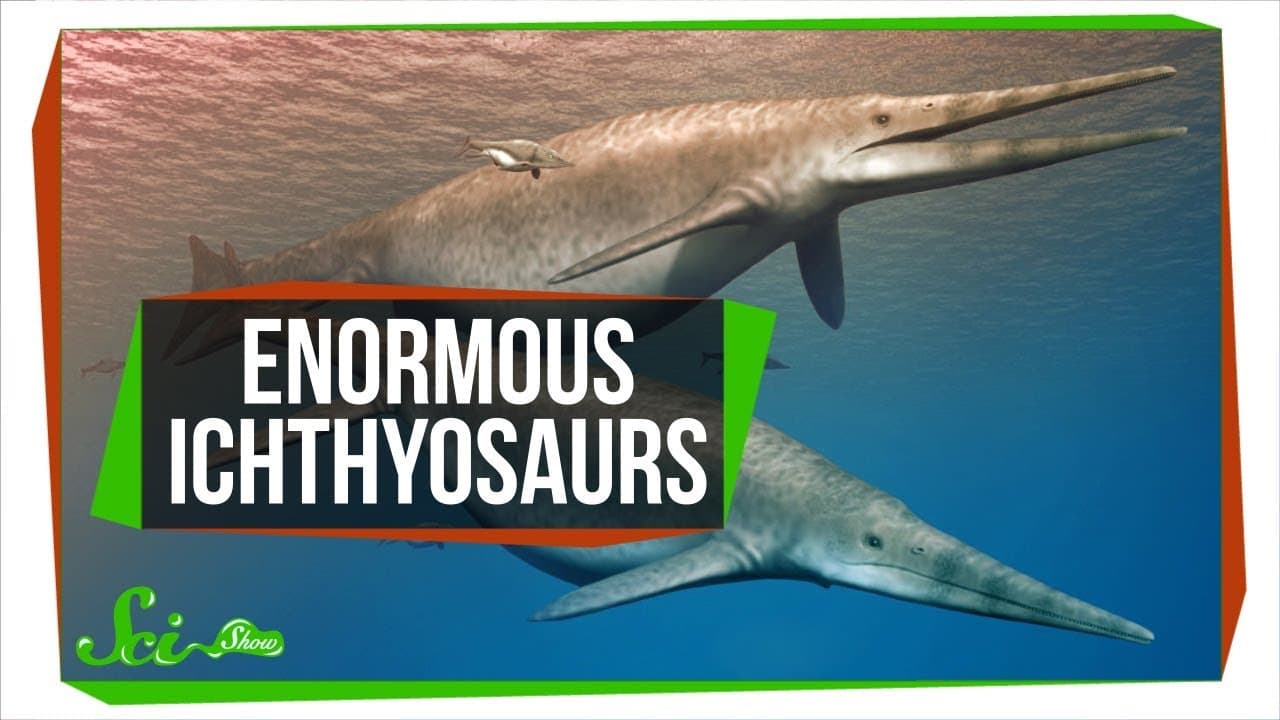
- 🔵 Research on ichthyosaurs suggests they may have been much larger than previously thought, potentially rivaling the size of blue whales.
Install to Summarize YouTube Videos and Get Transcripts
Explore YouTube Video Summarizer or Get YouTube Transcript Extractor
Questions & Answers
Q: What were paleontologists thought to have found in the ancient arthropod fossils?
Paleontologists believed they found fossilized brain and blood vessel tissues, suggesting insights into the evolution of these organs in ancient arthropods.
Q: How did the new study challenge previous findings?
The new study suggested that the structures identified as brains and blood vessels were actually biofilms formed by microbes digesting the arthropod's internal organs after death.
Q: Where were the debated fossils found?
The debated fossils were found in the Chéngjiāng fossil beds in southern China, a Konservat-Lagerstätten known for exceptionally well-preserved fossils.
Q: Why is it important for paleontologists to accurately identify fossilized structures?
Accurate identification of fossilized structures is crucial for understanding the evolution of ancient organisms and correcting errors in previous interpretations.
Summary & Key Takeaways
-
Paleontologists previously believed they found fossilized brain and blood vessel tissues in an ancient arthropod.
-
A new study argues these structures are likely biofilms formed by microbes digesting internal organs.
-
The findings challenge previous assumptions about the evolution of brains and blood vessels in ancient arthropods.
Read in Other Languages (beta)
Share This Summary 📚
Summarize YouTube Videos and Get Video Transcripts with 1-Click
Try YouTube Summary with ChatGPT & Claude or YouTube Transcript Generator
Explore More Summaries from SciShow 📚

Summarize YouTube Videos and Get Video Transcripts with 1-Click
Try YouTube Summary with ChatGPT & Claude or YouTube Transcript Generator