How to Conduct Fun DIY Physics Experiments at Home
TL;DR
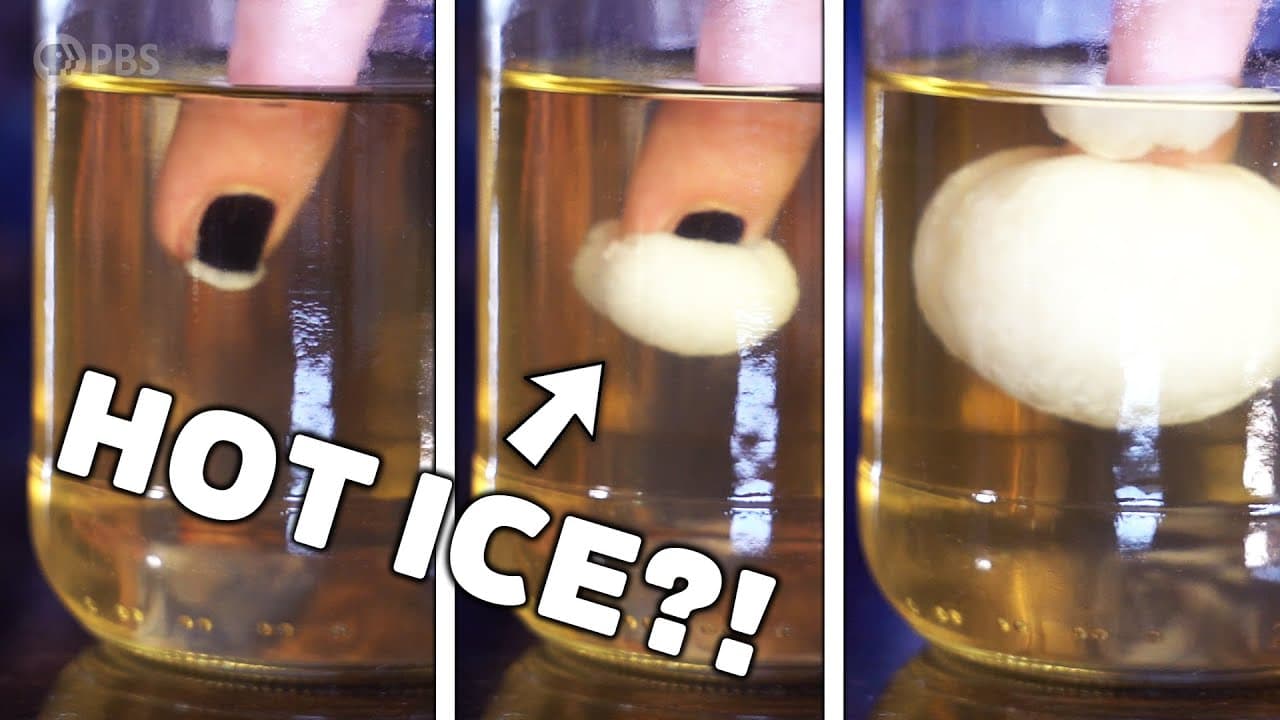
You can perform engaging DIY physics experiments at home using common items like sodium acetate and lasers. For instance, shining a laser through tonic water reveals fluorescence, while dropping an ice cube in oil illustrates buoyancy due to density differences. Supercooling sodium acetate creates 'hot ice' that crystallizes with a nucleation site.
Transcript
(upbeat music) - So you know when you find yourself stuck at home with a bunch of sodium acetate and fridge and a laser in your hand? Oh, Mondays, am I right? I'm Diana. You're watching Physics Girl. And I'm going to walk you through how to use your sodium acetate and your laser for some fun physics experiments. Let's get started, by the way, a lot... Read More
Key Insights
- 😅 Sodium acetate can be used to flavor food, create hand warmers, and make hot ice.
- 🙂 Understanding how light scatters and fluoresces in different liquids can help analyze their properties.
- 🧊 Differing densities of liquids can affect the buoyancy of objects like ice cubes.
- 😅 Supercooling and introducing nucleation sites can create hot ice.
Install to Summarize YouTube Videos and Get Transcripts
Explore YouTube Video Summarizer or Get YouTube Transcript Extractor
Questions & Answers
Q: How does light scattering work in water and tonic water?
When a laser is shone into water, it scatters off water molecules or impurities, creating a line through the water. Tonic water contains quinine, which fluoresces under the laser, absorbing higher energy light and emitting lower energy blue light.
Q: Why does an ice cube stop in the middle of two types of oil?
The ice cube floats between vegetable oil and baby oil because of the difference in densities. As the ice melts, its water increases in density, sinking to the bottom of the oil. The cube bounces back up due to water initially sticking to it and then dripping off.
Q: What is the process of creating "hot ice" with sodium acetate?
To create sodium acetate, mix baking soda with vinegar, boil the mixture, and pour it into a jar to cool. Supercooling the liquid below its freezing point allows it to solidify upon introduction of nucleation sites. The resulting substance is known as "hot ice."
Q: How does the visualization of sound waves using a laser and a mirror work?
By reflecting a laser off a mirror attached to a balloon stretched over a cup, the vibrations caused by sound from a speaker can be observed. As sound waves vibrate the balloon, the mirror's motion reflects on a wall, creating intricate patterns and animations.
Summary & Key Takeaways
-
Experiment 1: Shining a laser into glass A and glass B shows how light scatters off water molecules, with glass A containing plain water and glass B containing tonic water with quinine that fluoresces under the laser.
-
Experiment 2: Dropping an ice cube into a container filled with vegetable oil and baby oil demonstrates how the cube floats in between due to differing densities of the oil.
-
Experiment 3: Creating "hot ice" with sodium acetate and observing its crystallization process by supercooling and introducing nucleation sites.
Read in Other Languages (beta)
Share This Summary 📚
Summarize YouTube Videos and Get Video Transcripts with 1-Click
Try YouTube Summary with ChatGPT & Claude or YouTube Transcript Generator
Explore More Summaries from Physics Girl 📚

Summarize YouTube Videos and Get Video Transcripts with 1-Click
Try YouTube Summary with ChatGPT & Claude or YouTube Transcript Generator