Buddhist Meditation Explained
TL;DR
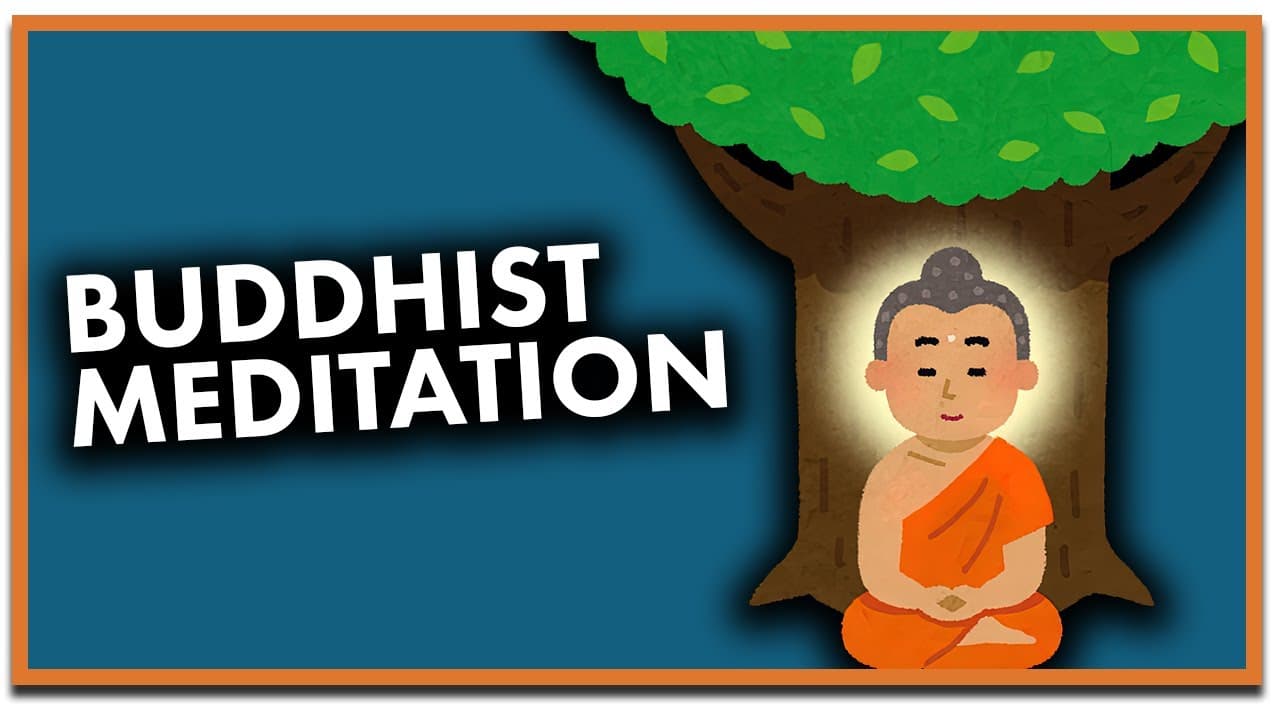
Meditation in Buddhism has evolved from a religious practice for attaining enlightenment to a popular relaxation technique in modern times.
Transcript
for many people this is the stereotypical image associated with the word meditation this is what i found searching on a generic video archive with the search query meditation tons of videos of people sitting there cross-legged in lotus position eyes closed serenely meditating meditation has become one of the most well-known and most popular element... Read More
Key Insights
- 🧘 The popular stereotype of meditation as a practice of clearing the mind for relaxation differs greatly from the original context of meditation in early Buddhism.
- 🧘 Meditation in early Buddhism was an advanced practice that involved specific techniques and steps to cultivate deep understanding of Buddhist teachings.
- 👋 Most Buddhists historically did not practice meditation, focusing instead on everyday rituals and practices to accumulate good karma.
- 👔 There are many forms of Buddhist meditation, both formal and informal, that aim to cultivate specific mental states and insight.
- 👾 The practice of meditation has transformed over time, entering non-religious spaces and being adapted to different purposes by different cultures and religions.
- 🖐️ Mindfulness plays a crucial role in Buddhist meditation, involving both attention and introspective vigilance to cultivate deep understanding and maintain ethical discipline.
Install to Summarize YouTube Videos and Get Transcripts
Explore YouTube Video Summarizer or Get YouTube Transcript Extractor
Questions & Answers
Q: How has the popular conception of meditation differs from its original context in early Buddhism?
In early Buddhism, meditation was seen as a way to cultivate deep understanding of Buddhist teachings, rather than a practice for relaxation or stress relief. It involved specific steps and techniques, rather than clearing the mind.
Q: Did all Buddhists historically practice meditation?
No, historically, most Buddhists did not practice meditation. Meditation was considered a difficult and advanced practice taken up by only a few individuals. Most Buddhists engaged in everyday rituals and practices to accumulate good karma and secure a good rebirth.
Q: How does mindfulness play a role in Buddhist meditation?
Mindfulness is a key aspect of Buddhist meditation. It involves both attention and introspective vigilance, allowing meditators to focus on a particular object or idea while also carefully monitoring their internal states. Mindfulness is considered essential for developing insight and maintaining ethical discipline.
Q: How has the practice of meditation transformed over time?
Meditation has evolved from a religious practice aimed at attaining enlightenment to a more accessible technique for relaxation and mental health. It has entered non-religious spaces and has been adapted for different purposes by different cultures and religions.
Summary & Key Takeaways
-
Meditation has become a popular and widely practiced element of Buddhism in the modern world, although historically it was considered a difficult and advanced practice.
-
Early Buddhist texts reveal that meditation was not about clearing the mind, but rather involved specific steps and techniques to cultivate deep understanding of Buddhist teachings.
-
There are many forms of Buddhist meditation, including formal and informal practices that aim to cultivate specific mental states and develop personal insight.
Read in Other Languages (beta)
Share This Summary 📚
Summarize YouTube Videos and Get Video Transcripts with 1-Click
Try YouTube Summary with ChatGPT & Claude or YouTube Transcript Generator
Explore More Summaries from ReligionForBreakfast 📚





Summarize YouTube Videos and Get Video Transcripts with 1-Click
Try YouTube Summary with ChatGPT & Claude or YouTube Transcript Generator