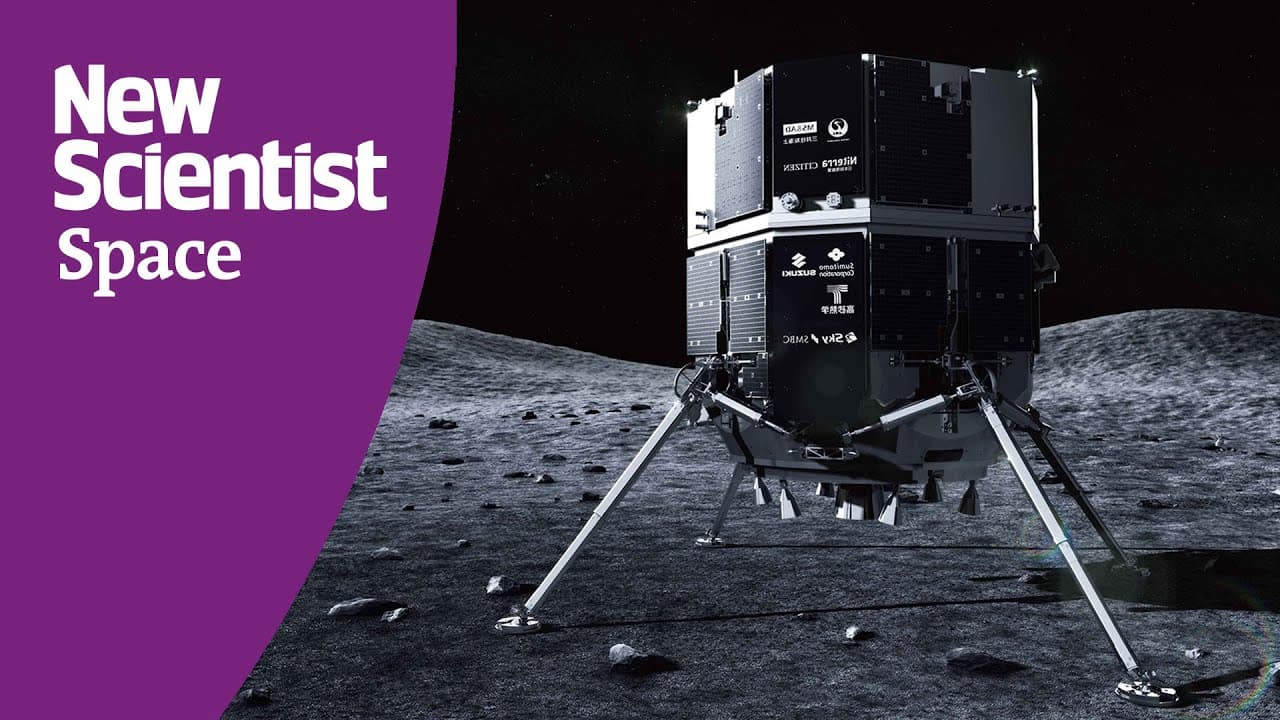
Watch Japan’s ispace attempt moon landing with Hakuto-R lunar lander
TL;DR
ispace successfully lands a private lunar mission, opening new opportunities for space exploration.
Transcript
design it represents the completion of a series of successes for ispace the verification of our communication technique candidate site in that case additional orbits are performed to align the Lander's trajectory with the new Target sites and to allow for optimal use of lunar daytime after landing during the landing sequence the Lander performs a s... Read More
Key Insights
- 👾 Advanced technology enabled a successful lunar landing, showcasing the capabilities of private space companies.
- 👾 Collaborations with international partners and diverse payload deployments illustrate the expansion of space exploration opportunities.
- 🎟️ The mission marks the beginning of a sustainable business model for future missions, ensuring continuous progress in space exploration endeavors.
- 🎟️ Data collected during the mission will pave the way for future developments, contributing to the enhancement of hardware performance for upcoming missions such as Mission 2 and Mission 3.
- 👾 Achieving a lunar landing, especially as a private entity, demonstrates a significant advancement in space exploration technology and capabilities.
- 👾 Sustainable business practices and continuous learning from each mission ensure the progress and success of future space exploration endeavors.
- 🎟️ The successful execution of mission milestones highlights the meticulous planning, advanced technology, and expertise involved in making lunar landings possible.
Install to Summarize YouTube Videos and Get Transcripts
Explore YouTube Video Summarizer or Get YouTube Transcript Extractor
Questions & Answers
Q: What was the primary outcome of the ispace mission?
The primary outcome was a successful lunar landing, marking the first private company to achieve such a feat in space exploration history.
Q: How did the Lander navigate to the lunar surface?
The Lander performed a series of automated actions, including deorbit insertion and braking burn, to slow its descent and achieve a soft touchdown.
Q: What were some payloads carried by the Lander?
Payloads included the UAE's Rasheed Rover, a Japanese lunar robot, solid-state batteries by Newtera, and various Canadian space agency payloads, showcasing international collaboration.
Q: How does the mission contribute to future space exploration?
Data collected during the mission will enhance future developments, improve hardware performance, and support upcoming missions like Mission 2 and Mission 3.
Summary & Key Takeaways
-
ispace successfully lands a lunar mission, marking a significant milestone in private space exploration.
-
The Lander executed automated actions during the landing sequence, showcasing advanced technology.
-
Future missions, including a second one in 2024, are planned, demonstrating a commitment to continual progress.
Read in Other Languages (beta)
Share This Summary 📚
Summarize YouTube Videos and Get Video Transcripts with 1-Click
Try YouTube Summary with ChatGPT & Claude or YouTube Transcript Generator
Explore More Summaries from New Scientist 📚

Summarize YouTube Videos and Get Video Transcripts with 1-Click
Try YouTube Summary with ChatGPT & Claude or YouTube Transcript Generator