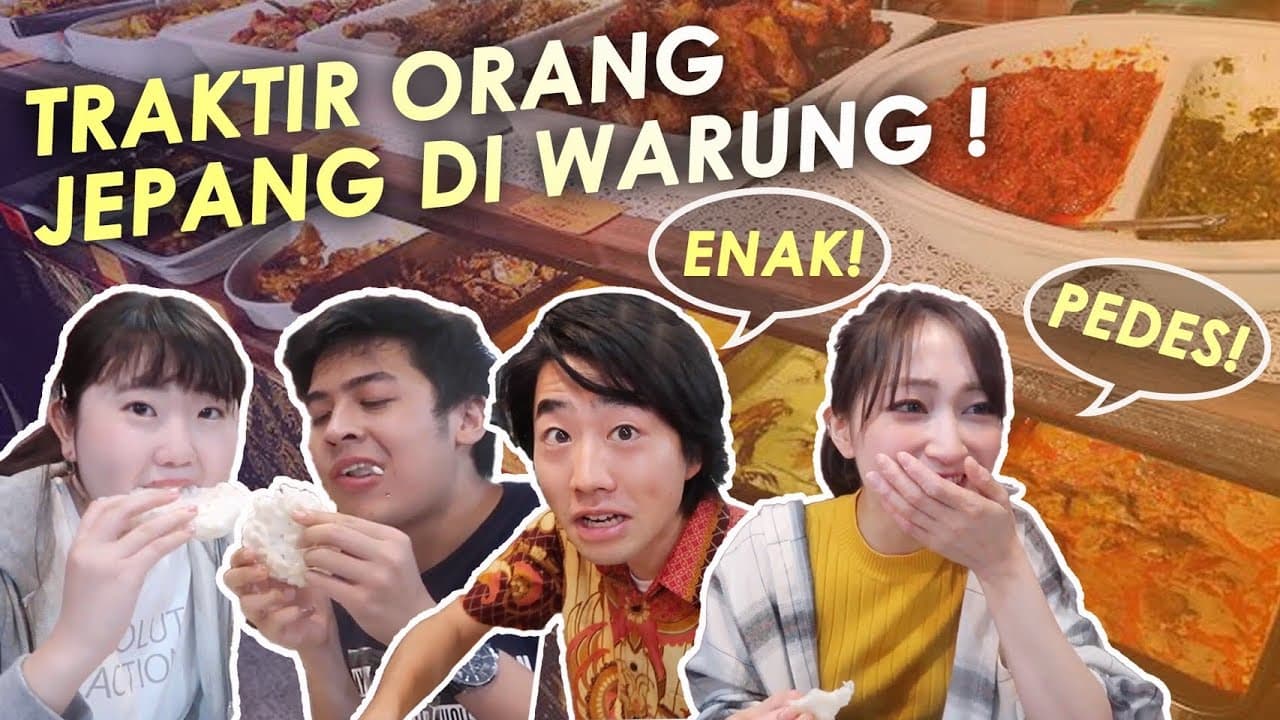
TRAKTIR MBAK SALON & ORANG JEPANG MAKAN DI WARTEG! | NIHONGO MANTAPPU
TL;DR
Japanese guests experience Indonesian cuisine for the first time.
Transcript
how is it? it's not spicy not spicy? it's so hard commercial break so today we are in front of Indonesian restaurant called Monggo Moro Java's halal restaurant do you know Java? i do~ aah, please introduce yourself my name is Kurumi you can speak Indonesia? how can? i learnt Indonesia Language around 1 year a year?! in Indonesia? or Ja... Read More
Key Insights
- The video features Japanese individuals trying Indonesian food, including dishes like lamb, fish, and kerupuk, which is similar to Japanese senbei.
- The guests express varying levels of tolerance to spicy food, with some finding the sambal too hot while others enjoy the heat.
- The restaurant visited is styled like a traditional Indonesian warung, offering a unique cultural dining experience in Japan.
- The pricing for meals is discussed, with lamb and beef priced at 1,500 Yen, and additional eggs costing 200 Yen.
- Eating with hands is introduced as part of Indonesian culture, which some guests find challenging but interesting.
- The video captures the guests' reactions to the flavors and textures, highlighting the novelty of the experience for them.
- A humorous moment occurs when a guest mistakes a bowl of water for drinking, which is actually meant for washing hands.
- The video encourages cultural exchange through food, showcasing how different cuisines can bring people together in a fun and engaging way.
Install to Summarize YouTube Videos and Get Transcripts
Explore YouTube Video Summarizer or Get YouTube Transcript Extractor
Questions & Answers
Q: What is the main theme of the video?
The main theme of the video is cultural exchange through food, as Japanese guests experience Indonesian cuisine for the first time. The video showcases their reactions to various dishes and highlights the unique dining customs of Indonesia, such as eating with hands and enjoying spicy sambal.
Q: How do the guests react to the spicy food?
The guests have mixed reactions to the spicy food, particularly the sambal. Some find it too hot to handle, while others appreciate the added flavor it brings to the dishes. Their varied responses highlight the subjective nature of spice tolerance and the novelty of trying unfamiliar flavors.
Q: What cultural dining practice is introduced in the video?
The video introduces the cultural dining practice of eating with hands, which is common in Indonesia. This practice is new to the Japanese guests, who find it both challenging and intriguing. The video humorously captures their attempts to adapt to this method of eating.
Q: What dishes are featured in the video?
The video features a variety of Indonesian dishes, including lamb, fish, fried chicken, kerupuk (similar to Japanese senbei), and sambal. These dishes provide the guests with a taste of Indonesian cuisine and an opportunity to explore flavors and textures that are new to them.
Q: How is the restaurant styled, and why is it significant?
The restaurant is styled like a traditional Indonesian warung, which is significant because it offers the Japanese guests an authentic cultural dining experience. This setting allows them to immerse themselves in Indonesian food culture and appreciate the atmosphere and customs associated with it.
Q: What humorous moment occurs during the meal?
A humorous moment occurs when a guest mistakes a bowl of water for drinking, which is actually meant for washing hands. This misunderstanding adds a light-hearted element to the video and highlights the cultural differences in dining practices between Japan and Indonesia.
Q: What is the price range for the meals, and how do the guests react?
The meals are priced at 1,200 Yen for a set, with lamb and beef dishes costing 1,500 Yen, and an additional egg costing 200 Yen. The guests find the prices relatively high, but they are intrigued by the unique experience and the opportunity to try authentic Indonesian food.
Q: How does the video promote cultural exchange?
The video promotes cultural exchange by showcasing Japanese guests trying Indonesian food, highlighting the differences and similarities between the two cultures. Through shared meals and new culinary experiences, the video emphasizes the power of food to bring people together and foster understanding across cultural boundaries.
Summary & Key Takeaways
-
The video showcases Japanese guests trying Indonesian food for the first time at a restaurant styled like a traditional warung. They explore various dishes, including lamb, fish, and kerupuk, experiencing both the flavors and cultural dining practices of Indonesia.
-
Spicy sambal is a focal point of the meal, with guests expressing diverse reactions to its heat. The video humorously captures their attempts to eat with hands, a common practice in Indonesia, and their overall enjoyment of the new culinary experience.
-
The video highlights the cost of dishes, cultural nuances, and the guests' genuine curiosity and enjoyment. It serves as a bridge between Japanese and Indonesian cultures, emphasizing the universal language of food and the joy of sharing meals.
Read in Other Languages (beta)
Share This Summary 📚
Summarize YouTube Videos and Get Video Transcripts with 1-Click
Try YouTube Summary with ChatGPT & Claude or YouTube Transcript Generator
Explore More Summaries from Nihongo Mantappu 📚



Summarize YouTube Videos and Get Video Transcripts with 1-Click
Try YouTube Summary with ChatGPT & Claude or YouTube Transcript Generator