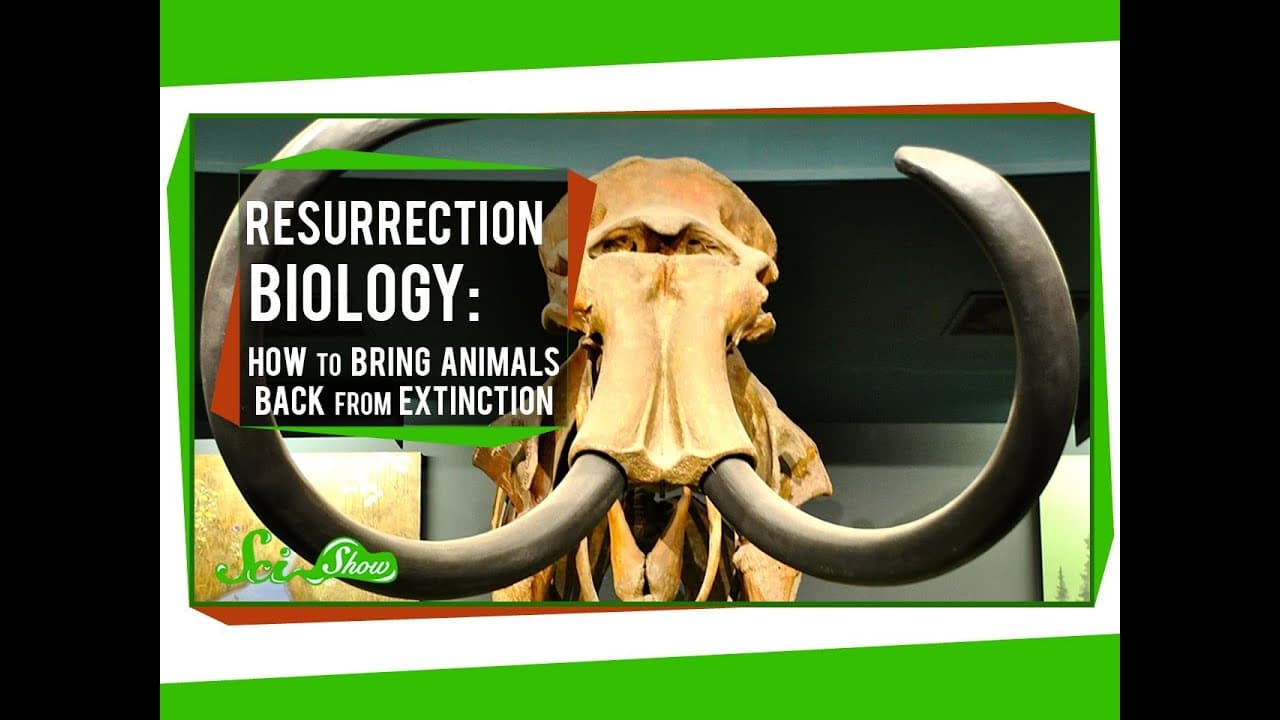
Resurrection Biology: How to Bring Animals Back From Extinction
TL;DR
Scientists explore cloning, genetic reconstruction, and back breeding to potentially bring extinct animals back to life, with ethical and environmental concerns.
Transcript
In May 2013, Russian researchers found a perfectly preserved Woolly Mammoth carcass frozen in the ice on an island off Siberia. As if it were pulled straight out of a meat locker, the animal's body still had fresh red muscle tissue, and the real prize, liquid blood. The female mammoth had been laying there like Snow White in her glass coffin for fo... Read More
Key Insights
- 🙃 De-extinction, or resurrection biology, involves methods like cloning, genetic reconstruction, and back breeding to potentially bring back extinct species.
- 🙃 Ethical concerns around de-extinction include genetic diversity, habitat availability, and the impact on ecosystems.
- 🙃 De-extinction technology offers potential benefits to conservation efforts by preserving endangered species and restoring ecosystems.
- ❓ Challenges in resurrecting extinct species include DNA degradation, the availability of intact genetic material, and practicalities of reintroduction.
Install to Summarize YouTube Videos and Get Transcripts
Explore YouTube Video Summarizer or Get YouTube Transcript Extractor
Questions & Answers
Q: What methods are scientists exploring to bring extinct species back to life?
Scientists are exploring cloning, genetic reconstruction, and back breeding methods to potentially resurrect extinct species. These methods involve manipulating genetic material to recreate extinct animals.
Q: What are some ethical concerns surrounding de-extinction?
Ethical concerns include poor genetic diversity in resurrected species, habitat availability, and the impact on ecosystems. Critics worry about invasive species, habitat destruction, and the welfare of resurrected animals.
Q: How could de-extinction technology benefit conservation efforts?
De-extinction technology could assist in preserving endangered species and restoring ecosystems. By filling ecological niches and preventing extinctions, it could potentially benefit conservation efforts and biodiversity.
Q: What are the challenges in resurrecting extinct species?
Challenges include DNA degradation over time, the availability of intact genetic material, and the practicality of reintroducing resurrected species into modern ecosystems. Scientists face technical, ethical, and environmental hurdles in de-extinction efforts.
Summary & Key Takeaways
-
Russian researchers found a well-preserved Woolly Mammoth, sparking interest in de-extinction.
-
Methods like cloning, genetic reconstruction, and back breeding are explored for bringing back extinct species.
-
Ethical and environmental concerns surround the concept of resurrecting extinct animals.
Read in Other Languages (beta)
Share This Summary 📚
Summarize YouTube Videos and Get Video Transcripts with 1-Click
Try YouTube Summary with ChatGPT & Claude or YouTube Transcript Generator
Explore More Summaries from SciShow 📚
Summarize YouTube Videos and Get Video Transcripts with 1-Click
Try YouTube Summary with ChatGPT & Claude or YouTube Transcript Generator