How Do Marine Animals Use Light for Camouflage?
TL;DR
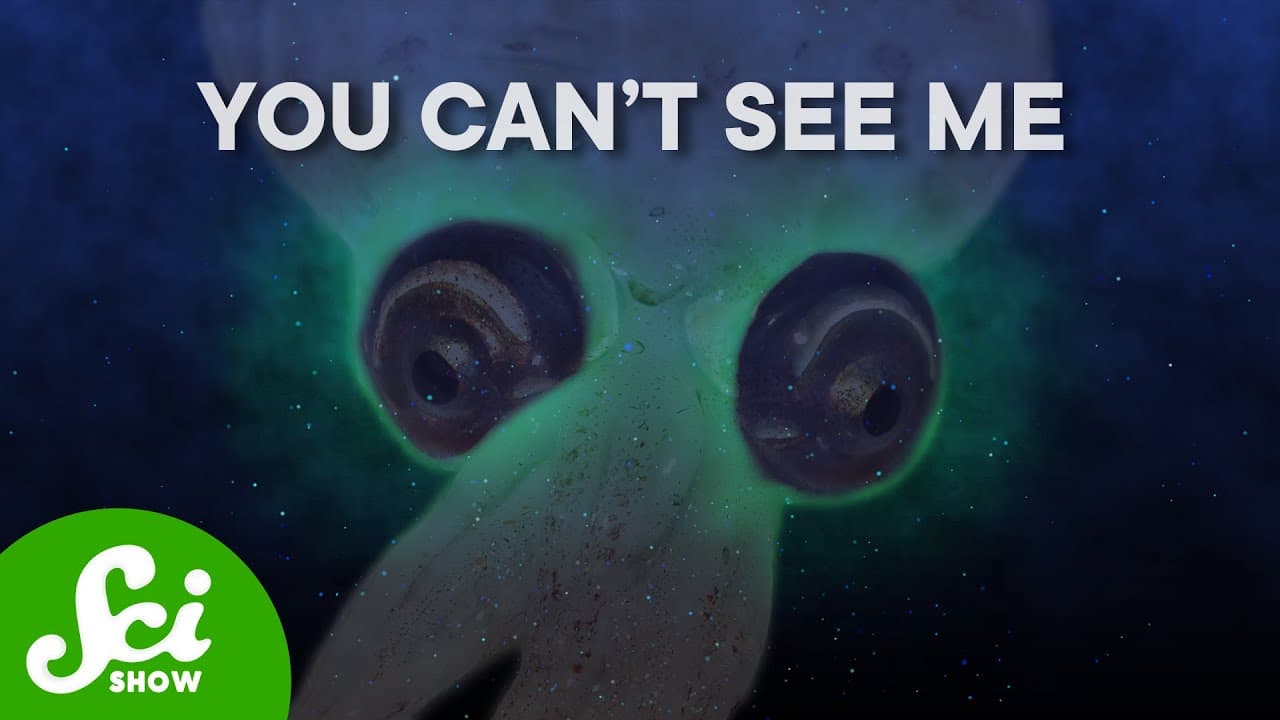
Marine animals like the look down fish and glass squids use light to camouflage themselves in challenging ocean environments. The look down reflects polarized light to blend in, while glass squids use bioluminescent cells to cancel out their shadows, making them invisible to predators. These adaptations highlight the innovative ways marine life utilizes light for concealment.
Transcript
thanks to lenode for supporting this scishow video you can get a hundred dollar sixty day credit on a new lenote account at lenode.com scishow if you're trying to hide from something the open ocean is a tough place to do it I mean there's not much to hide behind for one and if you want to blend in with the background that's going to be tough too be... Read More
Key Insights
- 🙂 Marine animals in the open ocean face challenges in camouflage due to lack of cover and changing light conditions.
- 🙂 Silvery fish like the look down use mirror-like skin to reflect polarized light and blend in with the water.
- 🔦 Schools of fish adjust their geometry near the surface to minimize sunlight flashes and collectively manipulate light for safety.
- 🙂 Glass squids in the Twilight Zone utilize bioluminescence and structural adaptations to hide by blending in with the dim light environment.
- 🙂 Light is used as a tool for concealment in marine animals, showcasing incredible adaptations for camouflage.
- 😶🌫️ Lenode's cloud computing services are highlighted in the video, emphasizing the seamless nature of technology in assisting various tasks.
- 😶🌫️ The video sponsor, Lenode, provides access to cloud computing services for developers and enterprises, showcasing the importance of technology in modern applications.
Install to Summarize YouTube Videos and Get Transcripts
Explore YouTube Video Summarizer or Get YouTube Transcript Extractor
Questions & Answers
Q: How do marine animals in the open ocean overcome the challenge of camouflage?
Marine animals like silvery fish use mirror-like skin to reflect polarized light, while glass squids in the Twilight Zone utilize bioluminescence to blend in and hide from predators. These adaptations help them master camouflage in the challenging environment of the open ocean.
Q: How do look down fish use their unique camouflage abilities?
Look down fish have evolved flat micro crystals in their skin cells that reflect light at different polarization angles. This adaptation allows them to match the conditions around them and appear as part of the water, effectively concealing themselves from predators by manipulating light.
Q: How do schools of fish adjust their behavior to minimize sunlight flashes near the surface?
When sensing a threat, schools of fish pack together more densely and align with the direction of sunlight to reduce the flashes of light bouncing off their skin. This collective manipulation of light helps the school stay safer by making them less conspicuous to predators.
Q: How do glass squids in the Twilight Zone utilize bioluminescence for camouflage?
Glass squids have photophores under their eyeballs that produce bioluminescent light, allowing them to blend in with the surface when viewed from below. The structure of these photophores also cancels out the squid's shadow from all angles, making them appear invisible in the dim light of the Twilight Zone.
Summary & Key Takeaways
-
The open ocean presents challenges for hiding due to lack of cover and changing light, but some marine animals have evolved ingenious ways to camouflage.
-
Silvery fish like the look down use mirror-like skin to reflect polarized light, masking themselves from predators.
-
Schools of fish adjust their geometry near the surface to minimize sunlight flashes, while glass squids in the Twilight Zone use bioluminescence to blend in.
Read in Other Languages (beta)
Share This Summary 📚
Summarize YouTube Videos and Get Video Transcripts with 1-Click
Try YouTube Summary with ChatGPT & Claude or YouTube Transcript Generator
Explore More Summaries from SciShow 📚
Summarize YouTube Videos and Get Video Transcripts with 1-Click
Try YouTube Summary with ChatGPT & Claude or YouTube Transcript Generator