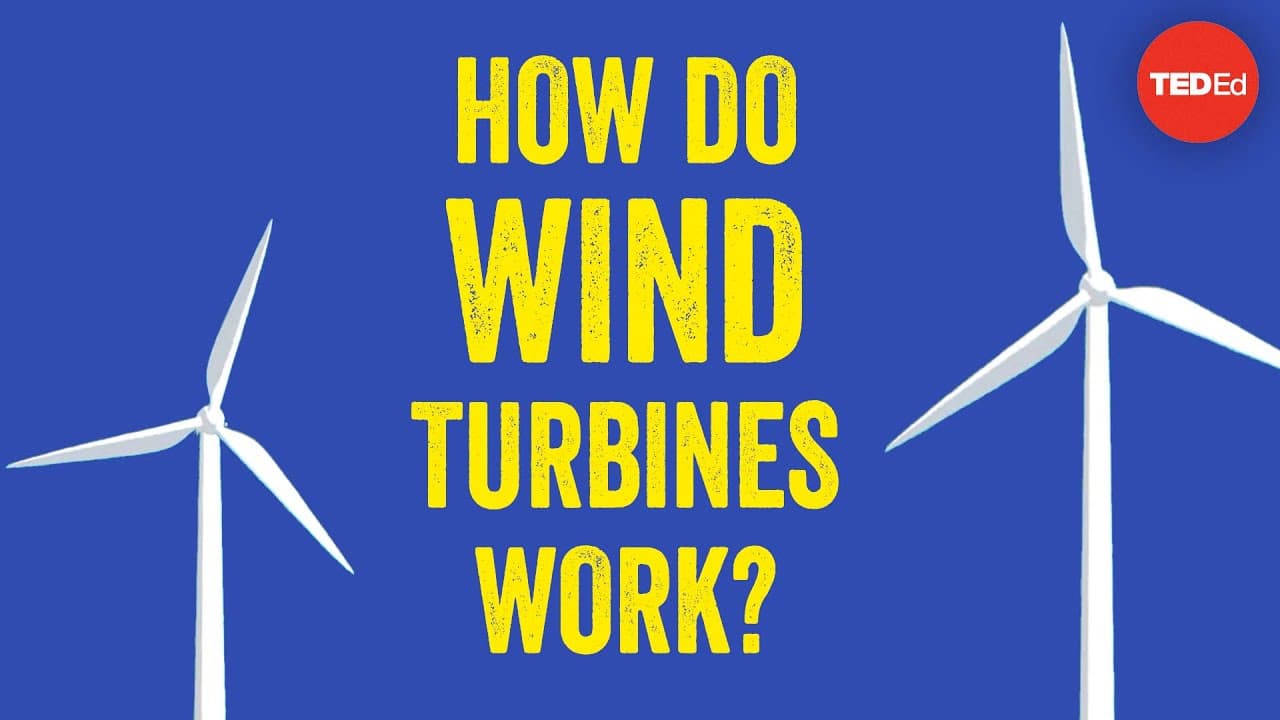
How do wind turbines work? - Rebecca J. Barthelmie and Sara C. Pryor
TL;DR
Wind energy has the potential to power the world and is renewed daily, with turbines using blade orientation, aerodynamic design, and wind speed to generate electricity.
Transcript
Every 24 hours, wind generates enough kinetic energy to produce roughly 35 times more electricity than humanity uses each day. And unlike coal or oil, this resource is totally renewed each day. So how can we harness this incredible amount of energy, and is it possible to create a world powered entirely by wind? The basic principle of wind energy ... Read More
Key Insights
- 💨 Wind energy has the potential to generate an abundance of electricity, surpassing humanity's daily energy needs.
- 💨 Horizontal axis rotors with aerodynamic blades are more efficient in capturing wind energy.
- 💨 Wind turbines need to be placed in windy environments to maximize electricity generation.
- 💨 Offshore wind farms with larger turbines have even greater energy production capabilities.
- 🌬️ Wind energy still faces challenges, including the limit of how much wind can be converted into electricity and its intermittent availability.
- 💨 Improved wind forecasting, electrical grid infrastructure, and energy storage can further enhance wind energy adoption.
- 💨 Wind turbines provide reliable and cost-effective electricity, benefitting communities worldwide.
Install to Summarize YouTube Videos and Get Transcripts
Explore YouTube Video Summarizer or Get YouTube Transcript Extractor
Questions & Answers
Q: How does wind energy production work?
Wind energy production involves converting wind's kinetic energy into rotational energy using turbines, which then generate electricity.
Q: What factors determine the energy production of wind turbines?
The size and orientation of the blades, the blade's aerodynamic design, and the amount of wind turning the rotor are the primary factors influencing the energy output of wind turbines.
Q: How do blade orientation and design impact wind energy production?
Horizontal axis rotors with curved blades are more efficient in capturing wind's full force by tracking its direction, creating a low-pressure pocket above the blade that forces it upwards.
Q: What are the challenges faced by wind energy?
There is a mathematical limit to how much wind can be converted into electricity, turbines can only capture 59.3% of the wind's energy, and wind energy's intermittent availability and visual impact can pose challenges in integrating it into electrical grids.
Summary & Key Takeaways
-
Wind energy generates 35 times more electricity than humanity uses each day, making it a highly renewable resource.
-
Modern wind turbines convert wind's kinetic energy into rotational energy and electricity.
-
Blade orientation, aerodynamic design, and wind speed are key factors in determining the energy production of wind turbines.
Read in Other Languages (beta)
Share This Summary 📚
Summarize YouTube Videos and Get Video Transcripts with 1-Click
Try YouTube Summary with ChatGPT & Claude or YouTube Transcript Generator
Explore More Summaries from TED-Ed 📚





Summarize YouTube Videos and Get Video Transcripts with 1-Click
Try YouTube Summary with ChatGPT & Claude or YouTube Transcript Generator