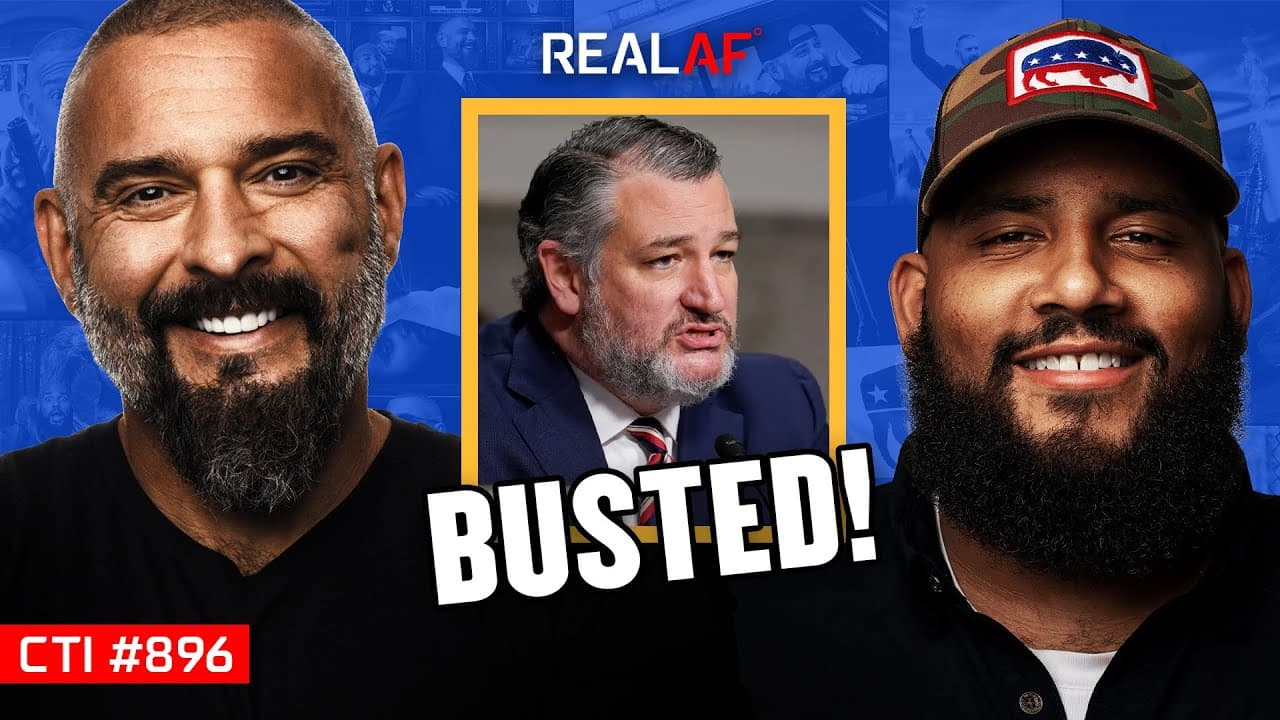
Did Ted Cruz Struggle to Defend His Views on Iran?
TL;DR
During an interview with Tucker Carlson, Ted Cruz struggled to answer questions about Iran's population and governance while advocating for U.S. military actions. The discussion raised concerns about the influence of AIPAC on U.S. politics and highlighted the necessity for politicians to be well-informed and accountable in foreign policy debates.
Transcript
senator Ted Cruz brutally assaulted and raped by journalists he was held against his will and asked about Apac well we got the video how many people live around by the way i I don't know the population at all no I don't know the population you don't know the population of the country you seek to topple how many people living around 92 million okay ... Read More
Key Insights
- Tucker Carlson's interview with Ted Cruz highlights the lack of preparedness and knowledge of some politicians on foreign policy issues, particularly regarding Iran.
- The interview exposes the influence of foreign lobbies, such as AIPAC, on U.S. politicians and raises questions about their allegiance and decision-making.
- Carlson's approach to journalism emphasizes the need for hard-hitting questions and accountability from elected officials, contrasting with typical media interviews.
- The discussion reflects broader issues of misinformation and manipulation in political discourse, with politicians often avoiding direct answers to maintain their narratives.
- The conversation sheds light on the complex relationship between the U.S. and Israel, questioning the automatic support for Israeli government actions.
- The broader geopolitical implications of U.S. involvement in Middle Eastern conflicts are discussed, highlighting potential consequences for global stability.
- The segment touches on the cultural and societal factors that contribute to the current political climate, including media influence and public perception.
- The interview exemplifies the growing divide between mainstream political narratives and the critical questioning demanded by the public.
Install to Summarize YouTube Videos and Get Transcripts
Explore YouTube Video Summarizer or Get YouTube Transcript Extractor
Questions & Answers
Q: What was the main focus of Tucker Carlson's interview with Ted Cruz?
The interview focused on challenging Ted Cruz's knowledge and stance on foreign policy issues, particularly regarding Iran, and scrutinizing his ties to foreign lobbies such as AIPAC. Carlson aimed to hold Cruz accountable for his positions and past decisions, emphasizing the need for transparency and preparedness in political discourse.
Q: How did Ted Cruz respond to questions about his knowledge of Iran?
Ted Cruz appeared unprepared when questioned about basic facts regarding Iran, such as its population and ethnic composition. He struggled to provide detailed answers, which highlighted a lack of in-depth understanding of the country he advocates taking military action against. This raised concerns about the depth of knowledge possessed by some U.S. politicians on critical foreign policy issues.
Q: What role does AIPAC play in U.S. politics, according to the interview?
The interview suggests that AIPAC, an American-Israeli lobby, has significant influence over U.S. politicians by providing financial support and lobbying for strong U.S.-Israel relations. Carlson questioned the appropriateness of this influence, implying that it may lead politicians to prioritize foreign interests over domestic ones, and raised concerns about transparency and accountability in these relationships.
Q: What broader implications does the interview have for U.S. foreign policy?
The interview underscores the complexities and potential dangers of U.S. involvement in Middle Eastern conflicts, particularly with Iran. It highlights the need for informed decision-making and the risks of being swayed by foreign lobbies. The discussion suggests that without a clear understanding and strategy, U.S. actions could lead to long-term geopolitical instability and harm national interests.
Q: How does the interview reflect on the current state of political journalism?
Carlson's approach represents a departure from typical media interviews, which often avoid challenging questions. By pressing Cruz on difficult topics, Carlson emphasizes the importance of accountability and truth in journalism, reflecting public demand for more critical and transparent political discourse. This style contrasts with the more common, less confrontational interviews that politicians typically encounter.
Q: What does the interview reveal about the relationship between the U.S. and Israel?
The interview questions the automatic support the U.S. provides to Israel, suggesting that this relationship is heavily influenced by political lobbies like AIPAC. It raises concerns about whether this support aligns with U.S. national interests and calls for a reevaluation of the motivations behind U.S.-Israel relations, particularly in light of ongoing conflicts in the Middle East.
Q: What societal factors contribute to the current political climate, as discussed in the interview?
The interview touches on the role of media influence, public perception, and misinformation in shaping political narratives. It highlights the divide between mainstream political discourse and the critical questioning demanded by the public, suggesting that many politicians rely on media narratives that avoid accountability and transparency, contributing to a lack of trust in political institutions.
Q: What impact could this interview have on public perception of political figures?
The interview may influence public perception by highlighting the lack of preparedness and transparency among some politicians. It emphasizes the need for accountability and informed decision-making, potentially leading to increased public scrutiny of political figures and their relationships with foreign lobbies. This could result in a demand for more honest and open political discourse, aligning with public expectations for truth and accountability.
Summary & Key Takeaways
-
Tucker Carlson's interview with Ted Cruz reveals the senator's lack of detailed knowledge about Iran, despite advocating for military actions against the country. This raises concerns about the preparedness of U.S. politicians in foreign policy matters.
-
The discussion delves into the influence of AIPAC and other foreign lobbies on American politics, questioning the motivations behind U.S. support for Israel and the implications for domestic and international policy.
-
Carlson's journalistic style emphasizes accountability, challenging Cruz on his past decisions and highlighting the need for transparency and truth in political discourse. This approach contrasts with the often soft interviews politicians receive.
Read in Other Languages (beta)
Share This Summary 📚
Summarize YouTube Videos and Get Video Transcripts with 1-Click
Try YouTube Summary with ChatGPT & Claude or YouTube Transcript Generator
Explore More Summaries from Andy Frisella 📚




Summarize YouTube Videos and Get Video Transcripts with 1-Click
Try YouTube Summary with ChatGPT & Claude or YouTube Transcript Generator