How Ancient Human Clues Ended Up in Rock
TL;DR
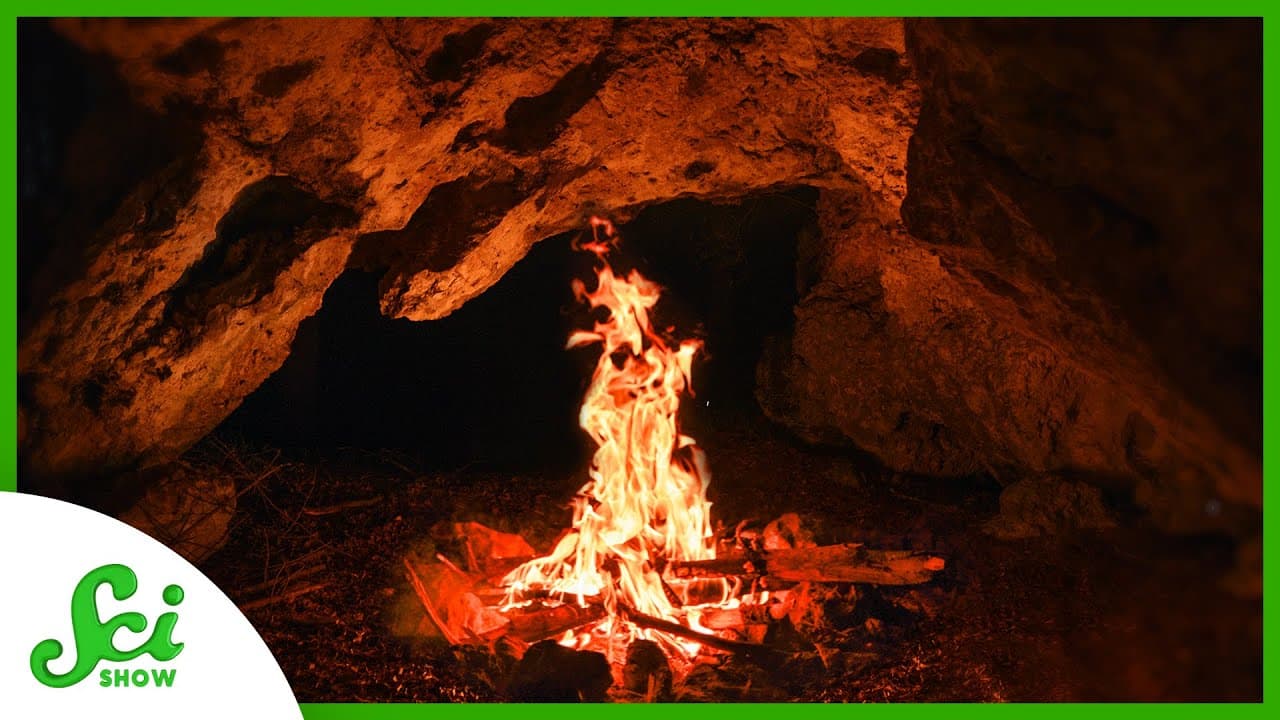
Researchers use stalagmites to find evidence of ancient human activity, revealing clues through stalagmite analysis.
Transcript
[♪ INTRO] A lot of what we know about ancient human civilizations comes from the things they leave behind, things like pottery, tools, and bones. Except, sometimes, humans don’t live in places long enough to leave these obvious clues. And even when they do, time can make those remnants unrecognizable. To get around this, some researchers have turne... Read More
Key Insights
- 🥹 Stalagmites can hold valuable evidence of ancient human history through soot layers from fires.
- 🧑🤝🧑 Speleothem analysis, including uranium-thorium dating, helps researchers date stalagmites and understand environmental changes.
- ❓ Researchers discovered evidence of human activity in Tabak Cave and Kocain Cave through speleothem analysis.
- ❓ Stalagmites offer insights into human rituals and burial practices in caves over centuries.
- 🤕 Understanding the chemistry and age of stalagmites allows researchers to reconstruct past environments and human interactions.
- 🥺 Traditional archeological dating methods may not work for stalagmites, leading to the adoption of geology techniques like uranium-thorium dating.
- 💨 Stalagmites provide a unique way to study ancient human history without relying on traditional archaeological evidence.
Install to Summarize YouTube Videos and Get Transcripts
Explore YouTube Video Summarizer or Get YouTube Transcript Extractor
Questions & Answers
Q: How do stalagmites provide clues about ancient human activity?
Stalagmites capture evidence of human activity through soot layers from fires, allowing researchers to track human history through chemical analysis.
Q: Why do climate scientists focus on stalagmites over stalactites?
Stalagmites grow predictably from the ground up, making them reliable records of a cave's environmental history due to the water and minerals affected by the local environment.
Q: How did researchers determine the age of stalagmites in the caves?
Researchers used uranium-thorium dating, a geology technique, to calculate the age of speleothems by measuring the ratio of uranium and thorium present in the mineral calcium carbonate.
Q: What did the presence of ceramics, animal bones, and human bones in the caves suggest?
The artifacts found alongside stalagmites in the caves indicate human presence, potentially used for funerary feasts or as burial grounds, shedding light on ancient human activities.
Summary & Key Takeaways
-
Stalagmites hold evidence of ancient human activity, including soot layers from fires.
-
Speleothem analysis helps track human history through stalagmite dating and chemistry.
-
Researchers found evidence of human presence in caves through stalagmite analysis in Turkey.
Read in Other Languages (beta)
Share This Summary 📚
Summarize YouTube Videos and Get Video Transcripts with 1-Click
Try YouTube Summary with ChatGPT & Claude or YouTube Transcript Generator
Explore More Summaries from SciShow 📚


Summarize YouTube Videos and Get Video Transcripts with 1-Click
Try YouTube Summary with ChatGPT & Claude or YouTube Transcript Generator