Why we press buttons - 6 Minute English
TL;DR
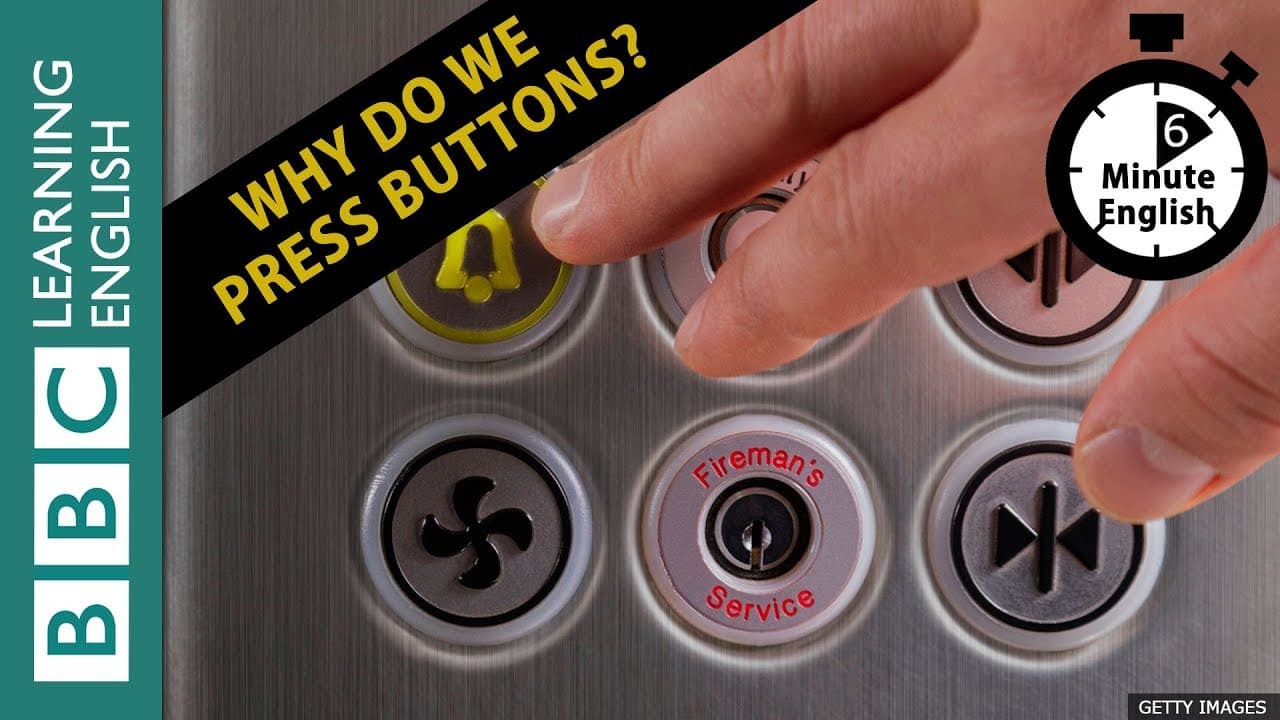
Exploring why humans are drawn to pressing buttons.
Transcript
Rob: Hello. This is 6 Minute English and I'm Rob. Neil: And I'm Neil. Rob: Today we’re talking about buttons. Neil: Yes, buttons. Buttons are what we have on our clothes to fasten them but the word is also used for things that we push to make things happen. Rob: Things like your bedside alarm, radio, toaster, kettle. We press hundreds of buttons ev... Read More
Key Insights
- Buttons serve both functional and psychological purposes, being essential in daily life for tasks like turning on appliances.
- Some people have a phobia of buttons, known as koumpounophobia, highlighting the diverse human reactions to these objects.
- Children are particularly drawn to buttons, which is why important ones are often placed out of their reach to prevent accidents.
- Buttons are tempting because they invite interaction, a concept tied to the human instinct to fidget and engage with our environment.
- Humans are described as digital creatures, a term referring to our use of fingers, which explains our attraction to tactile interactions like pressing buttons.
- The concept of grooming, seen in animals like apes, is related to our fidgeting instinct, as both involve using hands for interaction.
- The convenience of buttons is crucial; they must be easy to use for everyday tasks, yet protected when they control critical functions.
- The discussion on buttons extends to their role in technology and the psychological satisfaction derived from their use.
Install to Summarize YouTube Videos and Get Transcripts
Explore YouTube Video Summarizer or Get YouTube Transcript Extractor
Questions & Answers
Q: What is koumpounophobia?
Koumpounophobia is the fear of buttons. This phobia is recognized as a legitimate condition affecting some individuals, causing anxiety or discomfort when they encounter buttons. The program highlights this to demonstrate the diverse psychological responses humans have to everyday objects.
Q: Why are children particularly drawn to buttons?
Children are naturally curious and have a strong desire to interact with their environment, which includes pressing buttons. This behavior is tied to their instinctual need to fidget and explore. As a result, important buttons are often placed out of their reach to prevent accidents or unintended consequences.
Q: How do buttons relate to the concept of temptation?
Buttons are a source of temptation because they invite interaction, often making people want to press them even when it's unnecessary or potentially harmful. This temptation is a psychological response, as humans are drawn to tactile engagement with their surroundings, which buttons readily provide.
Q: What does it mean that humans are 'digital creatures'?
Humans are described as 'digital creatures' because we have fingers and toes, known as digits. This term emphasizes our reliance on our hands for interacting with the world, explaining our attraction to activities like pressing buttons, which satisfy our innate need to use our fingers actively.
Q: What role does grooming play in the discussion of buttons?
Grooming is used as an analogy to explain the human instinct to fidget and interact with objects like buttons. Just as apes groom each other using their hands, humans have a similar instinctual drive to use their hands for interaction, which includes pressing buttons as a form of engagement.
Q: Why is the convenience of buttons important?
The convenience of buttons is important because they need to be easy to use for everyday tasks, ensuring accessibility and efficiency. However, for buttons that control critical functions, convenience must be balanced with safety measures to prevent accidental activation, such as placing them behind glass.
Q: How does the program link buttons to technology?
The program links buttons to technology by discussing their essential role in operating various devices, from household appliances to complex machinery. Buttons provide a simple interface for human interaction with technology, making them a fundamental component in the design of user-friendly systems.
Q: What is the psychological satisfaction derived from pressing buttons?
Pressing buttons provides psychological satisfaction as it fulfills the human need for tactile interaction and control over our environment. This action satisfies our fidgeting instinct and offers a sense of accomplishment, as pressing a button often results in an immediate and tangible outcome, reinforcing our desire to engage with them.
Summary & Key Takeaways
-
Buttons are ubiquitous in daily life, used for both clothing and activating various devices. While they serve practical purposes, they also have a psychological appeal, often tempting people to press them even when unnecessary.
-
The program discusses the human fascination with buttons, linking it to instincts like fidgeting and grooming. This instinctual behavior is evident in children, who are naturally drawn to pressing buttons, necessitating safety measures.
-
Koumpounophobia is the fear of buttons, illustrating the varied human responses to these objects. The program highlights the importance of button convenience and the need to protect critical buttons from accidental use.
Read in Other Languages (beta)
Share This Summary 📚
Summarize YouTube Videos and Get Video Transcripts with 1-Click
Try YouTube Summary with ChatGPT & Claude or YouTube Transcript Generator
Explore More Summaries from BBC Learning English 📚

Summarize YouTube Videos and Get Video Transcripts with 1-Click
Try YouTube Summary with ChatGPT & Claude or YouTube Transcript Generator