How Does Homo Naledi Change Our Understanding of Human Evolution?
TL;DR
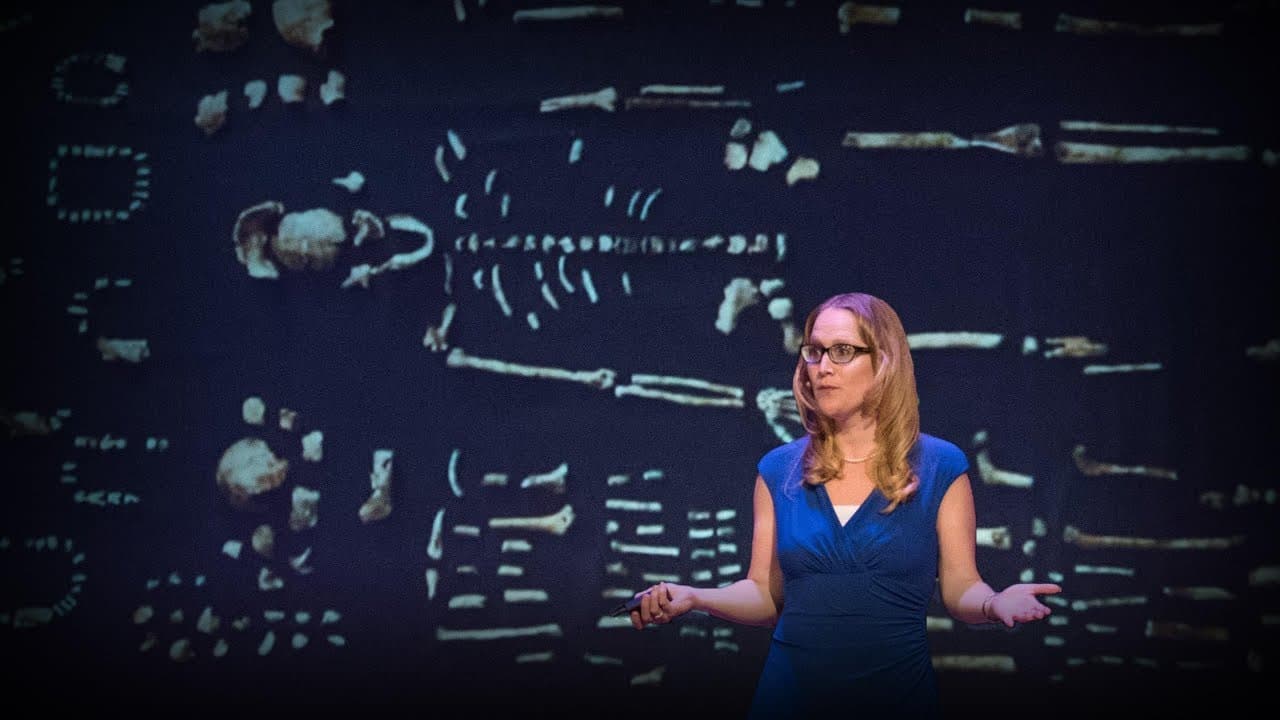
The discovery of Homo naledi challenges existing theories of human evolution by presenting a unique mix of primitive and derived traits, indicating that brain size is not the sole factor in defining the genus Homo. Additionally, evidence shows Homo naledi coexisted with modern humans in Africa around 300,000 years ago, raising questions about their interactions and the origins of stone tool-making.
Transcript
Translator: Leslie Gauthier Reviewer: Krystian Aparta Human origins. Who are we? Where do we come from, and how do we know? In my field, paleoanthropology, we explore human origins -- the "who" and "where" questions -- by analyzing fossils that date back thousands and even millions of years. In 2015, a team of colleagues and I named a new species i... Read More
Key Insights
- 🔬 The field of paleoanthropology analyzes fossils that date back thousands and millions of years to explore human origins, including the "who" and "where" questions.
- 🌳 The last common ancestors between humans and chimps date back between six and eight million years. The earliest human ancestors were a group called australopithecines, which evolved into the genus Homo and eventually modern humans.
- 🦴 Each new fossil discovery brings us closer to understanding our origins, and the recent discovery of Homo naledi has forced us to rethink our theories and make changes to our understanding of human evolution.
- 🌍 South Africa, particularly the Cradle of Humankind, contains numerous fossil sites that have yielded hundreds of thousands of fossils. The Rising Star cave system, where Homo naledi was found, has been a significant source of fossils.
- 🧠 Fossil evidence suggests that early populations of the genus Homo evolved in Africa between two and three million years ago. The origins of the first modern humans can be traced back approximately 300,000 years.
- 🔎 The fossils of Homo naledi present a mosaic of primitive and modern features, challenging our previous understanding of human evolution and forcing us to reconsider the characteristics that define the genus Homo.
- 🔧 The discovery of Homo naledi has implications for archaeologists studying stone tools in South Africa, questioning assumptions about brain size and the capacity to create stone tools.
- 🔍 The exact place of Homo naledi in our evolutionary lineage is still being researched, as the large sample size of Homo naledi fossils has raised more questions than answers.
Install to Summarize YouTube Videos and Get Transcripts
Explore YouTube Video Summarizer or Get YouTube Transcript Extractor
Questions & Answers
Q: How do paleoanthropologists explore human origins?
Paleoanthropologists explore human origins by analyzing fossils that date back thousands and even millions of years.
Q: When did the last common ancestors between humans and chimps exist?
The last common ancestors between humans and chimps existed somewhere between six and eight million years ago.
Q: When did the earliest human ancestors, known as australopithecines, evolve into the genus Homo?
The earliest human ancestors, known as australopithecines, evolved into the genus Homo somewhere between two and three million years ago.
Q: What did the fossil discoveries in Africa reveal about human evolution?
The fossil discoveries in Africa revealed certain trends from our earliest ancestors to modern humans, such as larger brains relative to body size, bowl-shaped pelves, and changes in hand-wrist morphology.
Q: What new species in the genus Homo was named in 2015?
In 2015, a new species in the genus Homo called Homo naledi was named.
Q: How many specimens of Homo naledi have been excavated so far?
Approximately 1800 specimens of Homo naledi have been excavated so far, representing at least 15 individual skeletons.
Q: What implications do the Homo naledi fossils have on our understanding of human evolution?
The Homo naledi fossils have forced us to reassess what it means to be in the genus Homo and what it means to be human. They challenge traditional characteristics used to define the genus Homo, such as brain size and hip morphology.
Q: How does Homo naledi's small brain size complicate the idea of brains becoming larger relative to the rest of our body?
Homo naledi's small-brained individual goes against the idea that our brains were becoming larger relative to our body. It complicates our understanding of brain size evolution in humans.
Q: What implications do the Homo naledi fossils have for archaeologists studying stone tools in South Africa?
The Homo naledi fossils raise questions about who made the stone tools in South Africa. The traditional notion that a large brain size is necessary to make stone tools is challenged by Homo naledi's small brain size but similar hand-wrist morphology to tool-making species.
Q: Where does Homo naledi fit in our human evolutionary lineage?
The exact placement of Homo naledi in our human evolutionary lineage is still being researched and determined.
Summary & Key Takeaways
-
Paleontologists analyze fossils to explore human origins, specifically the "who" and "where" questions.
-
The discovery of Homo naledi, a new species in the genus Homo, challenges previous understanding of human evolution and forces scientists to rethink what it means to be human.
-
Homo naledi's unique mix of primitive and derived traits and its coexistence with modern humans in Africa at 300,000 years raise questions about brain size, tool-making capabilities, and the maker of stone tools in South Africa.
Read in Other Languages (beta)
Share This Summary 📚
Summarize YouTube Videos and Get Video Transcripts with 1-Click
Try YouTube Summary with ChatGPT & Claude or YouTube Transcript Generator
Explore More Summaries from TED 📚






Summarize YouTube Videos and Get Video Transcripts with 1-Click
Try YouTube Summary with ChatGPT & Claude or YouTube Transcript Generator