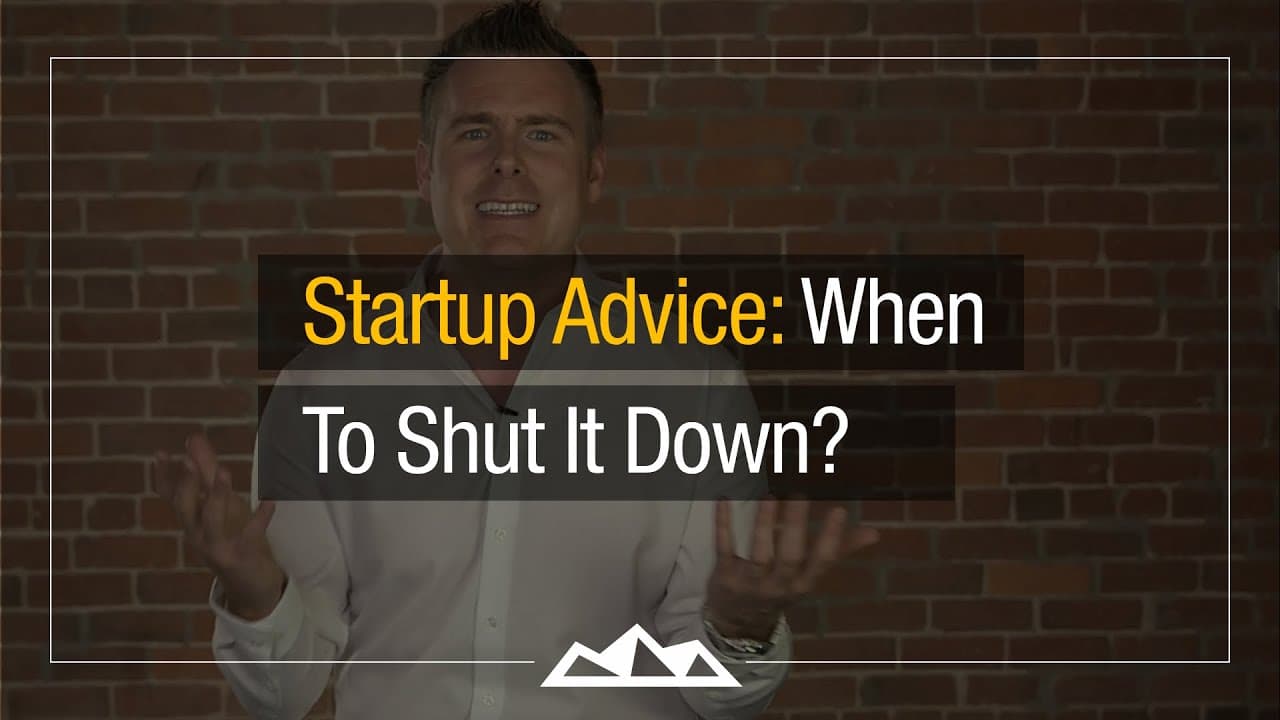
Startup Advice: When To Shut It Down? | Dan Martell
TL;DR
Evaluate passion, new ideas, and efforts before shutting down.
Transcript
- When to shut it down. I don't know if you've ever been in a position where you have a company or a start up or your project, and it's just not going the way you think it should go, and you want to shut it down. Last week I was in New York and I was talking to one of my good friends, and he'd been consulting, that's kind of what he does full time,... Read More
Key Insights
- Passion is crucial: If you're no longer passionate about your project, it might be time to shut it down.
- New ideas may be better: If a new idea seems more promising and aligns with your goals, consider pursuing it instead.
- Sunk cost fallacy: Don't let past investments prevent you from moving on from a failing project.
- Three tries rule: Give your project three earnest attempts before deciding to shut it down.
- Feedback and iteration: Use feedback from users to improve your project during the three attempts.
- Avoid persistence traps: Don't waste time on projects that aren't gaining traction despite significant effort.
- Learn from failures: Shutting down unsuccessful projects helps focus on those with potential for success.
- Look for synergy: Collaborate or join projects that align with your skills and show promise.
Install to Summarize YouTube Videos and Get Transcripts
Explore YouTube Video Summarizer or Get YouTube Transcript Extractor
Questions & Answers
Q: What is the first question to ask when considering shutting down a project?
The first question to ask is whether you are still passionate about the project. Passion is a critical factor because it drives motivation and perseverance through challenges. If the initial excitement has faded and you no longer find joy or interest in the project, it may be time to consider shutting it down.
Q: Why is the 'sunk cost fallacy' important in decision-making?
The sunk cost fallacy is important because it can lead individuals to continue investing in a failing project due to the time and resources already spent. Recognizing this fallacy helps entrepreneurs make rational decisions based on the project's current and future potential rather than past investments, allowing them to cut losses and focus on more promising opportunities.
Q: How does the 'three tries rule' apply to startups?
The 'three tries rule' suggests giving a project three earnest attempts to succeed. This involves launching, gathering feedback, and iterating based on insights. If the project doesn't show significant improvement or potential after these attempts, it may be wise to shut it down. This approach prevents prolonged investment in unsuccessful ventures and encourages learning and adaptation.
Q: What role does feedback play in the decision to continue or shut down a project?
Feedback is crucial in evaluating a project's viability. By collecting and analyzing user feedback, entrepreneurs can identify areas for improvement and make informed decisions. If feedback indicates persistent issues or lack of interest despite iterations, it may suggest that the project lacks potential, guiding the decision to shut it down and focus on more promising endeavors.
Q: Why is it important to avoid persistence traps in entrepreneurship?
Avoiding persistence traps is essential because they can lead entrepreneurs to continue investing time and resources into projects that show little promise. This persistence can result in wasted efforts and missed opportunities for more successful ventures. Recognizing when to let go allows entrepreneurs to redirect their focus and resources toward projects with greater potential for success.
Q: How can entrepreneurs benefit from shutting down unsuccessful projects?
Entrepreneurs benefit from shutting down unsuccessful projects by freeing up time and resources to focus on more promising opportunities. This process encourages learning from past mistakes and refining strategies for future endeavors. By letting go of failing projects, entrepreneurs can concentrate on ideas that align with their goals and have a higher likelihood of success.
Q: What advice does Dan Martell offer for those struggling to shut down a project?
Dan Martell advises entrepreneurs to evaluate their passion for the project, consider better opportunities, and adhere to the three tries rule. He emphasizes the importance of not falling into the sunk cost fallacy and encourages listening to feedback. Martell suggests aligning with projects that resonate with one's skills and goals, ultimately leading to a more fulfilling and successful entrepreneurial journey.
Q: How does collaboration play a role in deciding the fate of a project?
Collaboration can provide fresh perspectives and resources that may enhance a project's potential. If a project isn't gaining traction, joining forces with others who have complementary skills or aligning with successful ventures can offer new opportunities for growth. This synergy can breathe new life into a project or help entrepreneurs transition to more promising endeavors, leveraging collective strengths for success.
Summary & Key Takeaways
-
Dan Martell discusses the difficult decision of when to shut down a startup, emphasizing the importance of passion and better opportunities. He advises giving projects three earnest tries and avoiding the sunk cost fallacy.
-
Martell shares personal experiences of starting and shutting down multiple projects, highlighting the value of learning from failures and focusing on successful ventures. He suggests evaluating new ideas and market conditions.
-
The video encourages entrepreneurs to listen to feedback and avoid persistence traps, where they continue investing in failing projects. Martell promotes collaboration and aligning with promising opportunities for growth and success.
Read in Other Languages (beta)
Share This Summary 📚
Summarize YouTube Videos and Get Video Transcripts with 1-Click
Try YouTube Summary with ChatGPT & Claude or YouTube Transcript Generator
Explore More Summaries from Dan Martell 📚


Summarize YouTube Videos and Get Video Transcripts with 1-Click
Try YouTube Summary with ChatGPT & Claude or YouTube Transcript Generator