To solve old problems, study new species | Alejandro Sánchez Alvarado
TL;DR
Join me on a boat ride to explore the unknown and discover new species that challenge our understanding of life.
Transcript
Translator: Leslie Gauthier Reviewer: Camille Martínez For the past few years, I've been spending my summers in the marine biological laboratory in Woods Hole, Massachusetts. And there, what I've been doing is essentially renting a boat. What I would like to do is ask you to come on a boat ride with me tonight. So, we ride off from Eel Pond into Vi... Read More
Key Insights
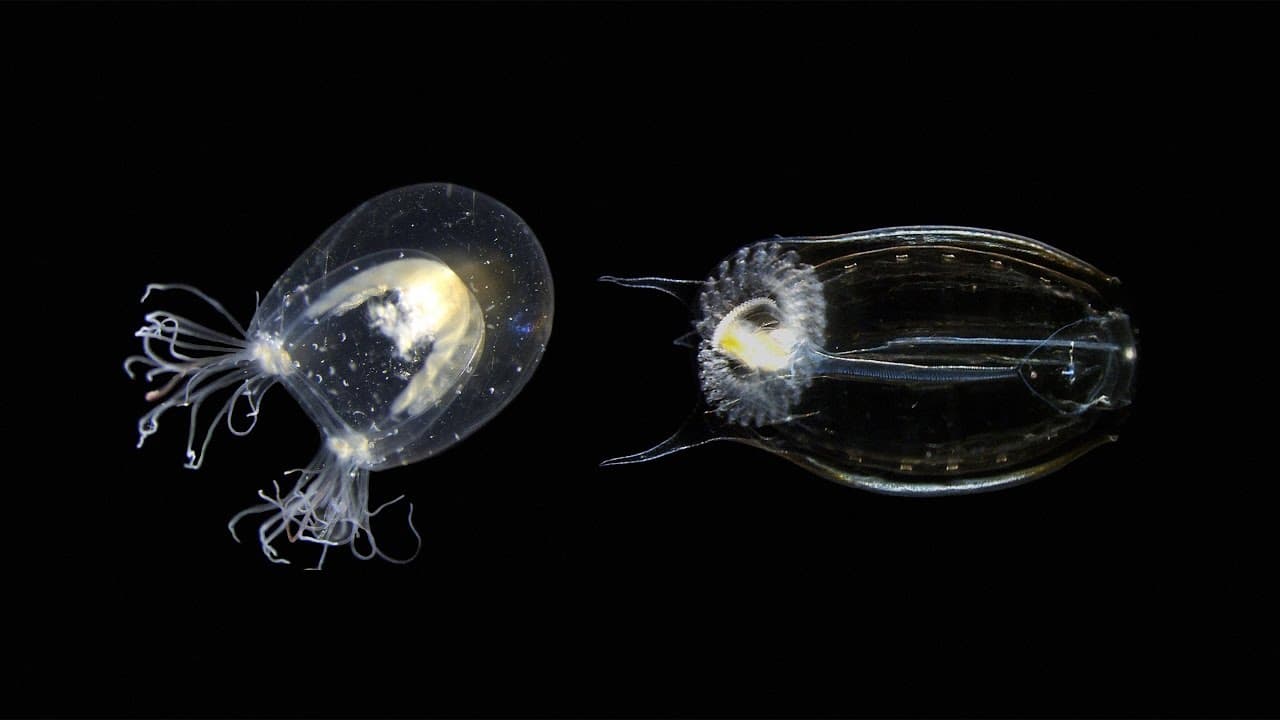
- 🛥️ Scientists at the marine biological laboratory in Woods Hole, Massachusetts use a boat and a drone to explore the Atlantic Ocean, discovering new and rarely seen organisms. Marine biology research is not just a fishing expedition but a journey of discovery.
- 🔬 Some scientists are more interested in exploring the unknown and discovering completely new species rather than studying what is already known. They crave the experience of being completely baffled by something new and value the ego satisfaction of being the first to discover.
- 🌊 95% of our oceans remain unexplored, highlighting how little we know about life on Earth. We are only measuring a narrow sliver of life and taking practical outcomes for granted. Our specialization and focus on a few select species restricts our ability to understand the depth and breadth of life.
- 🐟 Many new species are being added to the tree of life every week, showcasing the vast diversity and mysteries of life. Some species, like the flatworm Schmidtea mediterranea, possess remarkable regenerative abilities that still puzzle scientists after years of study.
- 🧪 The Nobel Prizes in biology have largely been awarded for research on just seven species, representing less than 0.001% of all species on Earth. Our specialization in studying these species may be hindering our progress and leading us astray from understanding the true nature of life.
- 🌿 Life on Earth is a history of rule breakers, from the evolution of multicellularity to land-dwelling organisms and creatures that can fly. These rule-breaking animals have contributed to our own existence, and studying them should involve breaking conventional research rules.
- 🔍 Scientists need to renew their spirit of exploration and study animals in their natural habitats rather than bringing them into laboratories. The focus should be on interrogating every new form of life and biological attribute using modern technological tools.
- 🌍 Science is not about knowledge, but rather about ignorance. It is our species' best chance to understand life itself. We need to embrace our role as the measurers of many things and strive to uncover the open secret of life.
Install to Summarize YouTube Videos and Get Transcripts
Explore YouTube Video Summarizer or Get YouTube Transcript Extractor
Questions & Answers
Q: What is the purpose of the speaker's boat rides in Woods Hole, Massachusetts?
The speaker's purpose for the boat rides in Woods Hole, Massachusetts is to explore the Atlantic Ocean and discover new and rarely seen organisms.
Q: What is one example of an organism that the speaker caught in their net?
One example of an organism that the speaker caught in their net is a jellyfish, which was found to contain another organism that may be an entirely new species.
Q: How are the animals the speaker studies related to humans?
The animals the speaker studies, such as the ascidian, are related to humans in terms of genomic ancestry. The speaker suggests that ascidians are one of the closest invertebrate species to humans.
Q: What does the speaker believe is restricting our ability to understand life?
The speaker believes that the emphasis on specialized research and practical outcomes is restricting our ability to fully interrogate and understand life. The focus on known species and numbers is limiting our exploration of the unknown aspects of life.
Q: What is the significance of the statistic that 95% of our oceans remain unexplored?
The statistic that 95% of our oceans remain unexplored highlights the vast amount of unknown information about life on Earth. It suggests that there is still much to uncover and understand about the diversity and behavior of organisms in the ocean.
Q: What is the speaker's perspective on the current focus of biological research?
The speaker believes that the current focus of biological research on a small number of species is impeding progress and potentially leading researchers astray. They argue that studying animals that break the rules and exploring new forms of life is necessary to deepen our understanding.
Summary & Key Takeaways
-
The speaker has been spending summers conducting research in the marine biological laboratory in Woods Hole, Massachusetts by renting a boat and exploring the Atlantic.
-
They emphasize the importance of discovering and understanding new species, highlighting organisms like jellyfish and ascidians that are closely related to humans.
-
The speaker argues that our current focus on studying what we already know restricts our ability to explore and understand the vast unknowns of life, particularly in the oceans where 95% remains unexplored.
Read in Other Languages (beta)
Share This Summary 📚
Summarize YouTube Videos and Get Video Transcripts with 1-Click
Try YouTube Summary with ChatGPT & Claude or YouTube Transcript Generator
Explore More Summaries from TED 📚





Summarize YouTube Videos and Get Video Transcripts with 1-Click
Try YouTube Summary with ChatGPT & Claude or YouTube Transcript Generator