How Did Liu Thai Ker Transform Singapore's Urban Planning?
TL;DR
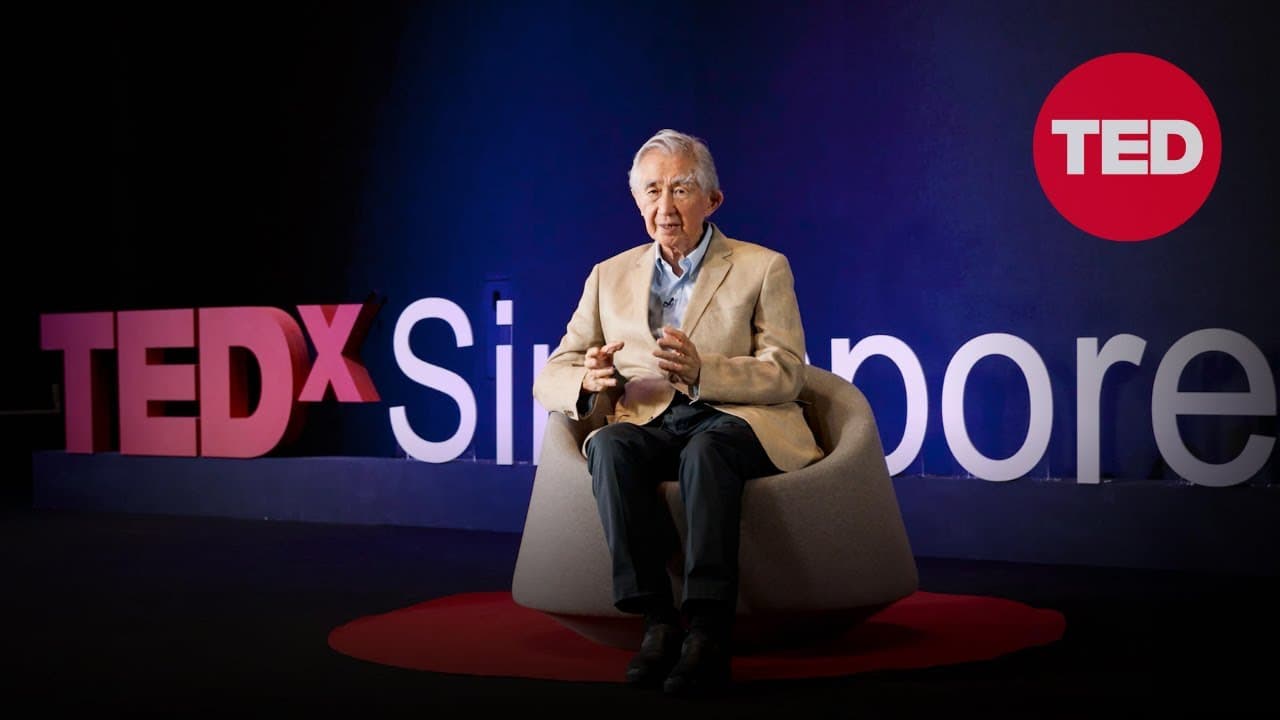
Liu Thai Ker transformed Singapore by focusing on sustainable urban planning that prioritized public housing, density management, and community needs. He emphasized planning for the long-term by understanding human needs and land characteristics, creating a unique, liveable city that harmonizes aesthetic beauty with functionality.
Transcript
Transcriber: A lot of people say, "Why didn't you continue with your father's career as a painter?" My answer to them is very simple: I’m also a painter. The only difference is that my father's painting is only a few square meters in size. My painting is a few thousand kilometers in size. That's the only difference. Singapore, when the British lef... Read More
Key Insights
- 🎨 The transformation of Singapore from squatter areas to public housing was a key factor in the city's success.
- 🏙️ Planning a city requires considering factors specific to the locality, such as climate, customs, and architectural heritage.
- 🏢 Density plays a role in city planning, with larger cities requiring higher density and smaller cities benefiting from lower density.
- ♟️ Creating a high-density city with a good environment can be achieved through a strategic placement of buildings and green spaces, following a chessboard-like pattern.
- 👦 Singapore was planned with a family-like structure, with divisions into regions, new towns, neighborhoods, and precincts, each with specific functions and amenities.
- 🔃 Cascading functions, facilities, and amenities in different city levels, such as commercial centers, hospitals, and schools, ensures accessibility for residents. ⏳ Long-term planning is essential for cities, as buildings and infrastructure are made to last, requiring a thorough understanding of human needs and the land.
- 🌳 Creating a city that is enjoyable to live in, with calmness, legibility, and a sense of community, should be the goal, avoiding the transformation into a theme park-like environment.
- 💡 Planning a city requires a balance between the humanistic consideration of people and land, the scientific understanding of the city as a machine, and the artistic appreciation of the land's unique qualities.
Install to Summarize YouTube Videos and Get Transcripts
Explore YouTube Video Summarizer or Get YouTube Transcript Extractor
Questions & Answers
Q: Why did the government of Singapore introduce public housing?
The government of Singapore introduced public housing to remove squatter areas and house everybody in affordable housing. This was a key factor in the transformation of Singapore into a sustainable city.
Q: How did Singapore get rid of all the squatters and house its population in public housing?
Singapore successfully got rid of all the squatters and housed its population in public housing within 25 years, between 1960 and 1985. They achieved this through the introduction of subsidized housing with affordable rental and selling prices.
Q: How does density play a role in city planning?
Density plays a significant role in city planning. Large cities require higher density to make the design more grand, while small cities have lower density to make the design more romantic. The right density for each city creates a unique environment that can be felt upon arrival.
Q: How did Singapore create a high-density city with a good environment?
Singapore integrated a high-density policy with the Western chessboard idea. By dispersing high-density buildings with lower-density developments like parks and schools, they were able to create a high-density city with a nice environment. This allowed for a variety of environments and made the city more enjoyable to live in.
Q: How did Singapore plan its city to cater to different needs and populations?
Singapore planned its city by dividing it into regions, new towns, neighborhoods, and precincts to cater to different needs and populations. Each region, new town, neighborhood, and precinct had its own distinct functions and facilities, such as hospitals, universities, schools, and shopping centers, making the city more organized and accessible for its residents.
Q: How can a city be planned to last a long time?
A city can be planned to last a long time by studying the basic human needs of the city and understanding the basic needs of the land. By carefully considering these factors and planning accordingly, a city can be designed to be sustainable and endure changing circumstances. This ensures that whatever is built will last for a long time.
Q: What are the three key elements to remember when planning a city?
When planning a city, it is important to have a humanist's heart, a scientist's head, and an artist's eyes. This means planning for people and land, designing the city as a precise machine for living, and also considering the aesthetic aspects that will compliment the land and create an enjoyable environment.
Summary & Key Takeaways
-
The speaker, a painter, explains that his father's paintings were small, while his own paintings are large in scale, symbolizing the transformation of Singapore.
-
The government of Singapore implemented a plan to remove squatter areas and provide affordable housing, leading to the complete elimination of squatters within 25 years.
-
The speaker emphasizes the importance of considering factors such as climate, customs, architectural heritage, and density when planning a city, and suggests dividing the city into regions, new towns, neighborhoods, and precincts to cater to different needs.
Read in Other Languages (beta)
Share This Summary 📚
Summarize YouTube Videos and Get Video Transcripts with 1-Click
Try YouTube Summary with ChatGPT & Claude or YouTube Transcript Generator
Explore More Summaries from TED 📚




Summarize YouTube Videos and Get Video Transcripts with 1-Click
Try YouTube Summary with ChatGPT & Claude or YouTube Transcript Generator