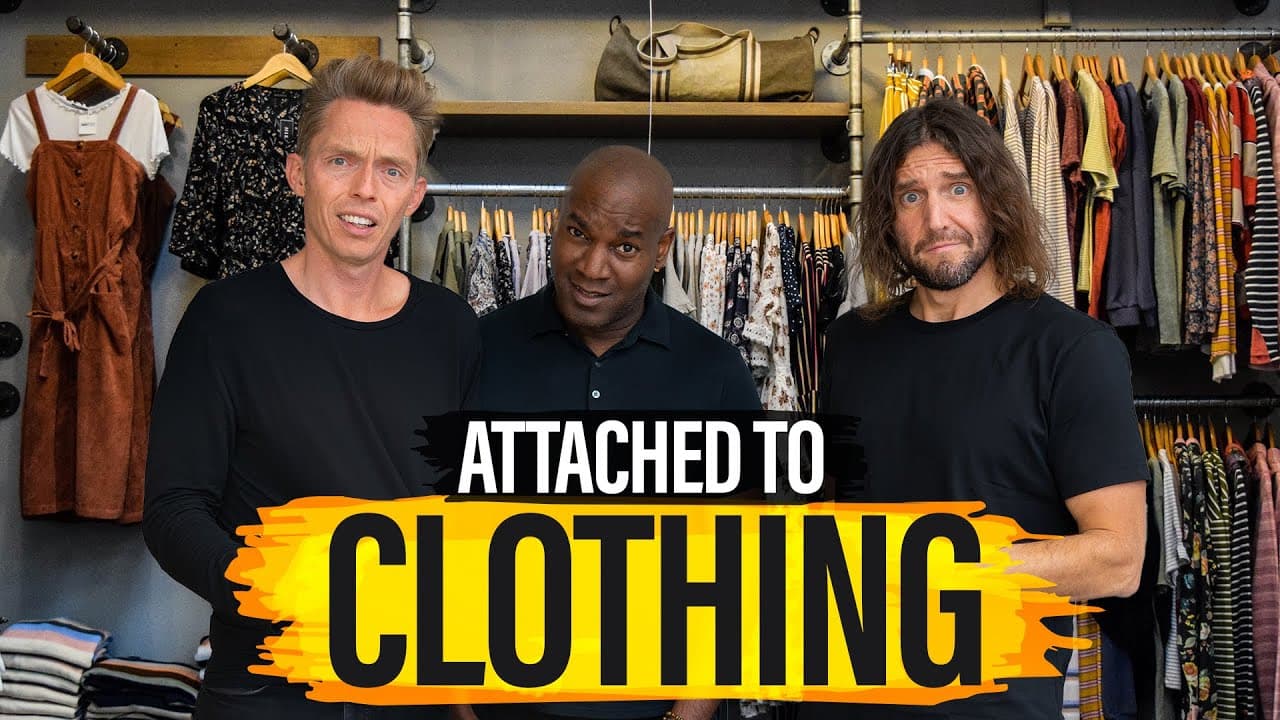
Ep. 389 | Attached to Clothing
TL;DR
The Minimalists discuss managing clothing clutter and emotional attachment.
Transcript
hello everybody Welcome to the minimalist podcast where we discuss what it means to live a meaningful life with les my name is Joshua fields mbour and I'm Ryan nickademus and together we are the minimalists we're here with Mal abama hi everybody TK Coleman hey hey hey we got the rest of our team here as well and coming up today on this free public ... Read More
Key Insights
- Emotional attachment to clothing can lead to clutter, impacting mental and emotional well-being. Simplifying the wardrobe can alleviate stress.
- The average person throws away 81 pounds of clothing annually, much of which could be reused or recycled, highlighting the need for mindful consumption.
- The 'duplicates rule' suggests that owning multiple similar items can still be clutter, even if each piece is worn regularly.
- Minimalism encourages setting boundaries with possessions, such as using the 'spontaneous combustion rule' to determine an item's true value.
- Aspirational clothing can serve as motivation for personal goals, but they should not hinder personal freedom or well-being.
- The '9090 rule' helps declutter by questioning if an item has been used in the past 90 days or will be used in the next 90.
- Project 333 is a minimalist approach to fashion, encouraging a limited wardrobe of 33 items for three months to identify favorite pieces.
- Preferences in clothing, like color choices, should align with personal values and not be compromised for others’ expectations.
Install to Summarize YouTube Videos and Get Transcripts
Explore YouTube Video Summarizer or Get YouTube Transcript Extractor
Questions & Answers
Q: How do we ensure we have only the clothing we actually need?
To ensure you only have the clothing you need, start by evaluating the utility and emotional attachment to each item. Use minimalist rules like the '9090 rule' to assess whether you've worn an item in the last 90 days or plan to in the next 90. Consider whether duplicates are necessary and apply the 'spontaneous combustion rule' to determine if you'd miss an item if it disappeared. Simplifying your wardrobe can lead to reduced stress and a more meaningful life.
Q: What are your takes on clothing styles?
Clothing styles should align with personal values and should not be dictated by external expectations. While aspirational clothing can motivate personal growth, it should not imprison you or compromise your freedom. The key is to own your style, as confidence in wearing an outfit often outweighs the outfit itself. Minimalism encourages choosing clothing that truly resonates with you, even if it means having fewer, but more meaningful, pieces.
Q: How do I appropriately appreciate the red dress my boyfriend bought me when I prefer all black clothing?
Appreciating a gift like a red dress, when your preference is for black clothing, involves open communication with your partner. Express gratitude for the gift while explaining your personal style preferences. It's important to maintain your authenticity and not feel pressured to change your style for someone else. If the dress doesn't align with your preferences, it's okay to discuss this with your partner and find a compromise that respects both your tastes.
Q: When will I finally feel I’ve minimized all I can?
Feeling completely minimized is an ongoing process rather than a destination. As life changes, so do your needs and preferences. Minimalism is about continually reassessing your belongings and letting go of what no longer serves you. Embrace the journey of minimalism without the expectation of reaching a perfect state. Instead, focus on the peace and clarity that comes with having a life filled with only what adds value.
Q: What can I do if I regret letting something go?
If you regret letting something go, reflect on why you miss it and whether it added significant value to your life. Consider if the regret stems from emotional attachment or practical use. If it's the latter, you might replace it with something similar in the future. However, view this as a learning opportunity to refine your decision-making process regarding possessions. Minimalism is about intentionality and understanding what truly enhances your life.
Q: How can I be a minimalist and have a hobby that involves crafting?
Balancing minimalism with a crafting hobby involves mindful consumption and organization. Keep only the materials you regularly use and find joy in. Consider donating or selling excess supplies. Implement storage solutions that keep your crafting area organized and clutter-free. Minimalism doesn't mean giving up hobbies but rather engaging with them intentionally, ensuring they enhance your life without overwhelming your space.
Q: How can minimalism help me create work-life balance while still working from home?
Minimalism can enhance work-life balance by encouraging a clutter-free, organized workspace that promotes focus and productivity. Establish clear boundaries between work and personal time, and keep your work area separate if possible. Prioritize tasks and eliminate distractions, both physical and digital. By simplifying your environment and routines, you can reduce stress and increase efficiency, allowing more quality time for personal activities and relationships.
Q: How do listener comments and minimalism tips contribute to the podcast?
Listener comments and minimalism tips enrich the podcast by providing diverse perspectives and practical advice. They create a sense of community and shared experience among listeners, encouraging engagement and learning. These contributions often introduce new ideas and solutions, enhancing the overall discussion on minimalism. By incorporating audience input, the podcast becomes more interactive and relevant to its listeners’ needs and interests.
Summary & Key Takeaways
-
The Minimalists discuss the emotional and psychological impact of having too many clothes and provide strategies to declutter wardrobes. They emphasize the importance of setting boundaries and question the necessity of owning multiple similar items.
-
Listeners are encouraged to adopt minimalist principles like the 'duplicates rule' and 'spontaneous combustion rule' to simplify their wardrobe. The '9090 rule' and Project 333 are highlighted as effective methods for reducing clothing clutter.
-
The episode also touches on the idea that personal preferences, such as clothing color choices, should not be compromised for others. Emotional attachments to clothing can create clutter, and simplifying can lead to a more meaningful life.
Read in Other Languages (beta)
Share This Summary 📚
Summarize YouTube Videos and Get Video Transcripts with 1-Click
Try YouTube Summary with ChatGPT & Claude or YouTube Transcript Generator
Explore More Summaries from The Minimalists Podcast 📚





Summarize YouTube Videos and Get Video Transcripts with 1-Click
Try YouTube Summary with ChatGPT & Claude or YouTube Transcript Generator