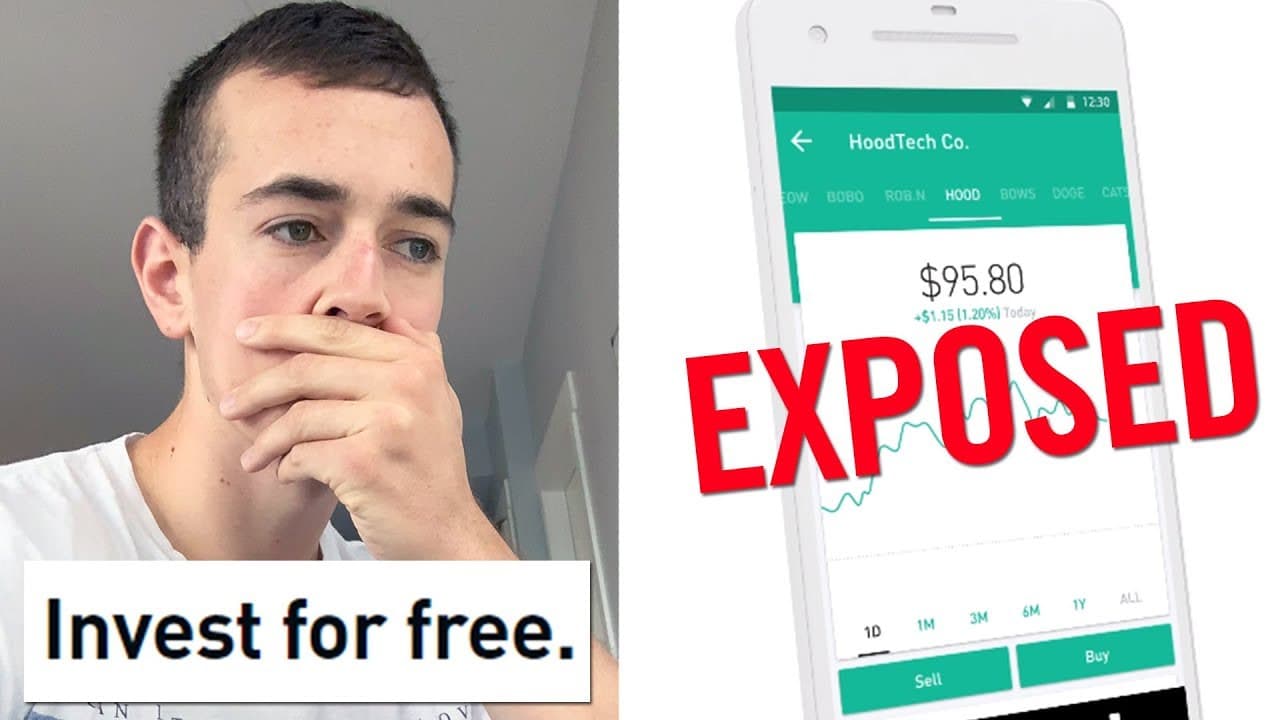
How Robinhood Really Makes Money
TL;DR
Robinhood makes money through interest on uninvested cash and margin accounts, paid subscriptions, share lending, directing order flow to market makers, and venture capital funding. Its commission-free model also cuts expenses through limited customer service, digital statements, and no retail locations. Robinhood launched this model in April 2013 with zero-dollar commissions and no minimum balance; read on to understand each revenue source and how free-stock promotions work.
Transcript
- So in this video today I'm going to be answering one of the most common questions that I get every single day, either here on my YouTube channel or over on my investing blog. And that is the question of how do these free trading apps out there actually make any money? And the thought process behind this makes a lot of sense because a lot of us we... Read More
Key Insights
- 🥶 Free trading apps have disrupted the brokerage industry by offering commission-free trades and zero minimum account balances.
- 🤑 They make money through strategies such as interest on uninvested cash, charging interest on margin accounts, paid subscriptions, lending shares to short sellers, directing order flow, and venture capital funding.
- 😀 These apps have reduced costs by limiting customer service, adopting digital statements, and eliminating retail locations.
- 👻 Market makers play a crucial role in providing liquidity, allowing investors to buy and sell stocks easily.
- 😀 Free trading apps are regulated and insured by SIPC, ensuring a secure and safe trading environment.
- 😀 Venture capital funding supports these apps' growth and expansion, enabling them to offer free stocks and invest in advertising.
- 😀 Affiliate marketing is another revenue stream for free trading apps, allowing them to earn commissions through referral links.
Install to Summarize YouTube Videos and Get Transcripts
Explore YouTube Video Summarizer or Get YouTube Transcript Extractor
Questions & Answers
Q: How does Robinhood make money without charging trading commissions?
Robinhood earns money from interest on uninvested cash and margin accounts, paid subscriptions, lending shares to short sellers, and directing order flow to market makers. Venture capital funding also supports its growth and customer-acquisition spending.
Q: How do free trading apps reduce their operating costs?
Free trading apps reduce expenses by limiting customer service, using digital statements, and operating without retail locations. These savings help them offer commission-free trades and zero-dollar minimum account balances.
Q: What is payment for order flow on free trading apps?
Free trading apps can earn money by directing customers' orders to market makers. Market makers provide liquidity that helps investors buy and sell stocks.
Q: How do free trading apps earn money from uninvested cash and margin accounts?
The apps can earn interest from cash that customers leave uninvested in brokerage accounts. They also charge interest when customers use margin accounts.
Q: Why do free trading apps lend customers' shares to short sellers?
Share lending is one of the revenue streams used by free trading apps. They lend shares to short sellers and earn money from that activity.
Q: How did Robinhood disrupt the brokerage industry?
Robinhood launched in April 2013 with zero-dollar commissions, a zero-dollar minimum account balance, and a referral program that gave both participants a free stock. Previously, online discount brokers commonly charged around $5 to $10 per trade and often required minimum balances of $500 or more.
Q: How did Webull's two-free-stock offer work?
Webull offered one free stock for opening an account and a second after funding the account with $100 or more. The offer required an affiliate link; downloading Webull directly from the app store did not qualify for the free stocks described.
Q: Are commission-free trading apps legitimate or scams?
The page describes Robinhood, M1 Finance, and Webull as regulated trading apps and says they are insured by SIPC. Their free trades are supported by multiple revenue streams and lower operating costs rather than by trading commissions alone.
Summary & Key Takeaways
-
Free trading apps like Robinhood, M1 Finance, and Webull offer commission-free trades and zero minimum account balance.
-
These apps make money through uninvested cash held in brokerage accounts, interest earned from margin accounts, paid subscriptions for additional features, lending shares to short sellers, directing order flow to market makers, and venture capital funding.
-
They have cut costs through limited customer service, digital statements, and the absence of retail locations.
Read in Other Languages (beta)
Share This Summary 📚
Summarize YouTube Videos and Get Video Transcripts with 1-Click
Try YouTube Summary with ChatGPT & Claude or YouTube Transcript Generator
Explore More Summaries from Ryan Scribner 📚


Summarize YouTube Videos and Get Video Transcripts with 1-Click
Try YouTube Summary with ChatGPT & Claude or YouTube Transcript Generator