Do We Really Need Taxes for Society to Function?
TL;DR
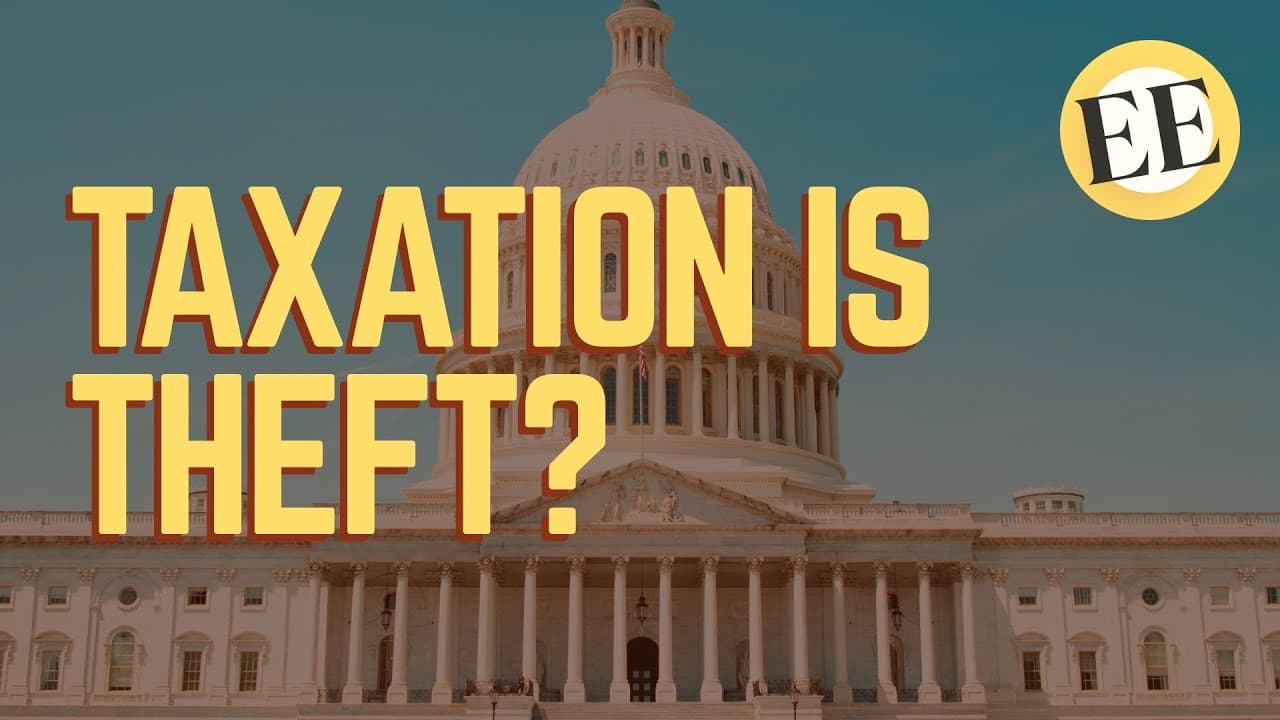
Taxes are necessary to fund essential services like roads, schools, and emergency services, which uphold societal stability. While some nations operate without income taxes, they still rely on alternative taxes to generate revenue. Concepts like modern monetary theory and anarcho-capitalism explore potential alternatives, but the challenges of providing public goods and maintaining economic equilibrium underscore the need for some form of taxation.
Transcript
In this world, nothing is certain except death and taxes" Neither one is a particularly pleasant topic, but taxes are arguably the lesser evil, so let’s focus on them! Taxes are an unfortunate reality for most people living and working in the modern world, we pay them every year, we complain about them, and then we try to forget about them until ne... Read More
Key Insights
- Taxes are crucial for funding essential services such as roads, schools, and emergency services, which are foundational to modern society.
- Countries without income taxes, like Monaco, still rely on alternative forms of taxation, such as sales taxes, to generate revenue.
- Natural resource-rich countries can substitute tax revenue with resource revenue, but this is akin to indirect taxation.
- Modern monetary theory suggests governments can print money to fund expenditures, but this risks inflation without maintaining currency demand.
- Anarcho-capitalism proposes a society without government influence, relying on private enterprises for services, but faces challenges with public goods.
- Private sector solutions to government services, such as insurance for social security, present alternatives but come with limitations.
- Indiscriminate goods like street lamps and military protection pose challenges in a profit-driven society due to their non-excludable nature.
- Governments need taxes to provide services that private businesses may not supply, highlighting the importance of balanced economic systems.
Install to Summarize YouTube Videos and Get Transcripts
Explore YouTube Video Summarizer or Get YouTube Transcript Extractor
Questions & Answers
Q: Why are taxes considered essential in modern economies?
Taxes are essential because they fund critical infrastructure and services that form the backbone of modern societies. These include roads, schools, emergency services, and social welfare programs. Without taxes, governments would struggle to provide these services, potentially leading to societal instability and economic decline.
Q: How do countries without income taxes generate revenue?
Countries without income taxes, like Monaco, generate revenue through alternative taxation methods such as sales taxes or value-added taxes. These taxes allow governments to collect revenue from economic activities, including tourism, without relying on taxing individual incomes, thereby attracting residents and businesses seeking tax advantages.
Q: What is modern monetary theory and its implications for taxation?
Modern monetary theory posits that governments can create money to fund expenditures, reducing reliance on taxation. However, this approach risks inflation if not managed properly. Taxes are still necessary to maintain demand for currency and prevent hyperinflation, ensuring economic stability and sustainable government funding.
Q: What challenges does anarcho-capitalism face in providing public goods?
Anarcho-capitalism, which eliminates government influence, faces challenges in providing public goods like street lighting and military protection. These goods are non-excludable and non-rivalrous, making it difficult to charge for their use. Without a profit motive, private enterprises may not supply these essential services, leading to gaps in societal infrastructure.
Q: How do natural resource-rich countries substitute tax revenue?
Natural resource-rich countries substitute tax revenue by leveraging resource sales, such as oil, to fund government expenditures. While this reduces the need for direct taxation, it effectively acts as indirect taxation by utilizing national resources that belong to the populace, raising ethical and economic considerations.
Q: What role do private enterprises play in replacing government services?
Private enterprises can replace government services by offering alternatives like insurance for social security. These market-driven solutions allow individuals to tailor coverage to their needs. However, they may not address all societal needs, especially for public goods, highlighting the need for a balanced approach between government and private sector roles.
Q: Why is balancing government and private sector roles important?
Balancing government and private sector roles is crucial for economic efficiency and societal welfare. Governments provide services that may not be profitable for private businesses, while the private sector can drive innovation and efficiency. Finding the right balance ensures that essential services are delivered effectively, supporting economic growth and stability.
Q: What are the limitations of relying solely on private sector solutions?
Relying solely on private sector solutions can lead to under-provision of public goods and services that are not profitable. Issues like pollution control, public safety, and infrastructure may be neglected without government intervention. A mixed approach, leveraging both government and private sector strengths, is often necessary to address diverse societal needs effectively.
Summary & Key Takeaways
-
Taxes are vital for funding public infrastructure and services, ensuring societal stability and growth. While some countries operate without income taxes, they rely on alternative taxation methods. The discussion explores economic theories and alternatives to taxation, highlighting the complexities and necessity of tax systems.
-
Natural resource revenue can substitute tax income in some countries, but it essentially acts as indirect taxation. Modern monetary theory suggests printing money as an alternative, but it risks inflation. Anarcho-capitalism offers a government-free society but struggles with providing public goods.
-
Balancing government and private sector roles is crucial for economic efficiency. Taxes fund services that may not be profitable for private enterprises to provide. The debate continues on the optimal level of taxation and government involvement in economies to ensure societal welfare.
Read in Other Languages (beta)
Share This Summary 📚
Summarize YouTube Videos and Get Video Transcripts with 1-Click
Try YouTube Summary with ChatGPT & Claude or YouTube Transcript Generator
Explore More Summaries from Economics Explained 📚

Summarize YouTube Videos and Get Video Transcripts with 1-Click
Try YouTube Summary with ChatGPT & Claude or YouTube Transcript Generator