How Are the AI Data Wars Affecting Businesses?
TL;DR
The ongoing AI data wars are reshaping business strategies as companies like Twitter and Reddit restrict data access, making data a new form of currency. Proprietary data sources are monetizing their content, while AI tools capitalize on publicly available data, leading to rapid disruption in industries such as finance and legal. Businesses must adapt their data strategies to navigate these changes effectively.
Transcript
(upbeat music) - Hey hey. Welcome to another episode of "Marketing Against the Grain," your show for marketing minded people everywhere. I'm your co-host, Kipp Bodnar, CMO at HubSpot, joined always by my co-host Kieran Flanagan, who's the CMO over at Zapier. And we kinda have a WTF episode today. The AI data wars are upon us. Twitter, Reddit, Stack... Read More
Key Insights
- The AI data wars are intensifying as companies like Twitter, Reddit, and Stack Overflow restrict data access, impacting businesses reliant on third-party data.
- Data is now a crucial asset, akin to gold, in the AI era, influencing business operations and growth strategies significantly.
- Proprietary data sources are locking down data to monetize it, while public data sources are rapidly being leveraged by AI tools, disrupting traditional industries.
- Data aggregators and middleware companies face existential threats as AI models disintermediate their roles by providing direct access to information.
- Publicly available data markets, such as legal and financial sectors, are experiencing rapid AI-driven disruption, with new tools like Harvey.ai and FinChat.io emerging.
- Geopolitical and regulatory challenges are arising as countries like Russia and China develop their own AI models, potentially fragmenting global AI access.
- AI's integration into various sectors is forcing a reevaluation of existing laws and regulations, with data privacy and accessibility at the forefront.
- Companies must adapt quickly to the changing data landscape by revising their data strategies to remain competitive in the AI-driven market.
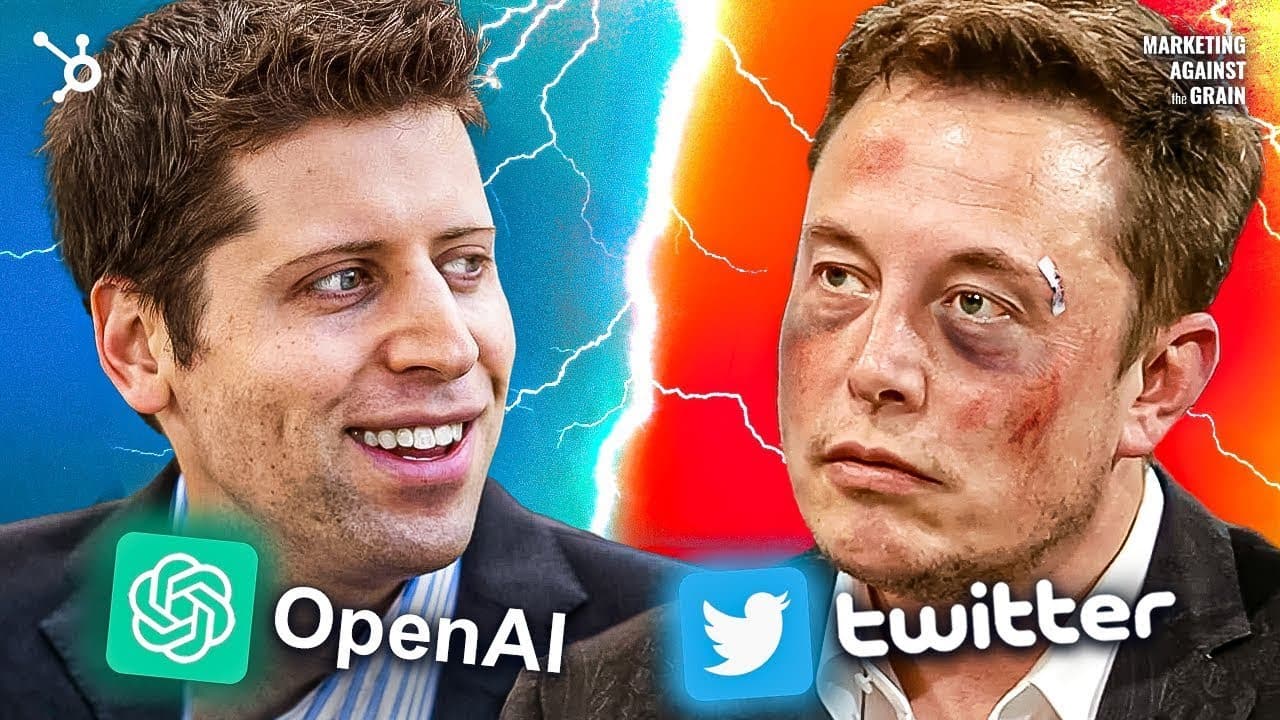
- More videos with Sam Altman / Elon Musk:
Install to Summarize YouTube Videos and Get Transcripts
Explore YouTube Video Summarizer or Get YouTube Transcript Extractor
Questions & Answers
Q: What are the AI data wars about?
The AI data wars refer to the ongoing battle over data access and control as companies like Twitter, Reddit, and Stack Overflow restrict data access to monetize their proprietary data. This shift impacts businesses that rely on third-party data for operations and growth.
Q: Why is data considered the gold of the internet in the AI era?
Data is considered the gold of the internet in the AI era because it is a crucial asset that fuels AI models, influencing business operations and growth strategies. As AI becomes more integrated into various sectors, the value and importance of data continue to rise.
Q: How are publicly available data markets being disrupted by AI?
Publicly available data markets, such as legal and financial sectors, are being rapidly disrupted by AI tools that leverage this data to provide advanced services. Tools like Harvey.ai and FinChat.io utilize public data to offer specialized AI-driven solutions, challenging traditional industry models.
Q: What challenges do data aggregators face in the AI data wars?
Data aggregators face existential threats in the AI data wars as AI models disintermediate their roles by providing direct access to information. As proprietary data sources lock down data and monetize it, aggregators must adapt to survive in the changing landscape.
Q: How is the geopolitical landscape affecting AI development?
The geopolitical landscape is affecting AI development as countries like Russia and China create their own AI models, potentially fragmenting global AI access. These developments raise concerns about data privacy, accessibility, and the regulatory environment surrounding AI technology.
Q: What impact does AI have on existing laws and regulations?
AI's integration into various sectors is forcing a reevaluation of existing laws and regulations, particularly concerning data privacy and accessibility. As AI models grow more sophisticated, governments and industries must adapt their frameworks to accommodate these technological advancements.
Q: How should companies adapt to the changing data landscape?
Companies should adapt to the changing data landscape by revising their data strategies to remain competitive in the AI-driven market. This includes understanding the value of proprietary data, leveraging AI tools for publicly available data, and navigating the regulatory challenges posed by AI development.
Q: What role does AI play in automation and productivity?
AI plays a crucial role in automation and productivity by serving as a bridge to the next level of technological advancement. Through AI, businesses can unlock new levels of efficiency and innovation, transforming industries and reshaping economic dynamics on a global scale.
Summary & Key Takeaways
-
The podcast discusses the ongoing AI data wars, where companies are restricting data access, impacting businesses relying on third-party data. Proprietary data sources are monetizing their data, while public data sources are being rapidly leveraged by AI tools, causing industry disruptions.
-
Data aggregators face challenges as AI models disintermediate their roles, threatening their business models. Publicly available data markets, such as legal and financial sectors, are experiencing rapid AI-driven disruption, with new tools emerging to capitalize on this data.
-
Geopolitical and regulatory challenges arise as countries develop their own AI models, potentially fragmenting global AI access. Companies must adapt quickly to the changing data landscape by revising their data strategies to remain competitive in the AI-driven market.
Read in Other Languages (beta)
Share This Summary 📚
Summarize YouTube Videos and Get Video Transcripts with 1-Click
Try YouTube Summary with ChatGPT & Claude or YouTube Transcript Generator
Explore More Summaries from Marketing Against the Grain 📚



Summarize YouTube Videos and Get Video Transcripts with 1-Click
Try YouTube Summary with ChatGPT & Claude or YouTube Transcript Generator