What Are Stem Cells and Why Are They Important for Medicine?
TL;DR
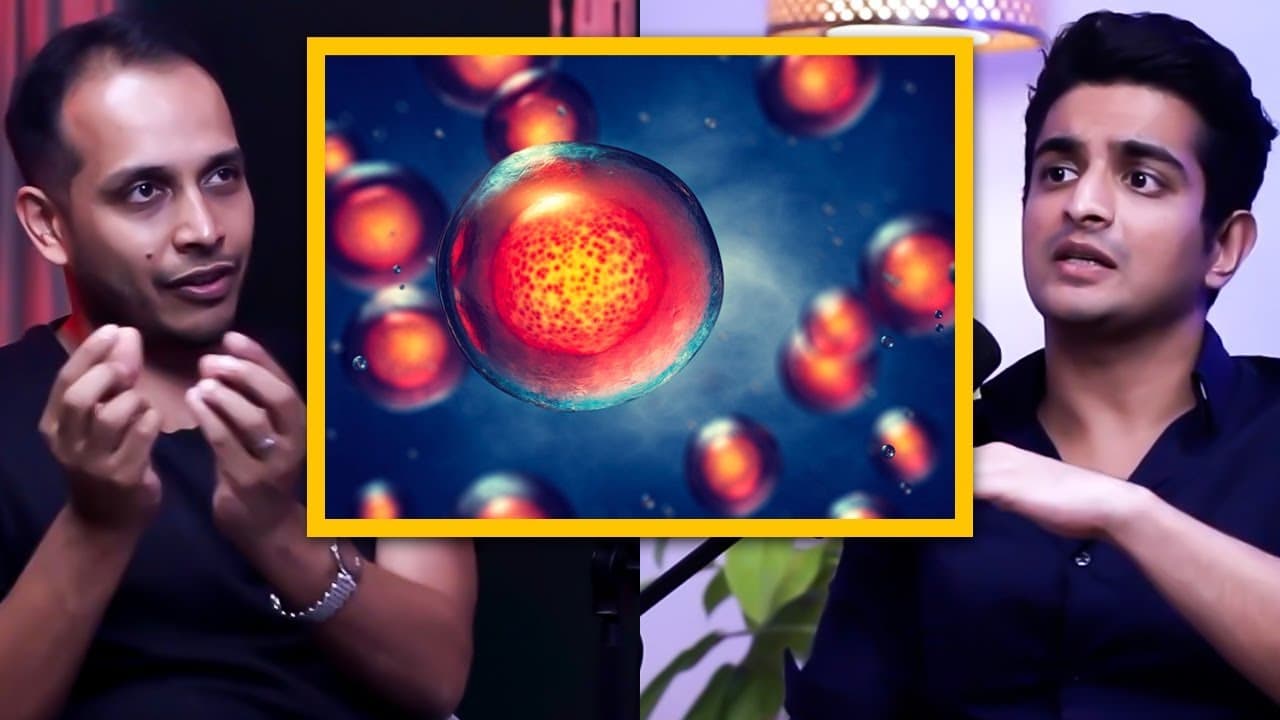
Stem cells are undifferentiated cells that can develop into various types of specialized cells, making them crucial for medical advancements such as organ regeneration and cancer treatment. They exist in both adults and umbilical cords, with research aiming to grow organs in labs and harness their potential for therapeutic applications.
Transcript
some of the best minds in the world bringing you some of the best knowledge on trs clips um let's talk about something that's going on right now while we're talking about uh bio neck would you call stem cells as biotech and what are stem cells stem cells are bio uh they are not they're more bio than tech so stem cells are cells in your body that ha... Read More
Key Insights
- 💊 Stem cells can turn into various cell types, making them vital for regenerative medicine and treating diverse health conditions.
- 🅰️ Adult humans retain stem cells that are essential for healing and can produce different types of blood cells and neurons.
- 💗 Research is increasingly exploring lab-grown organs from stem cells, potentially addressing shortages in transplantable organs.
- 🌥️ Recent cancer treatment breakthroughs involving stem cells show promise, but larger studies are needed for validation.
- 🥳 Neurogenesis indicates that the human brain can generate new neurons, challenging the belief that we only have a fixed number from birth.
- 👻 Advanced MRI imaging technologies allow non-invasive observation of brain activity and structure, greatly enhancing research capabilities.
- 🧠 As imaging techniques improve, our relationship with understanding the brain is evolving, promising deeper insights into its complexities.
Install to Summarize YouTube Videos and Get Transcripts
Explore YouTube Video Summarizer or Get YouTube Transcript Extractor
Questions & Answers
Q: What are stem cells, and why are they significant?
Stem cells are unique cells that lack specific differentiation and hold the capacity to transform into various cell types critical for developing organs and tissues. Their significance lies in their potential to treat diseases, repair damaged tissues, and even grow organs in laboratories, thus addressing numerous medical challenges.
Q: How do stem cells exist in adult bodies?
Contrary to the belief that stem cells only exist in embryos, adults also possess stem cells, particularly in bone marrow and certain brain regions. These cells remain undifferentiated, enabling ongoing tissue regeneration and offering fresh avenues for therapies, showcasing the body's innate capability for healing.
Q: What recent advancements have been made in stem cell research?
Recent advancements include efforts to grow organs from stem cells in vitro, which could alleviate organ shortage issues for transplantation. Additionally, promising clinical trials are being conducted for cancer treatments utilizing stem cells, indicating that this field is rapidly evolving with potential life-saving implications.
Q: How does exercise influence brain cell growth?
Research indicates that exercise plays a crucial role in neurogenesis—the process of forming new neurons in the brain. Engaging in physical activity not only boosts overall brain health but may also enhance cognitive functions by promoting the growth of new neurons, highlighting the brain's remarkable adaptability.
Q: What imaging techniques are changing brain research?
Advanced imaging techniques, particularly high-strength MRI like the seven-tesla MRI, are revolutionizing brain research. They allow scientists to visualize brain structures and even individual neurons non-invasively. This innovation is opening new frontiers in understanding brain functionality and could vastly improve our knowledge of neurological conditions.
Q: Why is studying animal brains relevant to human brain research?
Much of our understanding of human brain function is derived from studies conducted on animal models, including primates. While these studies provide crucial insights, they also raise questions about their applicability to humans, prompting researchers to seek more direct methodologies to understand human-specific brain functionalities.
Summary & Key Takeaways
-
Stem cells are undifferentiated cells in the body capable of becoming any cell type, crucial for medical advancements such as organ regeneration.
-
Both adult bodies and umbilical cords contain stem cells, with research focusing on growing these cells in labs for organ transplantation.
-
Techniques like MRI are evolving, allowing researchers to study brain cells in greater detail, potentially revolutionizing our understanding of neurogenesis and brain health.
Read in Other Languages (beta)
Share This Summary 📚
Summarize YouTube Videos and Get Video Transcripts with 1-Click
Try YouTube Summary with ChatGPT & Claude or YouTube Transcript Generator
Explore More Summaries from TRS Clips 📚





Summarize YouTube Videos and Get Video Transcripts with 1-Click
Try YouTube Summary with ChatGPT & Claude or YouTube Transcript Generator