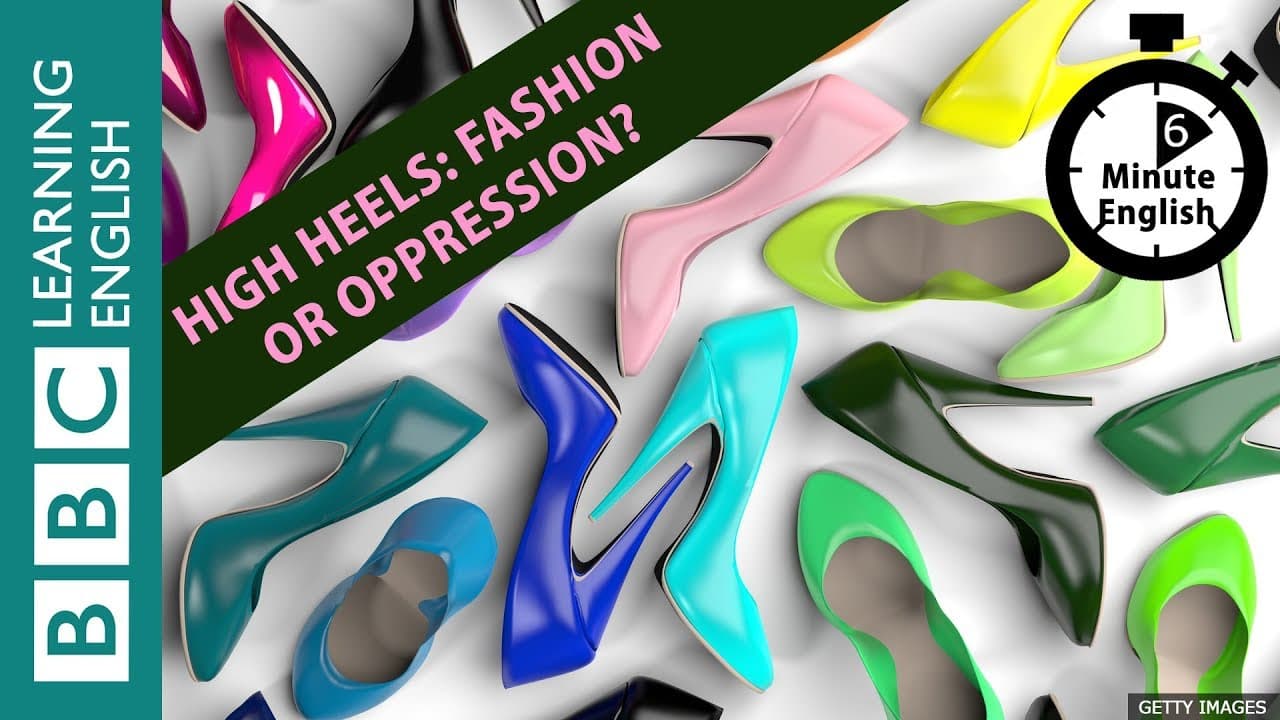
High heels: fashion or oppression? 6 Minute English
TL;DR
Discussing if high heels are fashion or oppression.
Transcript
Neil: Hello. Welcome to 6 Minute English, I'm Neil. And joining me it's Rob. Rob: Hello. Neil: Today, we'll be discussing whether wearing high heeled shoes is a fashion statement or a sign of oppression - and by that I mean something you have to wear because someone has told you to. Rob: Now Neil, whatever style of shoe you choose to wear, it's goo... Read More
Key Insights
- High heels are often seen as a fashion statement but can also be perceived as a form of oppression when women feel obliged to wear them.
- Despite the potential for muscle and skeletal damage, high heels are worn for their association with professionalism and glamour.
- Tim Edwards describes high heels as having a transformative quality, changing a woman's experience by altering her height and balance.
- High heels are considered magical or otherworldly, elevating the wearer and enhancing their sense of power and importance.
- The act of wearing high heels can be seen as either empowerment or subordination, depending on the context and whether it is a choice or obligation.
- Men's footwear lacks an equivalent style that defines them, and flamboyant shoes for men can lead to judgments about their sexuality or work ethic.
- The societal perception of men's shoes reflects old-fashioned views, where deviation from the norm is met with suspicion.
- The discussion highlights the cultural differences in footwear and the implications of fashion choices on gender identity and societal norms.
Install to Summarize YouTube Videos and Get Transcripts
Explore YouTube Video Summarizer or Get YouTube Transcript Extractor
Questions & Answers
Q: What are the potential health risks of wearing high heels?
Wearing high heels can lead to damage to the muscles and skeleton due to the unnatural posture they create. High heels alter the natural alignment of the body, causing strain on the lower back, knees, and feet. Prolonged use can result in long-term health issues such as chronic foot pain, bunions, and even arthritis.
Q: How do high heels affect a woman's sense of empowerment?
High heels can enhance a woman's sense of empowerment by increasing her height and altering her posture, which can boost confidence and presence. This transformative effect is often associated with feeling more powerful and important, as the added height can change how a woman perceives herself and how she is perceived by others.
Q: Why might wearing high heels be considered an act of subordination?
Wearing high heels can be seen as an act of subordination if women feel compelled to wear them due to societal or workplace expectations. This obligation can diminish a woman's authority or power, as it suggests compliance with external pressures rather than personal choice. It highlights the tension between fashion and autonomy.
Q: What is the societal perception of men wearing flamboyant shoes?
Men wearing flamboyant shoes may be viewed with suspicion, as such footwear deviates from traditional norms of black, brown, or flat shoes. This can lead to judgments about a man's sexuality, work ethic, and moral standards, reflecting outdated societal attitudes towards masculinity and fashion.
Q: How does Tim Edwards describe the effect of high heels on women?
Tim Edwards describes high heels as having a magical and transformative effect on women. They not only alter a woman's physical appearance by increasing her height but also change her experience and perception. This transformation can be empowering or subordinating, depending on whether the heels are worn by choice or compulsion.
Q: What cultural differences exist in footwear between men and women?
Cultural differences in footwear are evident in the lack of a defining style for men's shoes compared to high heels for women. While high heels are associated with glamour and empowerment for women, men's footwear is typically more conservative, and deviations from this norm can lead to social judgments and stereotypes.
Q: Why are high heels considered otherworldly?
High heels are considered otherworldly because they transform the wearer's appearance and experience, elevating them physically and metaphorically. This transformation is often described as magical, creating an allure that transcends the ordinary, and is associated with an imaginary or idealized version of oneself.
Q: What is the significance of discussing high heels in the context of gender identity?
Discussing high heels in the context of gender identity highlights how fashion choices can reflect and reinforce societal norms and expectations. High heels serve as a symbol of femininity and empowerment, yet also of subordination when worn under obligation. This duality underscores the complex relationship between fashion, identity, and power dynamics.
Summary & Key Takeaways
-
The discussion explores the dual nature of high heels as both a fashion statement and a potential form of oppression, depending on whether they are worn by choice or compulsion. High heels are associated with glamour and professionalism, despite their potential health risks.
-
Tim Edwards highlights the transformative and magical qualities of high heels, which can alter a woman's height and balance, providing a sense of empowerment. However, this can also be seen as an act of subordination if worn under obligation.
-
Men's footwear lacks a defining style like high heels for women, and men wearing flamboyant shoes may face judgments regarding their sexuality and work ethic. This reflects societal norms and the cultural significance of fashion choices in expressing identity.
Read in Other Languages (beta)
Share This Summary 📚
Summarize YouTube Videos and Get Video Transcripts with 1-Click
Try YouTube Summary with ChatGPT & Claude or YouTube Transcript Generator
Explore More Summaries from BBC Learning English 📚

Summarize YouTube Videos and Get Video Transcripts with 1-Click
Try YouTube Summary with ChatGPT & Claude or YouTube Transcript Generator