2.1 Introduction to Acceleration
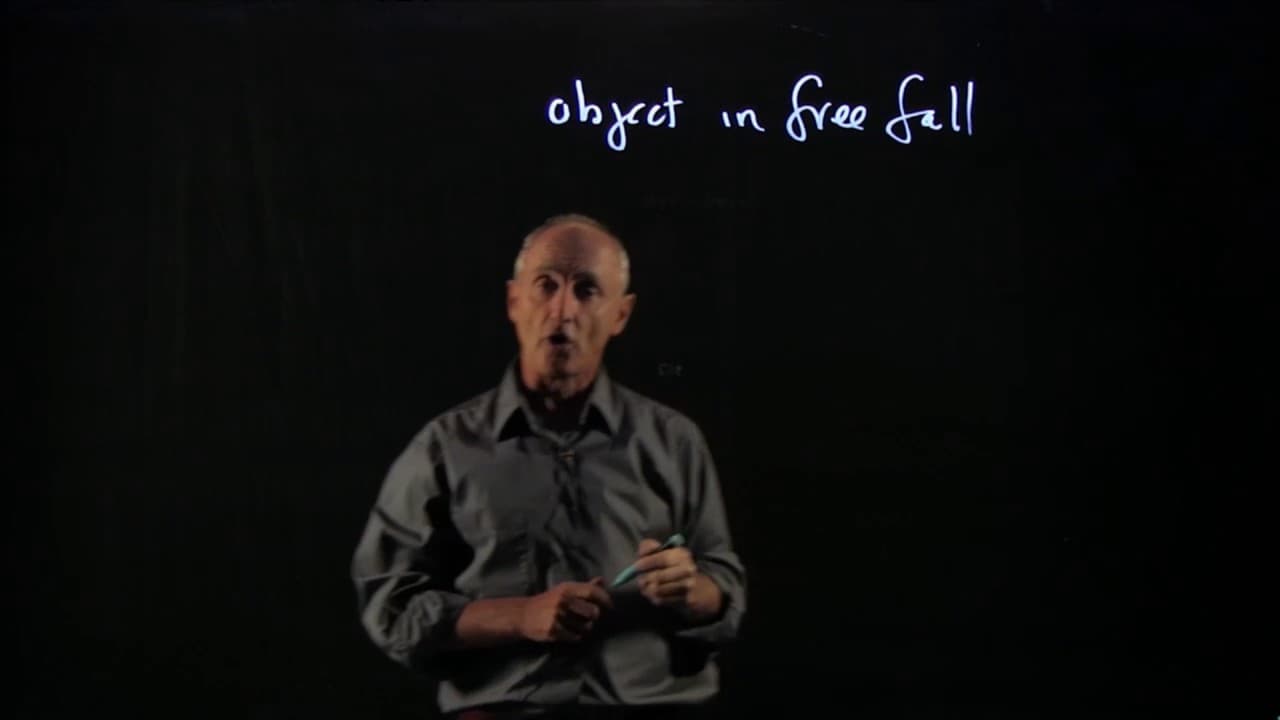
TL;DR
Acceleration is a more abstract concept compared to velocity, and is not easily perceived by the human eye.
Transcript
Now that we've described the instantaneous velocity of an object, we'd now like to describe what it's acceleration is. Philosophy and acceleration are complicated things. One of the reasons why acceleration is such an abstract quantity is for example, if I take this marker that's in my hand and I throw it up in the air and I catch it, you can see w... Read More
Key Insights
- ❓ Velocity is easily perceived, while acceleration is more abstract and harder to visualize.
- ❓ The mathematical nature of acceleration can vary and depends on the specific situation or forces involved.
- 😥 Even at the highest point of an object's motion, there is still a non-zero acceleration if the gravitational force is present.
Install to Summarize YouTube Videos and Get Transcripts
Explore YouTube Video Summarizer or Get YouTube Transcript Extractor
Questions & Answers
Q: Why is velocity easier to perceive than acceleration?
Velocity, which includes speed and direction, is easily observed with our eyes. We can see objects changing their velocity and have an intuitive understanding of it. However, acceleration is more difficult to perceive as it involves changes in velocity over time which are not visually obvious.
Q: What is the mathematical nature of acceleration?
The mathematical nature of acceleration can vary. In the case of a falling object, its acceleration is a result of the gravitational force acting on it. However, acceleration can also change over time or remain constant depending on the specific situation and forces involved.
Q: Is there an acceleration when an object is at the highest point of its motion?
Yes, even at the highest point of its motion, an object still experiences acceleration. In the case of free fall, the gravitational force is still acting on the object, causing a non-zero acceleration.
Q: How does Newton's second law relate to the concept of acceleration?
According to Newton's second law (F = ma), if there is a force acting on an object, there must be an acceleration. In the case of a falling object, the gravitational force causes the object to accelerate.
Summary & Key Takeaways
-
Velocity is easily perceived by the human eye, while acceleration is a more complicated and abstract concept.
-
The mathematical nature of acceleration, such as its variation with time, is not evident visually.
-
When an object is in free fall, the gravitational force acting on it causes a non-zero acceleration.
Read in Other Languages (beta)
Share This Summary 📚
Summarize YouTube Videos and Get Video Transcripts with 1-Click
Try YouTube Summary with ChatGPT & Claude or YouTube Transcript Generator
Explore More Summaries from MIT OpenCourseWare 📚


Summarize YouTube Videos and Get Video Transcripts with 1-Click
Try YouTube Summary with ChatGPT & Claude or YouTube Transcript Generator