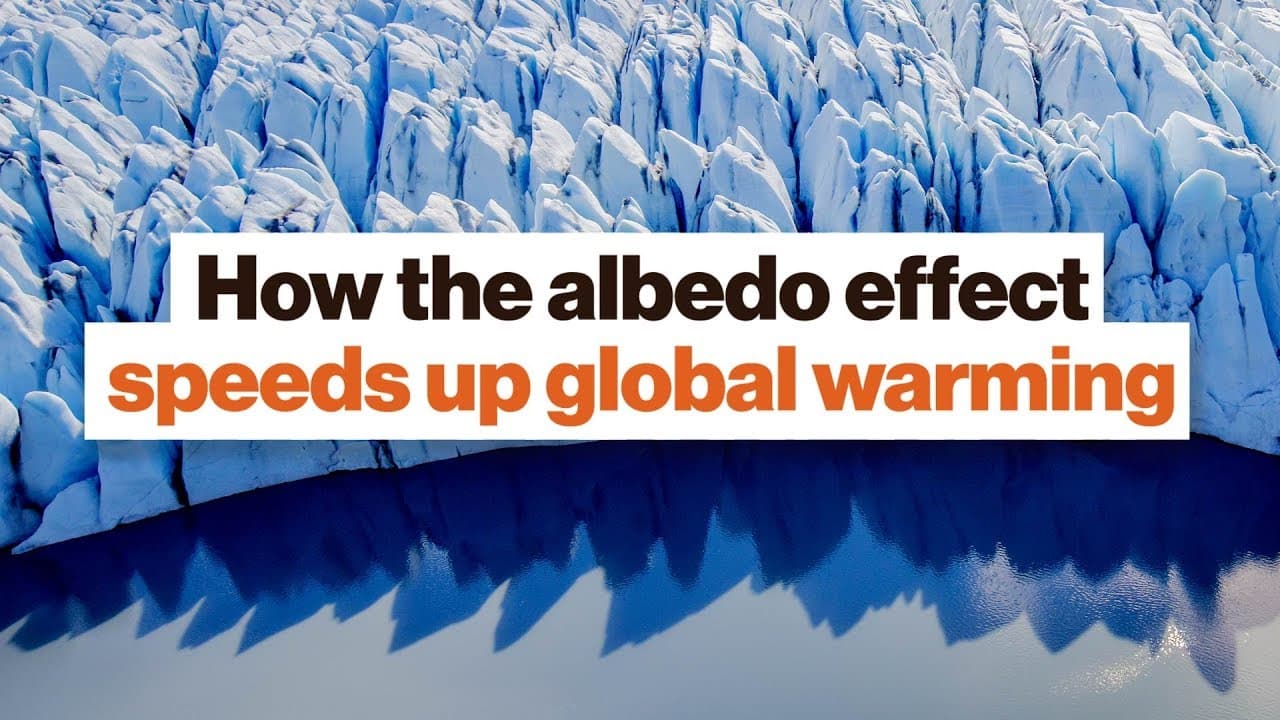
Arctic amplification: How the albedo effect speeds up global warming | Jon Gertner | Big Think
TL;DR
The Arctic is warming twice as fast, causing ice melt, sea level rise, and feedback loops.
Transcript
One thing that's particularly worrisome about the Arctic right now is that it's warming about twice as fast as the rest of the world. And there's this term scientists use for it, called arctic amplification. So whereas the rest of the Earth on average has warmed about 1 degree centigrade since pre-industrial era, the Arctic is more like 2 degrees c... Read More
Key Insights
- 😮 Arctic amplification is causing the region to warm at a faster rate than the rest of the world, with temperatures rising significantly.
- 🤢 Declining Arctic sea ice is a significant natural change affecting ecosystems and creating feedback loops of energy absorption.
- 🫠 Melting Arctic sea ice does not directly contribute to rising sea levels, but the melting of Greenland's ice sheet does, leading to future flood risks.
- 🫠 Feedback loops in the Arctic and Greenland exacerbate ice melt, with darker ice absorbing more energy and accelerating the melting process.
Install to Summarize YouTube Videos and Get Transcripts
Explore YouTube Video Summarizer or Get YouTube Transcript Extractor
Questions & Answers
Q: Why is the Arctic warming at a faster rate than the rest of the world?
The phenomenon of Arctic amplification has caused the Arctic to warm at twice the rate of the rest of the world due to various factors contributing to increased temperatures.
Q: How does the decrease in Arctic sea ice impact the environment?
The decline in Arctic sea ice alters the region's albedo, leading to increased energy absorption by exposed ocean areas and creating feedback loops that accelerate ice melt further.
Q: What are the implications of Greenland's ice sheet melting?
The melting of Greenland's ice sheet contributes to rising sea levels, future floods, and feedback loops where darkening ice accelerates further melting.
Q: Why is the darkening of Greenland's ice sheet concerning?
The darkening of Greenland's ice sheet, caused by algae, bacteria, and carbon soot, increases energy absorption, accelerates ice melt, and creates a cycle where melting leads to further darkening.
Summary & Key Takeaways
-
The Arctic is warming at a faster rate, with temperatures rising by 2 degrees Celsius compared to the global average of 1 degree Celsius since the pre-industrial era.
-
Sea ice in the Arctic has decreased significantly in the past 20 years, impacting ecosystems and creating a feedback loop of increased energy absorption.
-
Melting sea ice does not directly raise sea levels, but Greenland's ice sheet melting does, leading to future floods and feedback loops exacerbating ice melt.
Read in Other Languages (beta)
Share This Summary 📚
Summarize YouTube Videos and Get Video Transcripts with 1-Click
Try YouTube Summary with ChatGPT & Claude or YouTube Transcript Generator
Explore More Summaries from Big Think 📚




Summarize YouTube Videos and Get Video Transcripts with 1-Click
Try YouTube Summary with ChatGPT & Claude or YouTube Transcript Generator