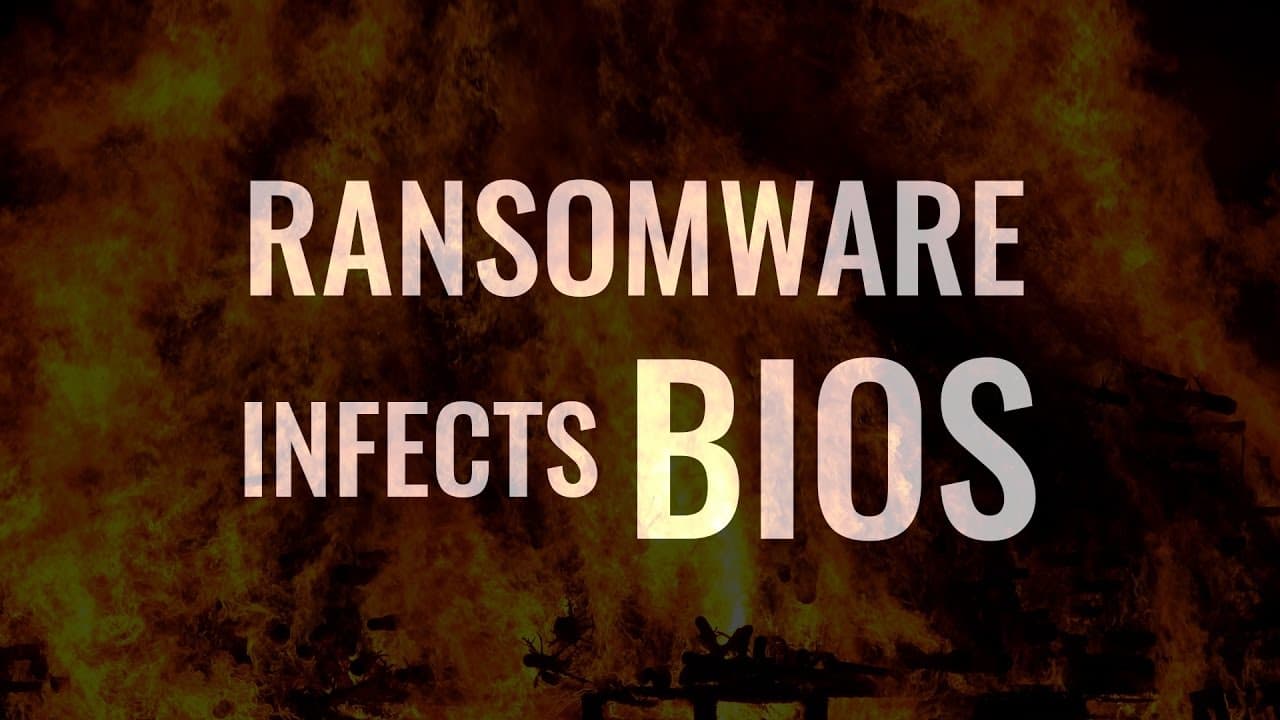
UEFI Ransomware | Malware infects BIOS
TL;DR
A vulnerability in firmware allows for the injection of ransomware into the BIOS, making it difficult to detect and remove. Additionally, a new ransomware called Sanctions demonstrates a humorous take on the US-Russia relationship.
Transcript
last month in February 2017 we had the RSA conference and one of the big things that the RSA conference was the disclosure of a proof-of-concept UEFI ransomware so malware in BIOS what else is new it turns out there is a vulnerability in a lot of current generation firmware that allows injecting this kind of malware / ransomware into your BIOS I th... Read More
Key Insights
- 🙂 The RSA conference highlighted a proof-of-concept UEFI ransomware, shedding light on a vulnerability present in many current generation firmware.
- 🎯 Malicious software injected into the BIOS can stay undetected, making it an attractive target for cyber criminals.
- 🕵️ Ransomware in the BIOS poses a unique threat as it is difficult to detect, remove, and recover from.
- 📸 Flashing the BIOS should be highly protected due to the potential presence of malicious software.
- ❓ Ransomware in the BIOS may not align with typical covert rootkit behavior but can still be enticing for cyber criminals.
- 👾 Users may be able to boot into safe mode to remove ransomware, but once it reaches the BIOS, it becomes game over for many.
- 🧑🤝🧑 Keeping the BIOS up to date is crucial in protecting against BIOS ransomware.
Install to Summarize YouTube Videos and Get Transcripts
Explore YouTube Video Summarizer or Get YouTube Transcript Extractor
Questions & Answers
Q: What is the vulnerability in the firmware that allows for the injection of ransomware into the BIOS?
The vulnerability allows for malicious software to be injected into the BIOS, which stays undetected and can embed a rootkit into the system upon startup.
Q: What risks does ransomware in the BIOS pose to users?
Once ransomware is present in the BIOS, it becomes difficult for users to remove it, potentially leading to permanent data loss or system compromise.
Q: Can users still boot into safe mode and remove ransomware from their systems if it is present in the BIOS?
No, once ransomware is embedded in the BIOS, it cannot be easily removed through traditional methods like safe mode. This makes it a significant threat to users' data and privacy.
Q: How can users protect themselves from ransomware targeting the BIOS?
Users should ensure their BIOS is up to date by visiting the manufacturer's website and downloading the latest version. Regularly updating firmware helps patch vulnerabilities.
Summary & Key Takeaways
-
The RSA conference highlighted a proof-of-concept UEFI ransomware, revealing a vulnerability present in many current generation firmware.
-
Malicious software injected into the BIOS stays undetected, making it a prime target for cyber criminals.
-
While ransomware in the BIOS seems counterintuitive, it can still pose a significant threat to users' data and privacy.
Read in Other Languages (beta)
Share This Summary 📚
Summarize YouTube Videos and Get Video Transcripts with 1-Click
Try YouTube Summary with ChatGPT & Claude or YouTube Transcript Generator
Explore More Summaries from The PC Security Channel 📚



Summarize YouTube Videos and Get Video Transcripts with 1-Click
Try YouTube Summary with ChatGPT & Claude or YouTube Transcript Generator