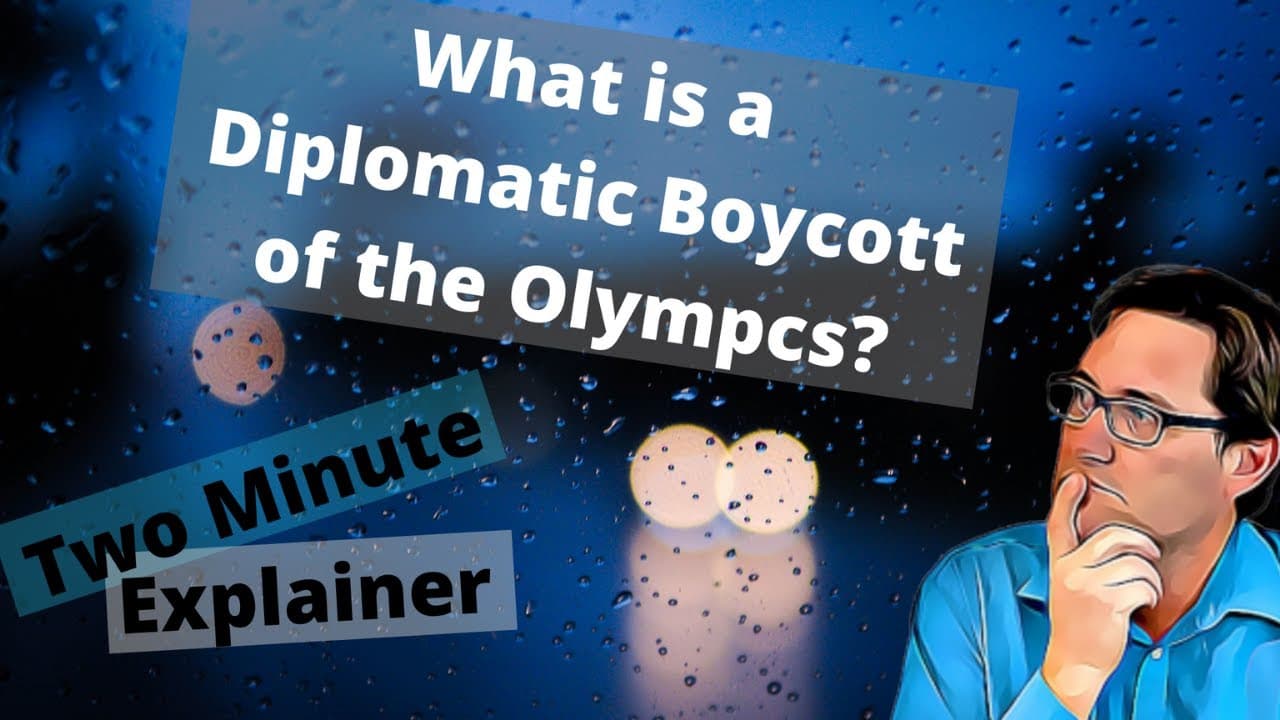
What is a Diplomatic Boycott? Do Boycotts Work?
TL;DR
Several countries boycott Beijing Winter Olympics over human rights concerns.
Transcript
the 2022 winter olympic games officially commenced in beijing on friday all told nearly 3 000 athletes representing some 91 countries will compete in 109 events over the next two weeks but even before the game started controversy broke out ten countries including australia canada lithuania taiwan the united kingdom and the united states have all de... Read More
Key Insights
- 😜 Diplomatic boycotts involve withdrawing high-ranking officials in protest.
- 🔨 Boycotts are historical tools to pressure governments and bring attention to issues.
- 🥅 Previous Olympic boycotts show mixed success in achieving policy goals.
- 😘 Boycotts can be a low-cost method to express disapproval and increase pressure.
- 🗯️ Gandhi and civil rights movements used boycotts to advocate for change.
- 🛄 Boycotts aim to draw attention to underlying issues rather than enforce immediate change.
- 🌗 Continued engagement is essential to creating lasting policy effects.
Install to Summarize YouTube Videos and Get Transcripts
Explore YouTube Video Summarizer or Get YouTube Transcript Extractor
Questions & Answers
Q: What is a diplomatic boycott?
A diplomatic boycott involves countries deciding not to send high-ranking officials to events to signal disapproval of the host country's actions, in this case, China's human rights violations.
Q: Are diplomatic boycotts effective?
While diplomatic boycotts can draw attention to issues, past examples like the 1980 Moscow Olympics boycott show that they may not always achieve their intended policy outcomes.
Q: How do boycotts historically impact political movements?
Historical examples, such as Gandhi's Indian boycott of British goods, show how boycotts can be used to pressure governments for change and draw international attention to a cause.
Q: What distinguishes the Beijing Winter Olympics diplomatic boycott from others?
Unlike complete bans, the Beijing Winter Olympics boycott allows athletes to compete, focusing on high-ranking officials not attending, but its long-term policy impact remains uncertain.
Summary & Key Takeaways
-
The 2022 Winter Olympics in Beijing have started with controversy due to a diplomatic boycott by ten countries.
-
Diplomatic boycotts involve countries withdrawing high-ranking officials from events to protest against a host country's actions.
-
History shows that while boycotts can draw attention to issues, they may not always achieve their intended policy outcomes.
Read in Other Languages (beta)
Share This Summary 📚
Summarize YouTube Videos and Get Video Transcripts with 1-Click
Try YouTube Summary with ChatGPT & Claude or YouTube Transcript Generator
Explore More Summaries from Noah Zerbe 📚


Summarize YouTube Videos and Get Video Transcripts with 1-Click
Try YouTube Summary with ChatGPT & Claude or YouTube Transcript Generator