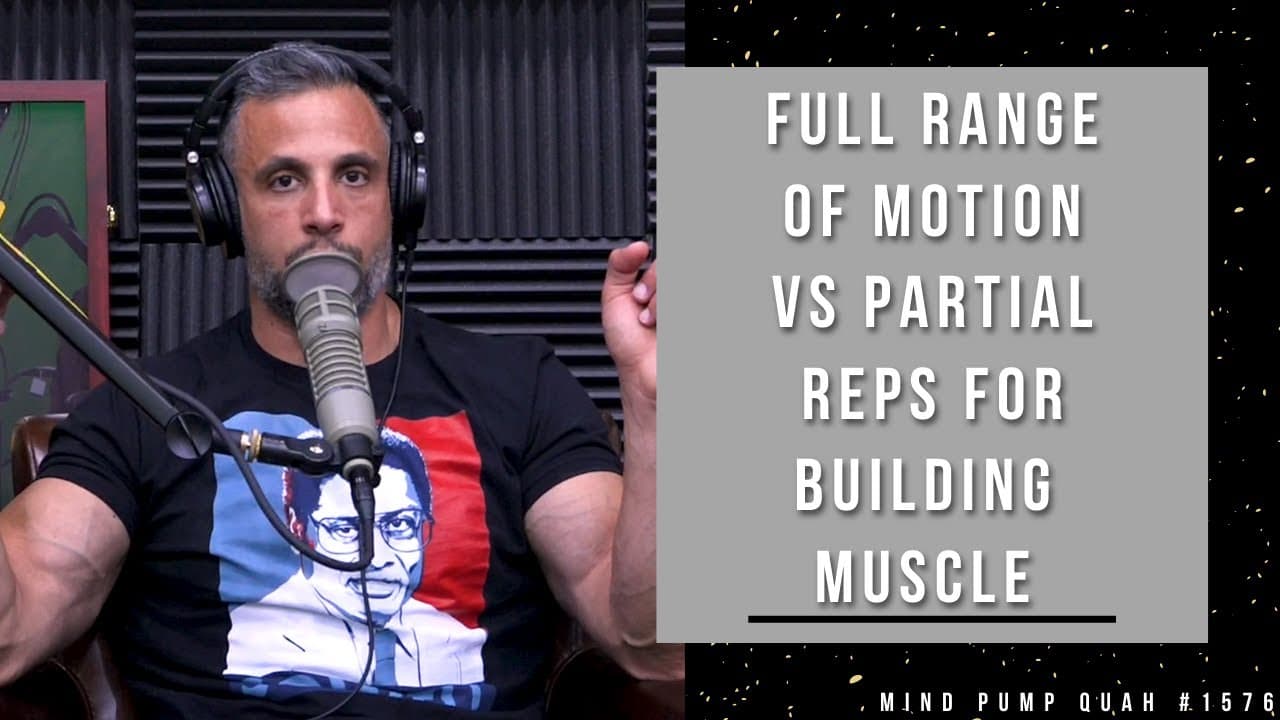
Full Range of Motion Vs. Partial Reps
TL;DR
Full range of motion is generally more beneficial than partial reps.
Transcript
first question is from reward pt movement coach full range of motion during bodybuilding exercises always or partial reps to keep tension on muscles for a bigger pump or both okay so if if we're going to do a head-to-head competition because there's value in both and we'll explain why but if we're gonna do a head-to-head competition full range of m... Read More
Key Insights
- Full range of motion exercises provide better overall strength gains compared to partial reps due to the larger range of strength development.
- Training with a full range of motion tends to build more muscle as it stimulates muscle fibers more effectively than partial reps.
- Maintaining tension is possible in both full range and partial reps; proper form ensures continuous muscle engagement.
- Partial reps can be beneficial for targeting specific weaknesses or sticking points in exercises, such as the lockout phase in a bench press.
- Bodybuilders often use partial reps to achieve a pump, but this should not be the primary training method for optimal results.
- During calorie cuts, switching to lighter weights and partial reps can help maintain workout intensity without overly focusing on strength loss.
- Training predominantly with a full range of motion is recommended, with partial reps used strategically for variety and specific goals.
- The misconception that time under tension is lost at the end ranges of motion is debunked; full range still maintains tension if done correctly.
Install to Summarize YouTube Videos and Get Transcripts
Explore YouTube Video Summarizer or Get YouTube Transcript Extractor
Questions & Answers
Q: Why is full range of motion generally preferred over partial reps?
Full range of motion is preferred because it provides better overall strength gains due to the larger range of strength development. It also tends to build more muscle as it stimulates muscle fibers more effectively than partial reps. This makes it a more effective training method for most fitness goals.
Q: Can you maintain muscle tension during full range of motion exercises?
Yes, you can maintain muscle tension during full range of motion exercises. Proper form is crucial to ensure continuous engagement of muscles throughout the movement. This dispels the myth that tension is lost at the end ranges of motion, as full range can maintain tension effectively.
Q: What is the benefit of using partial reps in training?
Partial reps can be beneficial for targeting specific weaknesses or sticking points in exercises. For example, they can help improve the lockout phase in a bench press by focusing on that particular part of the range of motion. This targeted approach can enhance overall performance in specific areas.
Q: How do partial reps fit into a bodybuilding routine?
In bodybuilding, partial reps are often used to achieve a muscle pump, which can enhance the appearance of muscles temporarily. However, they should not be the primary training method. Instead, they can be used strategically, such as during calorie cuts or when focusing on specific muscle weaknesses.
Q: Why might someone switch to lighter weights and partial reps during a cut?
During a calorie cut, strength loss is common due to reduced caloric intake. Switching to lighter weights and partial reps can help maintain workout intensity without overly focusing on the inevitable strength loss. This approach allows for continued engagement and workout effectiveness during periods of reduced strength.
Q: Should partial reps be the main focus of a training program?
No, partial reps should not be the main focus of a training program. Training predominantly with a full range of motion is recommended for optimal strength and muscle development. Partial reps can be used strategically for variety and to address specific goals, but they should complement, not replace, full range exercises.
Q: What is a common misconception about time under tension in exercises?
A common misconception is that time under tension is lost at the end ranges of motion. However, full range of motion exercises, when executed correctly, maintain tension throughout the movement. This makes full range exercises effective for muscle engagement and growth, contrary to the belief that tension is only maintained in partial reps.
Q: How can full range of motion improve overall exercise performance?
Full range of motion can improve overall exercise performance by ensuring a more comprehensive development of strength and muscle fibers. It allows for a greater range of strength gains and muscle stimulation, which can enhance stability, flexibility, and overall functional fitness. This makes it a superior choice for most training goals.
Summary & Key Takeaways
-
Full range of motion exercises are generally superior for strength and muscle growth compared to partial reps. They allow for greater muscle fiber stimulation and a wider range of strength development. However, partial reps have their place in targeting specific weaknesses or achieving a muscle pump.
-
Maintaining muscle tension is possible in both full range and partial reps. Proper form is crucial to ensure continuous engagement. While partial reps can be useful during calorie cuts or for specific goals, they should not be the main training focus.
-
The bodybuilding community often emphasizes time under tension, but it's a misconception that this is lost in full range exercises. Full range of motion, when executed correctly, maintains tension and offers significant benefits over partial reps.
Read in Other Languages (beta)
Share This Summary 📚
Summarize YouTube Videos and Get Video Transcripts with 1-Click
Try YouTube Summary with ChatGPT & Claude or YouTube Transcript Generator
Explore More Summaries from Mind Pump Show 📚





Summarize YouTube Videos and Get Video Transcripts with 1-Click
Try YouTube Summary with ChatGPT & Claude or YouTube Transcript Generator