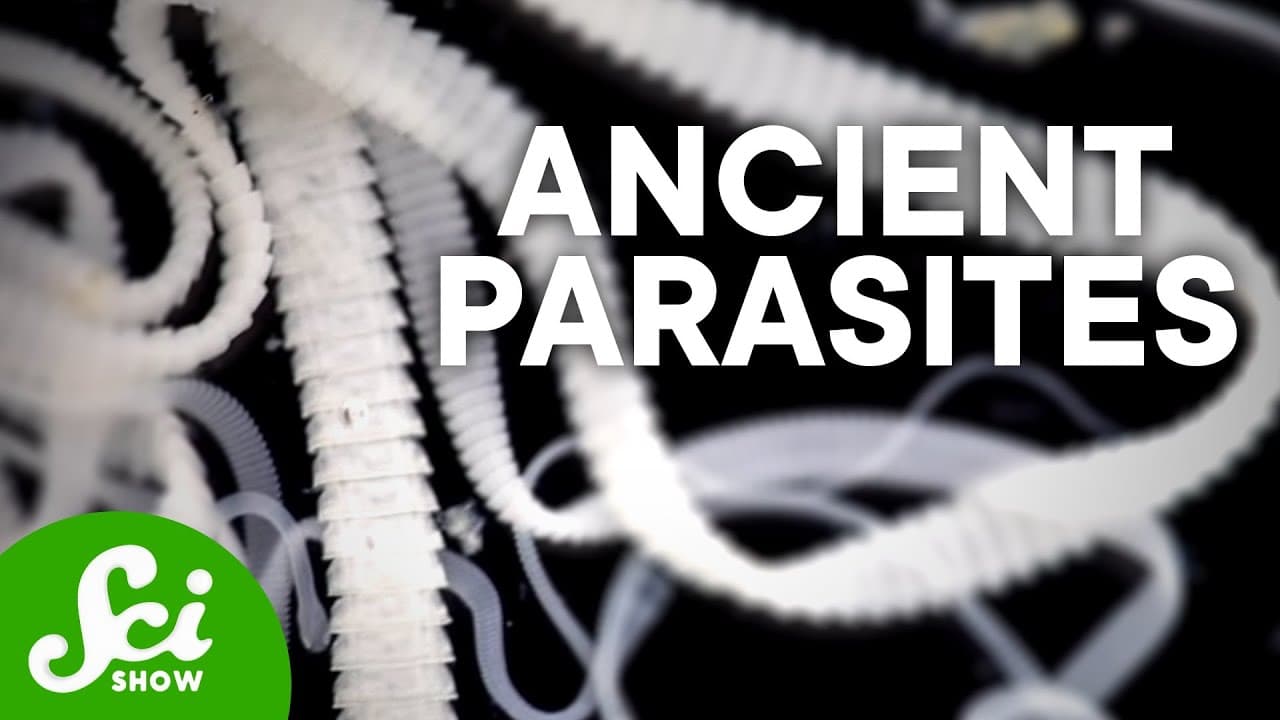
The Oldest Parasites Ever Found on Earth
TL;DR
Ancient parasites have been a successful life strategy, impacting human and animal history for millions of years.
Transcript
[ intro ] Where there’s life, there’s other life that’s looking for a free ride. A parasite is an organism that lives on or inside another organism, and it gets its nutrition at the expense of that host. It may not always be pretty, but parasitism is an extremely successful life strategy. Among animals, for example, around 50% of living species are... Read More
Key Insights
- 🧑⚕️ Parasitism is a successful life strategy with a long history, impacting both human and animal health.
- 🍄 Ancient parasites like nematodes, fungi, and tapeworms have been documented through fossil evidence.
- 🌰 Parasitoid wasps, with a chest-bursting lifecycle, have been around for millions of years.
- 🤯 Fungal parasites like Ophiocordyceps have been mind-controlling insects for millions of years.
- 💯 Tapeworms have infected vertebrates for hundreds of millions of years.
- 🛟 Tubeworms from the Early Cambrian Period serve as the oldest known animal parasites.
- 🧬 Ancient parasite DNA found in fossils provides valuable insights into the evolution of parasitic relationships.
Install to Summarize YouTube Videos and Get Transcripts
Explore YouTube Video Summarizer or Get YouTube Transcript Extractor
Questions & Answers
Q: What is parasitism, and why is it considered a successful life strategy?
Parasitism is when one organism lives off another at the host's expense, as it provides a reliable source of nutrition, allowing parasites to thrive.
Q: How do schistosomes affect humans, and what makes them one of the oldest human parasites?
Schistosomes cause diseases like schistosomiasis with symptoms ranging from rashes to organ damage. They were found in a 6000-year-old human skeleton, making them ancient human parasites.
Q: What is the significance of finding ancient parasite DNA in puma feces?
The discovery of ancient parasite DNA in puma feces from 17,000 years ago provides insights into the long-standing relationship between parasites and their hosts.
Q: How do parasitoid wasps differ from true parasites, and what do the fossils reveal about their history?
Parasitoid wasps only rely on hosts for their young and often kill the host. Fossils show that this strategy has been around for at least 35 million years.
Summary & Key Takeaways
-
Parasitism is a successful life strategy with around 50% of animal species considered parasitic.
-
Schistosomes, ancient flatworm parasites, have plagued humans for over 6000 years causing severe diseases.
-
Fossil evidence reveals ancient parasites like nematodes, wasps, fungi, tapeworms, and tubeworms dating back millions of years.
Read in Other Languages (beta)
Share This Summary 📚
Summarize YouTube Videos and Get Video Transcripts with 1-Click
Try YouTube Summary with ChatGPT & Claude or YouTube Transcript Generator
Explore More Summaries from SciShow 📚


Summarize YouTube Videos and Get Video Transcripts with 1-Click
Try YouTube Summary with ChatGPT & Claude or YouTube Transcript Generator