How to Read SID (Standard Instrument Departure) Charts / Flight Simulation
TL;DR
Learn how to effectively fly any SID with the help of this instructional tutorial.
Transcript
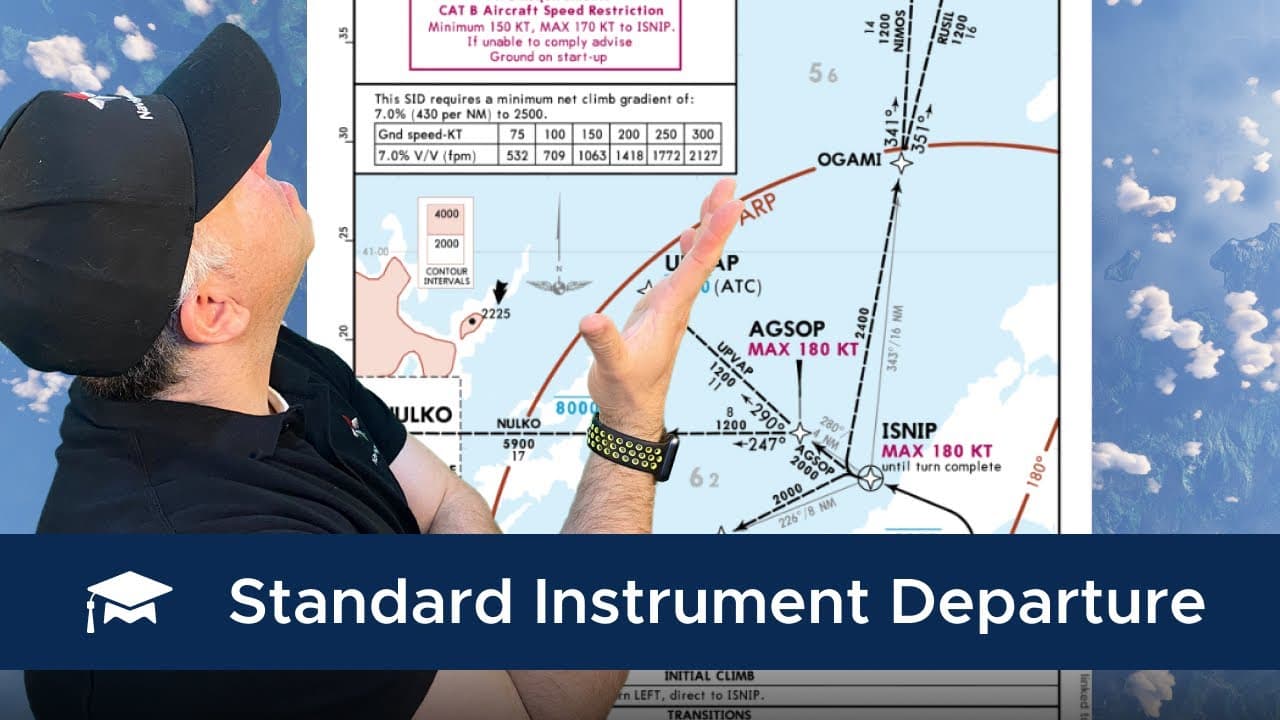
in this series we're going to go through the dp departure procedure in this case a standard instrument departure or sid welcome to another navigraft tutorial on chart reading my name is jason and i'll be your instructor for this lesson at the end of this tutorial you'll be able to fly any dp or departure procedure assigned to you we will use wellin... Read More
Key Insights
- 🛄 A SID is like a train station, helping organize air traffic flow in and out of an airport.
- 🛫 Wellington International airport has specific requirements for the SID, including contacting the departure controller and observing altitude and navigation system requirements.
- 🙃 Proper understanding and adherence to SID instructions are crucial for safe and efficient departures.
- 🖐️ GPS waypoints and transition tracks play a significant role in following the SID.
- 🐎 Speed restrictions may apply based on aircraft category.
- 🧗 Climb gradients and performance requirements must be met during the departure.
- 🧑✈️ Altitude limitations and restrictions are indicated on the SID chart, and pilots need to follow them.
Install to Summarize YouTube Videos and Get Transcripts
Explore YouTube Video Summarizer or Get YouTube Transcript Extractor
Questions & Answers
Q: What is the purpose of a SID?
The purpose of a SID is to organize air traffic and control when and where airplanes reach certain waypoints, thus easing the workload for ATC and pilots.
Q: What are some important details to note about the Wellington International airport SID?
The departure controller frequency is 122.3, the airport sits at an altitude of 41 feet, and there are specific notes regarding required navigation systems and altitude restrictions.
Q: How should pilots prepare for flying the SID from Wellington International airport?
Pilots should ensure they contact Wellington Approach or Departure (frequency 122.3) after takeoff, cross specified waypoints at or above certain altitudes, and be aware of any speed restrictions based on aircraft category.
Q: What are the advantages of using RNAV and GNSS for navigation?
RNAV allows for direct routing between GPS waypoints, saving time and fuel compared to traditional ground-based navigation systems. GNSS, or Global Navigation Satellite System, improves navigation accuracy by using a network of satellites.
Summary & Key Takeaways
-
A SID, or Standard Instrument Departure, is a way to organize air traffic and control airplane routes.
-
The tutorial focuses on the Wellington International airport and provides a briefing of the SID chart.
-
Important elements of the SID include contacting the departure controller, following speed restrictions, and navigating GPS waypoints.
Read in Other Languages (beta)
Share This Summary 📚
Summarize YouTube Videos and Get Video Transcripts with 1-Click
Try YouTube Summary with ChatGPT & Claude or YouTube Transcript Generator