What Are Buffer Overflow Exploits and How Do They Work?
TL;DR
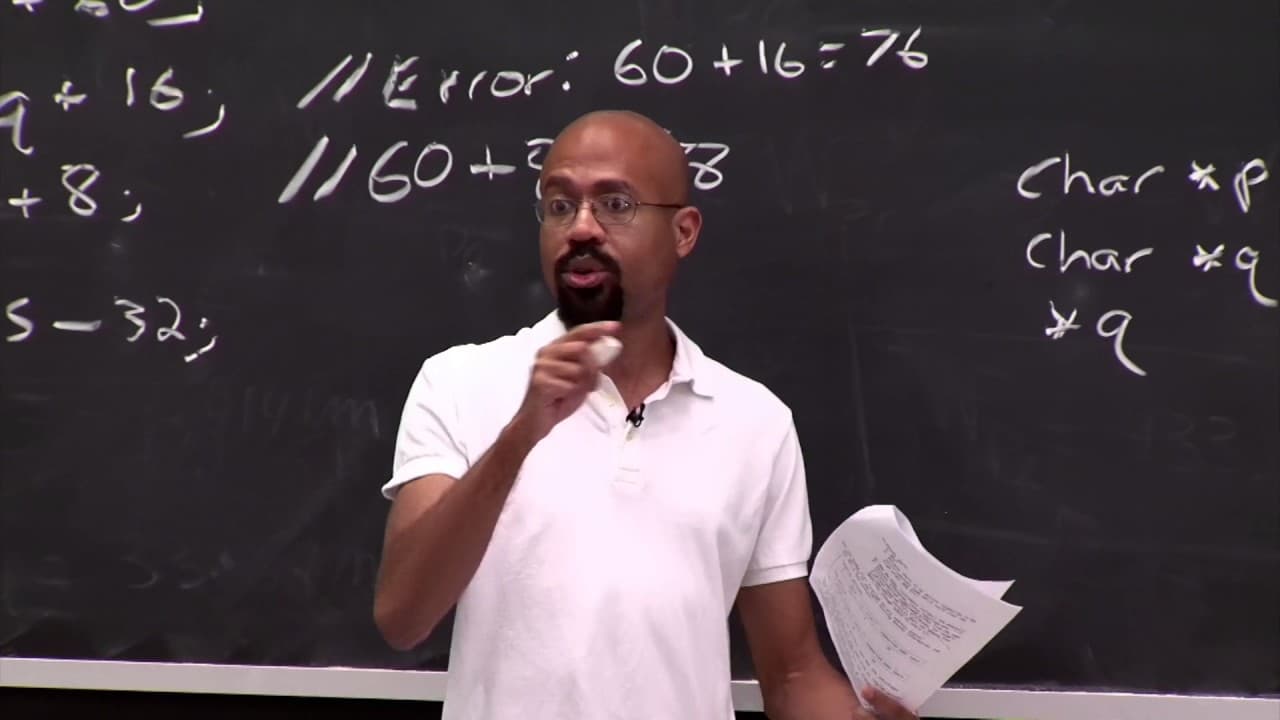
Buffer overflow exploits take advantage of programming errors, allowing attackers to overwrite memory and execute arbitrary code. Techniques like Blind Return Oriented Programming (BROP) bypass protections such as canaries, utilizing preexisting code snippets to manipulate program execution. Knowing the memory addresses and patterns, attackers can reveal canary values byte by byte to execute malicious payloads.
Transcript
The following content is provided under a Creative Commons license. Your support will help MIT OpenCourseWare continue to offer high quality educational resources for free. To make a donation, or to view additional materials from hundreds of MIT courses, visit MIT OpenCourseWare at ocw.mit.edu. PROFESSOR: All right, let's get started. So welcome to... Read More
Key Insights
- 😒 Blind Return Oriented Programming uses preexisting code snippets to defeat defense mechanisms.
- 👨💻 BROP requires finding gadgets and stringing them together to execute code.
- 🇮🇨 Canaries can be defeated by guessing their value byte by byte.
Install to Summarize YouTube Videos and Get Transcripts
Explore YouTube Video Summarizer or Get YouTube Transcript Extractor
Questions & Answers
Q: What is the purpose of Blind Return Oriented Programming?
Blind Return Oriented Programming is used to bypass defense mechanisms like canaries, non-executable memory, and address randomization.
Q: How does BROP defeat canaries?
BROP defeats canaries by iteratively guessing the canary byte by byte until the correct value is found.
Q: What are gadgets in the context of BROP?
Gadgets are preexisting pieces of code that can be used to string together to execute arbitrary code.
Q: How does BROP work against non-executable memory?
BROP bypasses non-executable memory by using a series of gadgets to jump to existing code snippets rather than injecting new code.
Summary & Key Takeaways
-
Blind Return Oriented Programming (BROP) aims to defeat defense mechanisms like canaries, non-executable memory, and address randomization.
-
BROP involves stringing together preexisting pieces of code, called gadgets, in order to execute arbitrary code.
-
To defeat canaries, the attacker iteratively guesses the canary byte by byte until the correct value is found.
Read in Other Languages (beta)
Share This Summary 📚
Summarize YouTube Videos and Get Video Transcripts with 1-Click
Try YouTube Summary with ChatGPT & Claude or YouTube Transcript Generator
Explore More Summaries from MIT OpenCourseWare 📚



Summarize YouTube Videos and Get Video Transcripts with 1-Click
Try YouTube Summary with ChatGPT & Claude or YouTube Transcript Generator