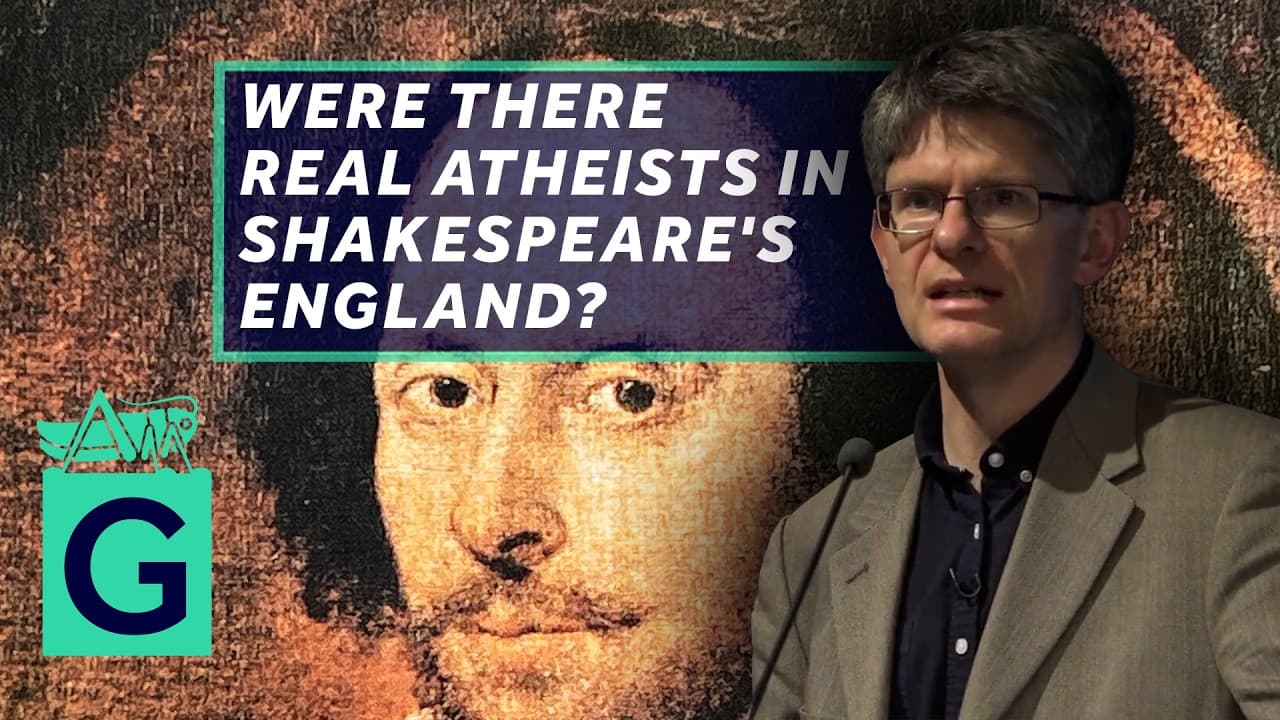
How to be a Shakespearean Atheist
TL;DR
The 17th century in England saw a rise in atheism, depicted as immoral and defiant, challenging religious authority.
Transcript
during the first two lectures in this series we followed the emotional story of doubt of unbelief and what they call atheism in Europe during the Middle Ages and the Reformation era so we've been gulping down whole centuries at a time but now we need to slow down a little for this lecture and the next two we'll be looking at the 17th century which ... Read More
Key Insights
- 🏴 Unbelief in 17th century England was characterized by defiance of religious authority.
- ❓ Stereotypical atheists were depicted as morally vacuous and defiant, rejecting religious doctrines.
- 😨 Literature and societal attitudes fueled the fear of atheism in this period.
- 🙈 Atheism was seen as a threat to moral order and societal stability.
- 🛀 Some depictions showed atheists with moral principles, challenging traditional stereotypes.
- 🇨🇫 The religious and moral implications of atheism were central to societal anxieties.
- 🙈 The 17th century saw a complex interplay between unbelief, morality, and defiance.
Install to Summarize YouTube Videos and Get Transcripts
Explore YouTube Video Summarizer or Get YouTube Transcript Extractor
Questions & Answers
Q: How was atheism viewed in 17th century England?
Atheism in 17th century England was perceived as a moral threat, characterized by defiance of religious authority and rejection of Christian doctrines.
Q: What role did literature play in portraying atheism during this period?
Literature of the time often depicted atheists as morally bankrupt villains, challenging religious norms and authority figures, showcasing their defiance.
Q: How did the fear of atheism shape societal attitudes in 17th century England?
Fear of atheism led to moral panic, with stereotypes painting atheists as monsters, devoid of moral values, reinforcing the importance of religion in maintaining social order.
Q: Were there any instances of atheists in 17th century England who exhibited moral principles?
Some depictions, like Shakespeare's characters, hinted at atheists with moral codes, challenging the traditional stereotype of atheists as purely immoral and defiant.
Summary & Key Takeaways
-
Atheism surged in England in the early 17th century, sparking moral panic about disbelief in Christian doctrines.
-
Stereotypical atheists were depicted as morally vacuous and defiant, rejecting fundamental Christian beliefs.
-
Unbelief in this period was more about defiance of authority and morals than philosophical denial of God.
Read in Other Languages (beta)
Share This Summary 📚
Summarize YouTube Videos and Get Video Transcripts with 1-Click
Try YouTube Summary with ChatGPT & Claude or YouTube Transcript Generator
Explore More Summaries from Gresham College 📚

Summarize YouTube Videos and Get Video Transcripts with 1-Click
Try YouTube Summary with ChatGPT & Claude or YouTube Transcript Generator