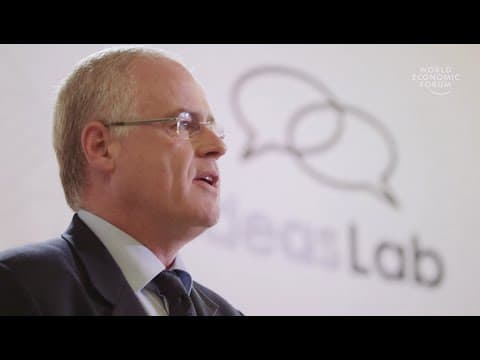
IdeasLabs 2013 - Fu Yuming - Developing New Strategies for Resource Optimisation

TL;DR
Investing in smart capital allocation can make high-density cities livable and affordable, focusing on resource management and community engagement.
Transcript
foreign I want to discuss the economics of high density cities so so kind of a business model for high density so to speak the question is how can we make these cities livable and affordable to more people so in Chinese City in Chinese characters is made of Chung which is a building and you know physical capital in a series of people in the market ... Read More
Key Insights
- 🥺 High-density cities can be made affordable and livable through smart capital allocation and community-led innovation.
- 🤪 Livability goes beyond aesthetics, focusing on resource management, community interaction, and sustainable mobility.
- 🥺 Over-investment in capital-intensive models can lead to diminishing returns and debt in high-density cities.
- 😒 Affordable and sustainable high-density cities prioritize efficient resource use, community engagement, and collective decision-making.
- 🖐️ Technology and innovation play a crucial role in enhancing the sustainability and productivity of high-density cities.
- ✋ Community ownership and decentralized decision-making are essential for the successful implementation of innovative solutions in high-density cities.
- ✋ Swiss cities serve as a model for efficient, inclusive, and environmentally friendly urban systems in high-density environments.
Install to Summarize YouTube Videos and Get Transcripts
Explore YouTube Video Summarizer or Get YouTube Transcript Extractor
Questions & Answers
Q: How do capital-intensive models affect the livability of high-density cities?
Capital-intensive models in high-density cities can lead to over-reliance on cars, reduced pedestrian space, and affordability issues, as seen in China's indebted cities.
Q: What are the key components of a livable city beyond just aesthetics?
Livable cities prioritize efficient resource use, community interaction, sustainable mobility, and affordability, enabling creativity and productivity among residents.
Q: How can technology and innovation contribute to making high-density cities more sustainable?
Scalable and intelligent technologies can enable resource management, productivity, and community engagement, but require collective action and ownership for successful implementation.
Q: What can we learn from Swiss cities in terms of efficient urbanization and sustainability?
Swiss cities demonstrate that decentralized decision-making and diverse urban systems can lead to efficient, inclusive, and environmentally friendly high-density cities.
Summary & Key Takeaways
-
Chinese cities invest heavily in real estate and infrastructure, creating a capital-intensive model for urbanization.
-
Livable cities should prioritize resource efficiency, community interaction, and sustainable mobility over GDP generation.
-
Smart capital allocation and community-led innovation are key to creating affordable and sustainable high-density cities.
Read in Other Languages (beta)
Share This Summary 📚
Summarize YouTube Videos and Get Video Transcripts with 1-Click
Try YouTube Summary with ChatGPT & Claude or YouTube Transcript Generator
Explore More Summaries from World Economic Forum 📚
Summarize YouTube Videos and Get Video Transcripts with 1-Click
Try YouTube Summary with ChatGPT & Claude or YouTube Transcript Generator