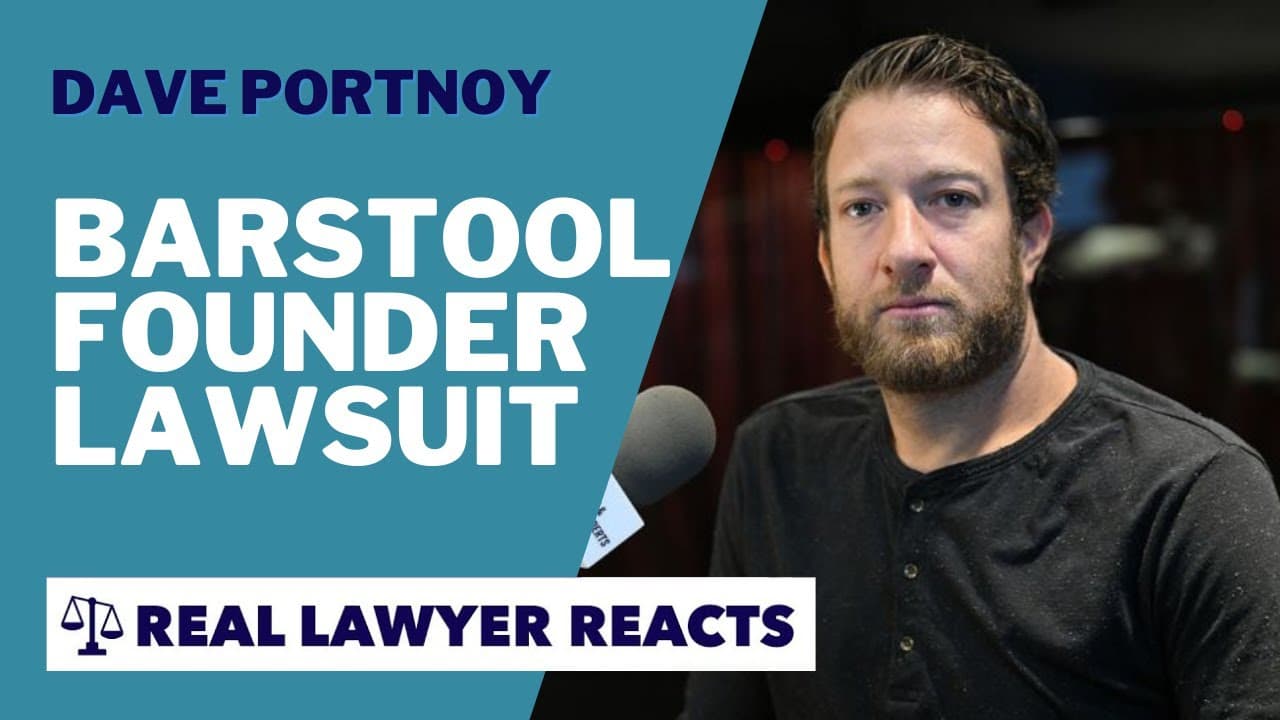
Lawyer Reacts: Deep Dive Into Dave Portnoy Lawsuit
TL;DR
Exploring defamation in Dave Portnoy's lawsuit, analyzing what constitutes defamation and what doesn't, with real-life examples from the internet.
Transcript
welcome back to another episode of the lawyer you know and today we're going to do a little bit of a deeper dive into the dave portnoy lawsuit and talk about what defamation is and maybe more importantly what it's not we're going to give you some examples from the internet using dave portnoy himself and hopefully to take a little bit of a deeper di... Read More
Key Insights
- ☸️ Defamation necessitates false statements published with a knowing or reckless disregard for the truth, causing harm to the subject.
- 😯 Opinions and personal attacks, even if disparaging, are generally not considered defamation as they are protected under freedom of speech.
- 💬 Real-life examples, like Portnoy's comments on LeBron James, highlight the distinction between opinion and defamation.
- 🧑🏭 The lawsuit against Dave Portnoy focuses on statements of fact that are claimed to be false, potentially constituting defamation.
- 👊 Understanding the nuances of defamation law is crucial in differentiating between opinion, personal attacks, and legally actionable defamation.
- 🇨🇫 Public figures, like Portnoy, are subject to criticism and differing opinions, which are generally protected under the First Amendment.
- 🙂 Business Insider's publication of potentially defamatory statements sheds light on the importance of verifying facts before publishing.
Install to Summarize YouTube Videos and Get Transcripts
Explore YouTube Video Summarizer or Get YouTube Transcript Extractor
Questions & Answers
Q: What are the essential elements that constitute defamation?
Defamation requires the publication of false statements with a knowing or reckless disregard for the truth, resulting in harm to the subject. It must be proven false, and opinions are generally protected.
Q: How does Dave Portnoy's opinion on LeBron James differ from defamation?
Portnoy's opinion on LeBron James, calling him a hypocrite, is protected speech as it is based on publicly available information and constitutes an opinion rather than a false statement of fact.
Q: Can personal attacks or insults amount to defamation?
Personal attacks or insults, even if harsh or derogatory, are generally considered opinion and not defamation as they do not meet the criteria of being false statements of fact.
Q: What differentiates potentially defamatory statements from opinions in the context of Dave Portnoy's lawsuit?
Potentially defamatory statements involve false statements of fact that can harm an individual, whereas opinions or personal attacks, while harsh, are not actionable as defamation.
Summary & Key Takeaways
-
Delving into Dave Portnoy's defamation lawsuit and explaining the definition provided in the complaint.
-
Highlighting how defamation must be false and published with a knowing or reckless disregard for the truth to be actionable.
-
Using real examples, such as Portnoy's comments on LeBron James, to illustrate the difference between opinion and defamation.
Read in Other Languages (beta)
Share This Summary 📚
Summarize YouTube Videos and Get Video Transcripts with 1-Click
Try YouTube Summary with ChatGPT & Claude or YouTube Transcript Generator
Explore More Summaries from Lawyer You Know 📚


Summarize YouTube Videos and Get Video Transcripts with 1-Click
Try YouTube Summary with ChatGPT & Claude or YouTube Transcript Generator