Andrew Bastawrous: Get your next eye exam on a smartphone
TL;DR
In a world where millions of people are needlessly blind, one organization is using mobile technology to deliver eye care to those in low-income countries.
Transcript
There are 39 million people in the world who are blind. Eighty percent of them are living in low-income countries such as Kenya, and the absolute majority do not need to be blind. They are blind from diseases that are either completely curable or preventable. Knowing this, with my young family, we moved to Kenya. We secured equipment, funds, vehicl... Read More
Key Insights
- 🌍 There are 39 million blind people in the world, with 80% in low-income countries who could avoid blindness with proper care.
- 🇰🇪 In Kenya, a smartphone system called Peek has been developed to deliver eye care to underserved communities.
- 📱 Mobile technology can be harnessed to provide access to eye care, especially in regions where mobile phones are more prevalent than clean water.
- 👶 Peek's smartphone apps and hardware enable eye testing for people of all ages and languages, even infants.
- 👥 Sharing data in non-medical jargon helps caregivers and teachers understand the visual world of individuals with low vision.
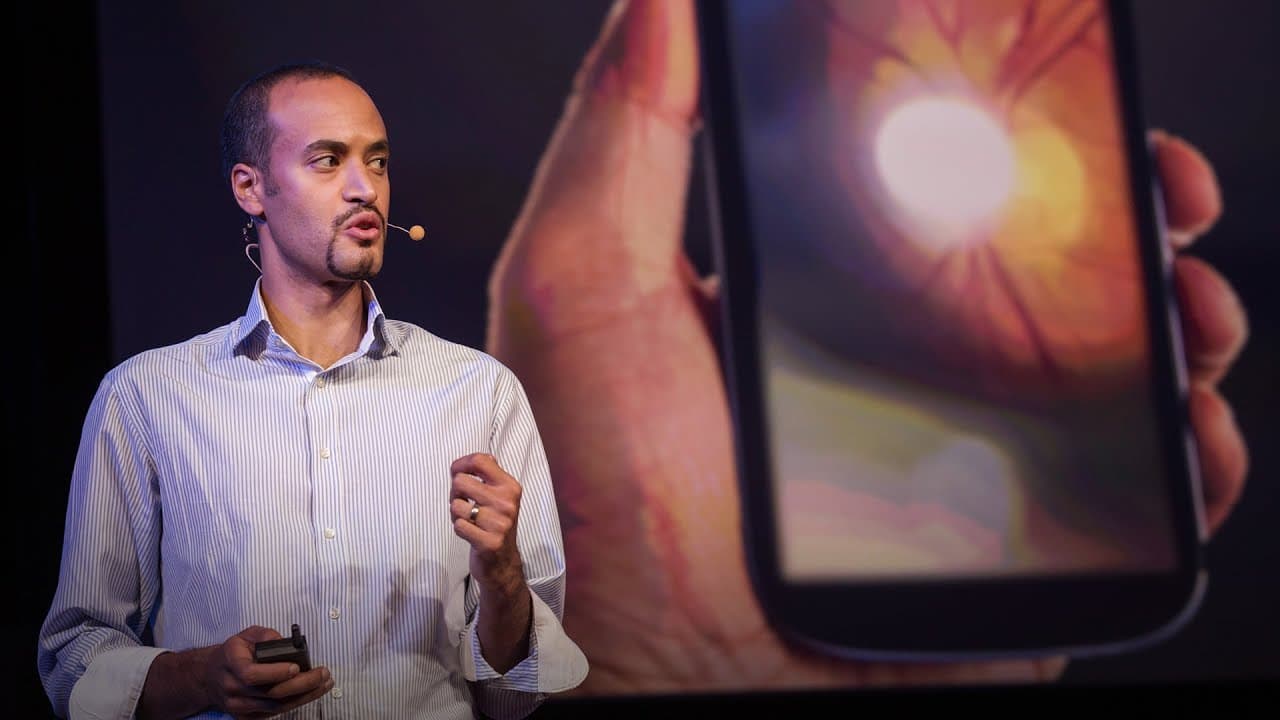
- 👀 3D-printed, low-cost hardware can be attached to a smartphone to obtain high-quality views of the retina, allowing for diagnoses in remote areas.
- 🚲 With just a smartphone and minimal training, healthcare workers on bikes can deliver comprehensive eye examinations and connect with global experts.
- 🌞 Solar power overcomes the challenge of limited power supply, enabling the delivery of care in remote locations and patient homes.
Install to Summarize YouTube Videos and Get Transcripts
Explore YouTube Video Summarizer or Get YouTube Transcript Extractor
Questions & Answers
Q: What is the main goal of the speaker's work in Kenya?
The main goal of the speaker's work in Kenya is to understand why people are going blind and find ways to prevent or cure the diseases that cause blindness.
Q: How does the speaker use mobile technology to deliver eye care?
The speaker developed Peek, a smartphone system that enables community healthcare workers to deliver eye care using smartphone apps and hardware. This allows for testing anyone, regardless of age or language, and replaces traditional bulky and expensive hospital equipment.
Q: What is the importance of sharing data in non-medical jargon?
Sharing data in non-medical jargon is crucial for people to understand the examinations and their implications. By using applications like sight sim, they can visually represent what the visual world is like for someone with low vision, allowing caregivers and teachers to empathize and provide appropriate help.
Q: How does the speaker overcome the challenge of accessing the inside of the eye?
The speaker developed 3D-printed, low-cost hardware that can be clipped onto a smartphone, allowing for high-quality views of the back of the eye. This hardware, costing less than five dollars to produce, replaces expensive equipment traditionally used to examine the retina.
Q: How has the delivery of healthcare changed with the use of smartphone technology?
Initially, the speaker required expensive equipment and a large team to deliver healthcare. However, with the use of smartphones, now only a single person on a bike equipped with a smartphone is needed to provide comprehensive, high-tech, and accurate examinations. The cost has significantly reduced, making healthcare more accessible.
Q: How do they locate and arrange treatment for patients in remote areas?
By using an interface, project managers and hospital directors can search for patients based on various conditions. They can identify people in remote and difficult-to-reach areas, and through bulk text messaging services, they can inform the patients about arranging treatment. Local leaders and elders also assist in connecting healthcare workers with patients, ensuring effective coordination.
Q: How much does it cost to restore the eyesight of someone who has been blind for over 10 years?
It costs less than 40 dollars to restore the eyesight of someone like Mama Wangari, who has been blind for over 10 years. This demonstrates the affordability and accessibility of the solutions offered by the speaker's work.
Summary & Key Takeaways
-
39 million people in the world are blind, with 80% in low-income countries like Kenya, and many cases are curable or preventable diseases.
-
The use of mobile technology, specifically smartphones and apps, can revolutionize access to eye care, replacing traditional equipment and enabling community healthcare workers to perform tests and provide treatment.
-
The development of low-cost, 3D-printed hardware that can be attached to smartphones allows for high-quality examination of the retina, and solar power overcomes the issue of limited power supply in remote areas.
Read in Other Languages (beta)
Share This Summary 📚
Summarize YouTube Videos and Get Video Transcripts with 1-Click
Try YouTube Summary with ChatGPT & Claude or YouTube Transcript Generator
Explore More Summaries from TED 📚




Summarize YouTube Videos and Get Video Transcripts with 1-Click
Try YouTube Summary with ChatGPT & Claude or YouTube Transcript Generator