How Can Web3 Restore User Ownership Online?
TL;DR
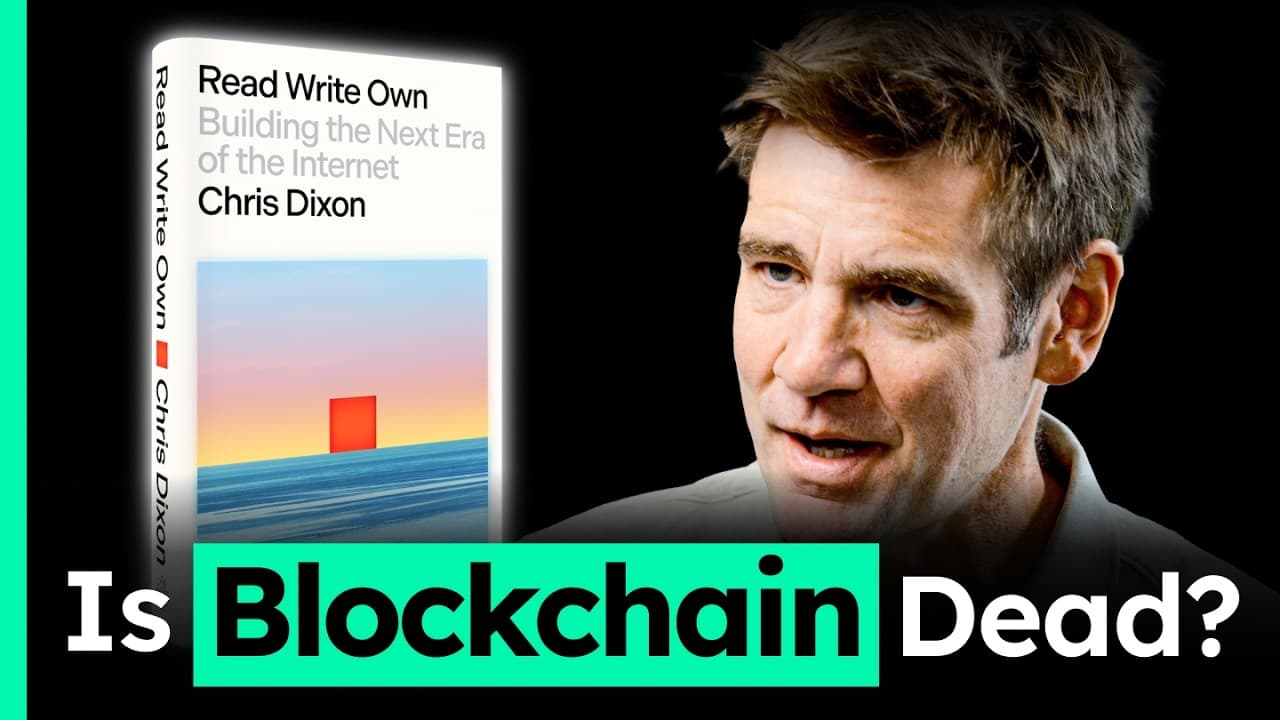
Web3 can return power and money to internet users by using blockchains to establish digital ownership and remove centralized gatekeepers. Chris Dixon argues that crypto is not dead despite failures such as FTX and Terra Luna, because harmful applications do not make a neutral technology inherently bad, and important technologies commonly develop through waves.
Transcript
look I think crypto has had its challenges for sure and specifically you know FTX in the US and I think teral Luna and Korea right I mean there've been a bunch of there were a bunch of bad things that happened a couple years ago people that say it's dead like I don't I don't agree and I think that every interesting technology has gone through waves... Read More
Key Insights
- Crypto is not dead simply because FTX, Terra Luna, and other failures caused serious challenges. Dixon argues that interesting technologies develop in waves and that bad uses of a neutral technology should not be treated as proof that the underlying technology itself is inherently bad.
- Web 1 was primarily a read-only internet where people visited websites to consume information. Websites in the 1990s often resembled magazines or brochures, and users generally lacked the participatory publishing features that later became central to social media and other Web 2 services.
- Web 2 transformed the internet into a read-write medium by allowing users to publish as well as consume information. Services such as Facebook and Twitter demonstrated this participatory model, but the networks supporting participation also accumulated considerable control as their user bases and network effects expanded.
- Network effects make an internet service more valuable as more people use it. Dixon says this dynamic helped services such as Facebook, Uber, and WhatsApp become powerful, while contributing to an internet increasingly dominated by a small collection of major technology companies.
- Centralized internet platforms control access, algorithms, promotion, demotion, and deplatforming. They also collect take rates from advertising or commerce flowing through their networks, with Dixon stating that internet services can retain between 50 and 100 percent of the money moving through their systems.
- Blockchains are a new class of internet-based computer that can enable digital ownership. A user who controls the private key for Bitcoin owns it differently from someone whose account, data, audience, or digital objects remain under the control of a centralized service provider.
- Digital ownership can make identities, audiences, and data portable between services. Dixon argues that a user who owns a social media handle and follower list could move to another service when dissatisfied, instead of remaining dependent on a platform that can change its rules or remove access.
- Web3 adoption remains at an early stage despite hundreds of millions of people owning crypto. Blockchain games and social services have users numbering in the tens of millions, and Dixon attributes the gap partly to infrastructure, expense, performance, and user experiences that have only recently begun approaching conventional applications.
Install to Summarize YouTube Videos and Get Transcripts
Explore YouTube Video Summarizer or Get YouTube Transcript Extractor
Questions & Answers
Q: Why does Chris Dixon believe crypto is not dead?
Chris Dixon believes crypto is not dead because major technologies often progress through multiple waves rather than following a smooth path. He acknowledges serious problems associated with FTX in the United States, Terra Luna in Korea, and other failures. However, he argues that harmful uses of a technology do not establish that the underlying technology is bad, since technology itself is neutral.
Q: What is the difference between Web 1, Web 2, and Web3?
Web 1 was mainly read-only, allowing people to visit websites and consume information presented like magazines or brochures. Web 2 added writing and participation, enabling users to publish content through services such as Facebook and Twitter. Web3 adds ownership through blockchains, giving users a way to possess and potentially move digital assets, identities, audiences, and data between internet services.
Q: Why have large internet platforms become so powerful?
Large internet platforms have become powerful because many important online services are networks with network effects. A network becomes more valuable as more people join it, which can reinforce the position of the largest provider. Dixon argues that this pattern has helped a small number of technology companies consolidate traffic, money, user relationships, and control over essential internet services.
Q: How do centralized platforms control users and creators?
Centralized platforms control who can access their networks, who can be removed, how recommendation algorithms operate, and which content receives promotion or demotion. Their rules and algorithms can change, while users and creators have limited influence over those decisions. People may build accounts, audiences, or businesses for years but can still lose access because the platform ultimately controls those resources.
Q: What is a platform take rate and why does it matter?
A take rate is the percentage of money moving through a network that goes to the network's owner. That money can come from advertising, commerce, or payments between participants. Dixon states that internet services can have take rates ranging from 50 to 100 percent, meaning centralized providers may capture most of the economic value generated through the systems they control.
Q: How can blockchains create digital ownership?
Blockchains can enable users to control digital items through mechanisms such as private keys. Bitcoin is Dixon's foundational example because the person holding its private key owns it in a way that differs from data stored on Twitter or Facebook. The idea has expanded to NFTs representing art, game objects, social media handles, and other forms of digitally owned property.
Q: How could Web3 make social media accounts portable?
Web3 could make social media portable by allowing users to own their handles, follower lists, and data instead of leaving those resources under one company's control. If a service changes its rules or no longer meets a user's needs, the user could take the owned identity and audience to another service. This portability would shift leverage away from centralized platforms and toward users.
Q: Why has Web3 not reached mainstream internet adoption?
Web3 remains relatively early because its infrastructure has needed time to achieve adequate performance, low costs, and high-quality user experiences. Dixon contrasts the hundreds of millions of people who own crypto with the tens of millions using newer blockchain games and social services. He believes blockchain applications have only recently begun to feel and function more like comparable non-blockchain services.
Summary & Key Takeaways
-
The internet evolved from the read-only websites of the 1990s to the participatory, read-write services of Web 2. Social media enabled users to publish content, but powerful network effects eventually concentrated traffic, money, and control within a small group of large technology companies that operate the dominant online networks.
-
Dixon presents blockchains as internet computers that add ownership to reading and writing. Users can possess digital assets, identities, follower lists, game objects, and contributed data through blockchain-based services. This portability could let people leave platforms without surrendering everything they created, accumulated, or contributed while using those online networks.
-
Web3 remains early because blockchain applications still serve fewer people than established Web 2 platforms, while infrastructure, cost, performance, and user experience have needed improvement. Dixon distinguishes the productive computer culture from the speculative casino culture and expects more interesting development as blockchain services become easier and less expensive to use.
Read in Other Languages (beta)
Share This Summary 📚
Summarize YouTube Videos and Get Video Transcripts with 1-Click
Try YouTube Summary with ChatGPT & Claude or YouTube Transcript Generator
Explore More Summaries from EO 📚
Summarize YouTube Videos and Get Video Transcripts with 1-Click
Try YouTube Summary with ChatGPT & Claude or YouTube Transcript Generator