Do chimps have the same emotions as us? 6 Minute English
TL;DR
Jane Goodall reveals chimps' emotional and tool-making abilities.
Transcript
Hello. This is 6 Minute English from BBC Learning English. I'm Rob. And I'm Sam. Having your photograph appear on the cover of a magazine makes you famous around the world. But imagine if that photo showed you hugging and playing with wild chimpanzees! That's exactly what happened to Jane Goodall who shot to fame in 1965 when she appeared on the co... Read More
Key Insights
- Jane Goodall's work with chimpanzees in Gombe revolutionized our understanding of animal emotions and intelligence, highlighting similarities between humans and great apes.
- In the 1960s, Jane Goodall observed chimpanzees using and modifying tools, challenging the belief that only humans were capable of such behavior.
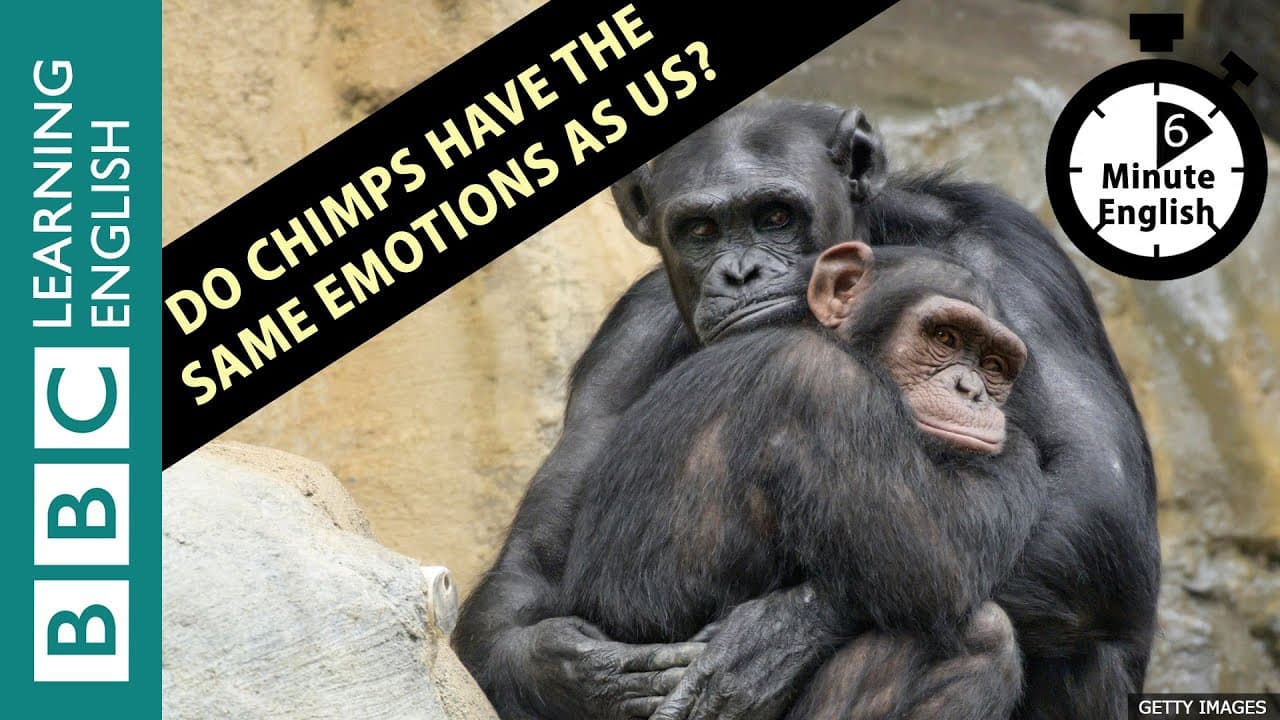
- Chimpanzees exhibit a range of emotions similar to humans, using gestures like hugging and kissing to communicate and alleviate stress.
- The renowned environmentalist, Jane Goodall, became famous after her photograph with chimpanzees appeared on the cover of National Geographic in 1965.
- The chimpanzees of Gombe became internationally recognized, with the death of the alpha female, Flo, even being noted in The Times newspaper.
- Jane Goodall's observations showed that chimpanzees' gestures closely resemble human gestures, indicating deep emotional connections.
- The program emphasizes the evolutionary closeness of humans and great apes, including chimpanzees, gorillas, and orangutans.
- Jane Goodall's studies have shifted scientific perspectives, highlighting the importance of empathy and emotional intelligence in understanding animal behavior.
Install to Summarize YouTube Videos and Get Transcripts
Explore YouTube Video Summarizer or Get YouTube Transcript Extractor
Questions & Answers
Q: What significant discovery did Jane Goodall make about chimpanzees?
Jane Goodall discovered that chimpanzees are capable of using and modifying tools, a behavior previously thought to be unique to humans. This finding challenged the scientific community's understanding of animal intelligence and demonstrated that chimpanzees possess cognitive abilities similar to those of humans.
Q: How did Jane Goodall's observations change perceptions of chimpanzee emotions?
Jane Goodall's observations revealed that chimpanzees exhibit a range of emotions similar to humans, such as seeking physical contact to alleviate stress and using gestures like hugging and kissing. These findings highlighted the deep emotional connections between humans and chimpanzees, changing perceptions of animal emotions.
Q: Why did Jane Goodall become famous in 1965?
Jane Goodall became famous in 1965 when her photograph appeared on the cover of National Geographic magazine. The image, which showed her interacting with wild chimpanzees, captured public attention and brought widespread recognition to her groundbreaking work on chimpanzee behavior and emotions.
Q: What impact did Jane Goodall's work have on the scientific community?
Jane Goodall's work had a profound impact on the scientific community by challenging existing beliefs about animal intelligence and emotions. Her discoveries about chimpanzees using tools and exhibiting human-like emotions prompted a reevaluation of the cognitive and emotional capabilities of animals, influencing future research and conservation efforts.
Q: What was the significance of the chimpanzee Flo's obituary in The Times?
The obituary of the chimpanzee Flo in The Times was significant because it demonstrated the widespread recognition and impact of Jane Goodall's work. Flo's death was noted in a major newspaper, highlighting the importance of Goodall's research in raising awareness about chimpanzees and their emotional and social lives.
Q: How do chimpanzees communicate emotions according to Jane Goodall?
According to Jane Goodall, chimpanzees communicate emotions through gestures such as hugging, kissing, and holding hands. These behaviors are similar to human gestures and are used to express feelings, reassure others, and alleviate stress. Goodall's observations highlighted the emotional intelligence of chimpanzees and their similarities to humans.
Q: What role did Jane Goodall's photography play in her research's recognition?
Jane Goodall's photography played a crucial role in gaining recognition for her research by visually capturing her interactions with chimpanzees. The iconic image of her on the cover of National Geographic brought global attention to her work, emphasizing the emotional and social lives of chimpanzees and changing public perceptions.
Q: What evolutionary connections between humans and great apes are highlighted in the program?
The program highlights the evolutionary connections between humans and great apes, such as chimpanzees, gorillas, and orangutans. These species share close genetic ties with humans, and Jane Goodall's research underscores the cognitive and emotional similarities, emphasizing the importance of understanding and conserving these species.
Summary & Key Takeaways
-
Jane Goodall's groundbreaking research in the 1960s revealed that chimpanzees use and modify tools, challenging previous beliefs about animal intelligence and tool-making abilities.
-
Chimpanzees exhibit human-like emotions and gestures, such as hugging and kissing, which they use to communicate and alleviate stress, showing deep emotional connections with humans.
-
The international recognition of Gombe's chimpanzees, especially the alpha female Flo, highlighted the impact of Jane Goodall's work on changing perceptions of great apes and their similarities to humans.
Read in Other Languages (beta)
Share This Summary 📚
Summarize YouTube Videos and Get Video Transcripts with 1-Click
Try YouTube Summary with ChatGPT & Claude or YouTube Transcript Generator
Explore More Summaries from BBC Learning English 📚

Summarize YouTube Videos and Get Video Transcripts with 1-Click
Try YouTube Summary with ChatGPT & Claude or YouTube Transcript Generator