Is High Cholesterol Really a Heart Disease Risk?
TL;DR
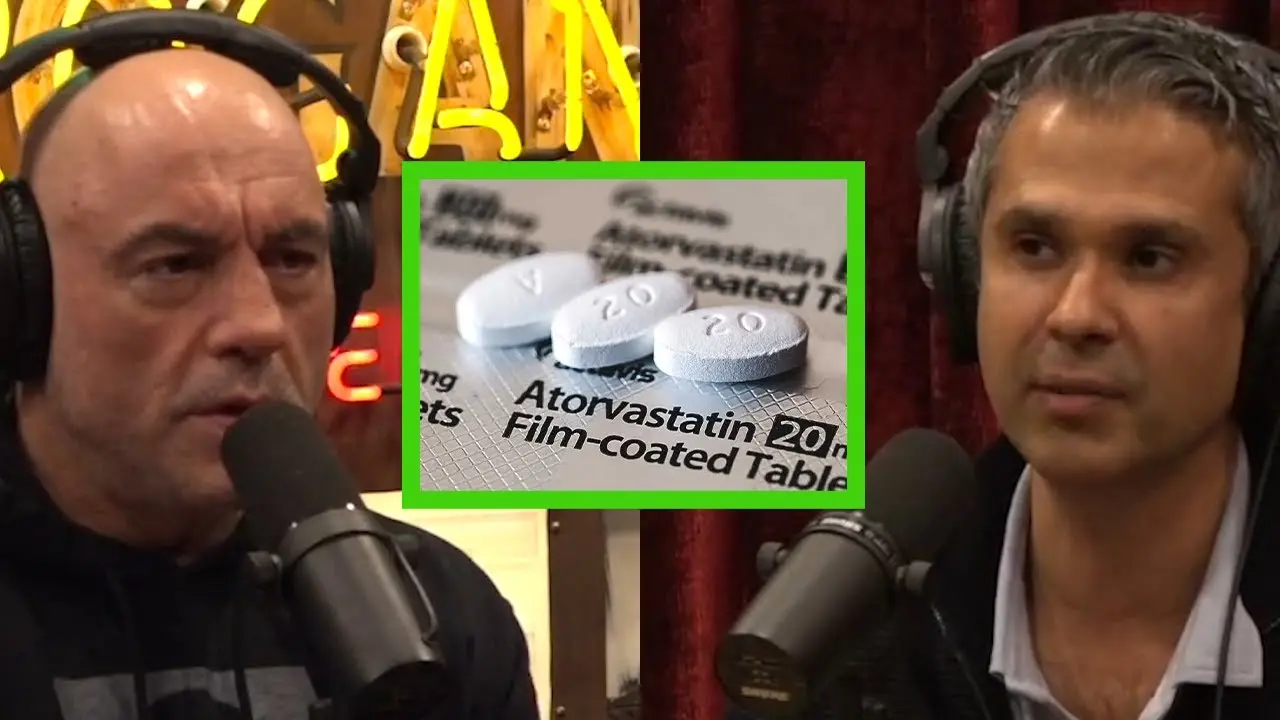
High cholesterol is only a weak risk factor for heart disease, with significant associations seen mostly in those with very high or genetically low cholesterol. Research indicates that statins provide limited benefits, mainly through anti-inflammatory properties, not just cholesterol reduction, and their effectiveness in saving lives is marginal.
Transcript
The Joe Rogan Experience can you please tell us like what is the mechanism how do statins work and what does it do to lower cholesterol yeah so for many years there's been this misconception the high cholesterol is one of the most single one of the most important risk factors for development heart disease so I broke down the data and I've published... Read More
Key Insights
- 🥰 The association between cholesterol and heart disease is primarily based on correlations from the Framingham study, which had limitations in the data and population studied.
- 🥰 Genetic factors play a significant role in cholesterol levels and heart disease risk.
- 🥰 Lowering LDL cholesterol does not necessarily result in a reduced risk of heart attacks and strokes, as shown by recent comprehensive research.
- 🇦🇬 Statins have minimal benefits, and their anti-inflammatory and anti-clotting properties contribute more to their effectiveness than their ability to lower cholesterol levels.
- 🛩️ The overall benefits of statins are marginal, with a small number needed to treat to see a significant benefit.
- 🥰 The mass prescription of statins has not significantly reduced death rates from heart disease.
- 👨🔬 There has been pushback and attempts to discredit the research challenging the efficacy of statins, but the importance of transparent and evidence-based medicine remains crucial.
Install to Summarize YouTube Videos and Get Transcripts
Explore YouTube Video Summarizer or Get YouTube Transcript Extractor
Questions & Answers
Q: What is the association between cholesterol and heart disease?
The association between cholesterol and heart disease is weak, with significant associations only observed in individuals with extremely high cholesterol levels or genetically low cholesterol levels.
Q: Do statins effectively lower the risk of heart attacks and strokes?
Recent research shows that there is no clear correlation between lowering LDL cholesterol and preventing heart attacks and strokes, indicating that statins have minimal benefits.
Q: How do statins work?
Statins work through their anti-inflammatory and anti-clotting properties, rather than solely by lowering cholesterol levels. These properties contribute to the prevention of heart attacks and strokes.
Q: What are the overall benefits of statins?
The overall benefits of statins are marginal, with a best-case scenario of 1 in 83 for saving lives and 1 in 39 for preventing further heart attacks. The benefits are even lower in real-world settings due to side effects and non-adherence.
Summary & Key Takeaways
-
The association between cholesterol and heart disease is weak, with the significant association only observed in individuals with extremely high cholesterol levels or genetically low cholesterol levels.
-
Recent research shows that there is no clear correlation between lowering LDL cholesterol and preventing heart attacks and strokes, debunking the long-held belief that statins are highly effective.
-
Statins have anti-inflammatory and anti-clotting benefits, but their overall benefits are marginal, with a best-case scenario of 1 in 83 for saving lives and 1 in 39 for preventing further heart attacks.
Read in Other Languages (beta)
Share This Summary 📚
Summarize YouTube Videos and Get Video Transcripts with 1-Click
Try YouTube Summary with ChatGPT & Claude or YouTube Transcript Generator
Explore More Summaries from PowerfulJRE 📚






Summarize YouTube Videos and Get Video Transcripts with 1-Click
Try YouTube Summary with ChatGPT & Claude or YouTube Transcript Generator