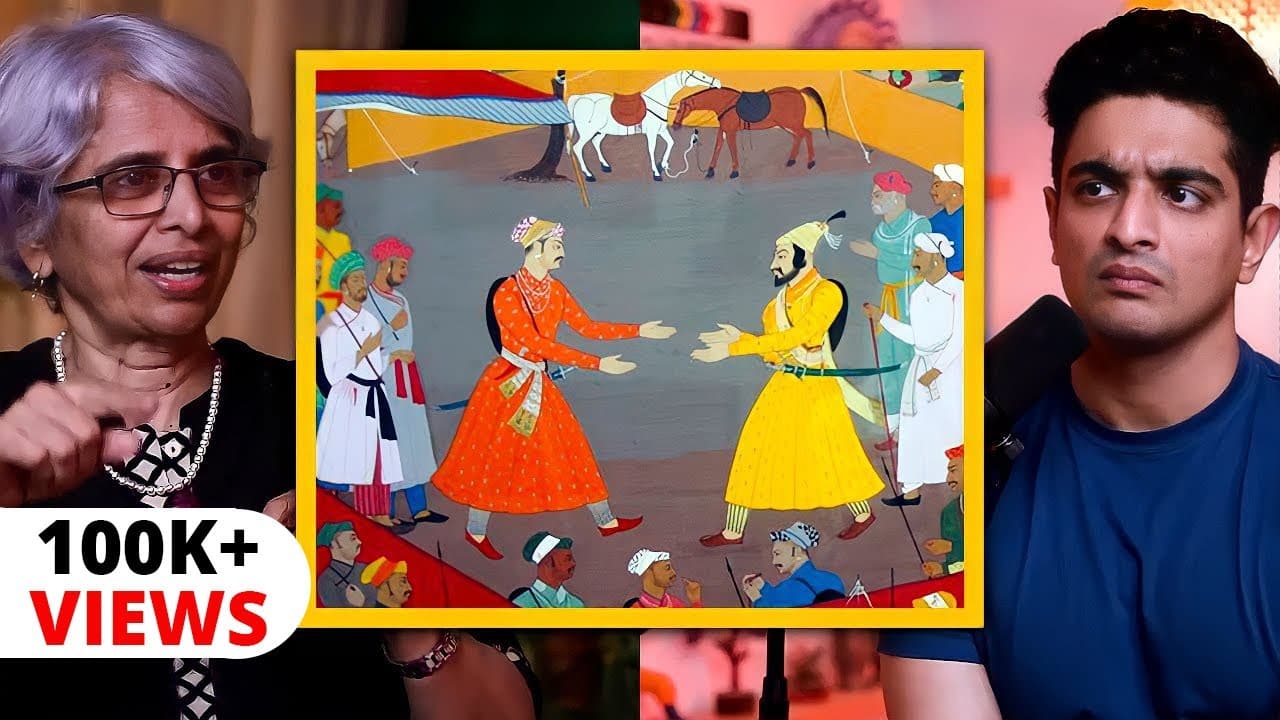
When Sambhaji Maharaj Became Mughal’s Mansabdar - The Treaty of Purandar Explained
TL;DR
A historic recount of Mirza Raja Jai Singh's conflict with Shivaji and the Mughal Empire.
Transcript
welcome to TRS Clips this was created so that you can go on a binge watching experience every time you want to enhance your brain with information happiness through Curiosity on the renby show so there is this another uh very powerful rajput Mirza Raja Jai Singh who is linguist knows several languages he's pickled in politics he knows the Deccan be... Read More
Key Insights
- 👨🎨 Mirza Raja Jai Singh was a multifaceted leader skilled in military strategy and politics, navigating complex inter-kingdom rivalries.
- ✊ The conflict exemplified the turbulent dynamics between various regional powers during Mughal rule, highlighting both cooperation and rivalry.
- 📏 Battles like those for Purandar illustrated the fierce resistance from local rulers against Mughal expansion, emphasizing the importance of fortifications.
- 💠 The narrative underscores themes of loyalty and betrayal, with personal allegiances shaping the fate of alliances and conflicts.
- 🤯 Shivaji's strategic mind allowed him to manipulate political scenarios effectively, retaining some power despite pressure from Mughal forces.
- 👊 The intense military engagements depicted the harsh realities of warfare in the Deccan, with significant human costs reflected in casualties and village attacks.
- 🙈 Treaties like the one at Purandar showcased the delicate balance of power, where territorial concessions could be seen as a means to regroup and strategize for future conflicts.
Install to Summarize YouTube Videos and Get Transcripts
Explore YouTube Video Summarizer or Get YouTube Transcript Extractor
Questions & Answers
Q: Who was Mirza Raja Jai Singh, and what were his main skills?
Mirza Raja Jai Singh was a prominent Rajput leader known for his political acumen, linguistic skills, and military expertise. His ability to navigate complex political landscapes and engage in strategic warfare, particularly in the Deccan region, made him a formidable opponent against local rulers like Shivaji.
Q: How did the rivalry between Mirza Raja and Diler Khan evolve during the conflict?
The rivalry between Mirza Raja and Diler Khan was fueled by their differing loyalties and strategic goals. Diler Khan sought to capture territory in Konkan, while Mirza Raja emphasized a plan to take Purandar Fort. Their animosity became a central theme as they reluctantly allied against Shivaji, showcasing the internal conflicts within their camp.
Q: What were the key outcomes of the battles for Purandar and Vajragad?
The battles for Purandar and Vajragad were significant turning points in the conflict. Mirza Raja and his forces successfully captured Vajragad, which facilitated their assault on Purandar. Despite overwhelming odds, Murar Baji exhibited remarkable bravery, inflicting heavy casualties on the Mughal side, underscoring the fierce resistance from Shivaji's supporters.
Q: What role did Shivaji's political strategy play in his interactions with the Mughals?
Shivaji's political strategy was characterized by shrewd diplomacy and tactical retreats. By negotiating treaties and maintaining control over key forts, he aimed to consolidate his power while remaining a significant player against Mughal expansion. His foresight in sending messages to maintain resistance exhibited his commitment to sovereign rule despite threats.
Q: How did the concept of loyalty manifest in the battles between the Rajputs and Marathas?
Loyalty played a central role in the struggles between Rajputs and Marathas, exemplified in Murar Baji's refusal to betray Shivaji despite the alluring offers from Diler Khan. This narrative of loyalty underpins the broader conflict, emphasizing the personal and ideological motivations driving these warriors beyond mere territorial disputes.
Q: What were the implications of the Purandar Peace Treaty for Shivaji?
The Purandar Peace Treaty significantly reduced Shivaji's control, as he had to cede 23 forts to Mirza Raja Jai Singh. However, it also allowed Shivaji to retain some autonomy and continue operations against the Adilshahi forces, preserving the essence of his swaraj or self-rule philosophy despite the setbacks he faced.
Summary & Key Takeaways
-
The content discusses the conflict between Mirza Raja Jai Singh and Shivaji, highlighting the strategic battles for control over forts in the Deccan region.
-
It details the intense rivalry between Mirza Raja and Diler Khan, and Murar Baji's courageous defense in battle, ultimately leading to his tragic death.
-
Additionally, it explores Shivaji's political maneuvering, including peace treaties and his strategic vision for maintaining power amid threats from Mughal forces.
Read in Other Languages (beta)
Share This Summary 📚
Summarize YouTube Videos and Get Video Transcripts with 1-Click
Try YouTube Summary with ChatGPT & Claude or YouTube Transcript Generator
Explore More Summaries from TRS Clips 📚




Summarize YouTube Videos and Get Video Transcripts with 1-Click
Try YouTube Summary with ChatGPT & Claude or YouTube Transcript Generator