What Is Dietrich Bonhoeffer's Theory of Stupidity?
TL;DR
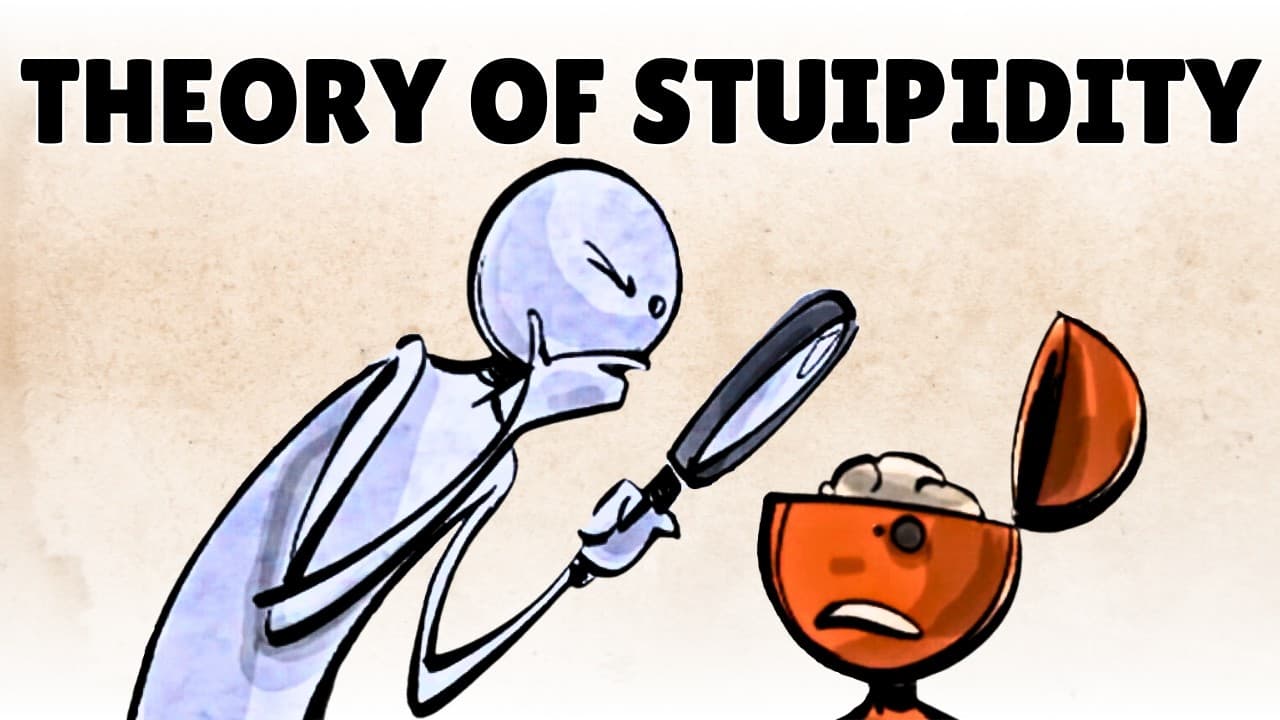
Dietrich Bonhoeffer's theory posits that stupidity is a moral defect more dangerous than malice because it resists reason and is self-satisfied. He argues that external liberation is necessary before internal liberation can occur, suggesting that societal power dynamics often lead individuals to become 'stupid' by abandoning their autonomy in groups.
Transcript
In the darkest chapter of German history, during a time when incited mobs threw stones into the windows of innocent shop owners and women and children were cruelly humiliated in the open; Dietrich Bonhoeffer, a young pastor, began to speak publicly against the atrocities. After years of trying to change people's minds, Bonhoeffer came home one even... Read More
Key Insights
- 😆 Stupidity, as defined by Bonhoeffer, is a moral defect that manifests as resistance to reason and a self-satisfied nature.
- 😒 Stupidity is a more dangerous enemy of the good than malice because it is resistant to protests or the use of force.
- ❓ Bonhoeffer believed that external liberation must precede internal liberation from stupidity.
- 🙈 The danger of stupidity is that it blinds individuals, making them capable of any evil without recognizing its evil nature.
- ✊ Bonhoeffer's reflections on stupidity suggest that it is a sociological problem influenced by societal power dynamics.
- 👥 Individuals in solitude are less prone to manifest the defect of stupidity than those in groups.
- 🥺 Bonhoeffer's involvement in a plot against Hitler ultimately led to his death, demonstrating the danger of confronting malicious power.
Install to Summarize YouTube Videos and Get Transcripts
Explore YouTube Video Summarizer or Get YouTube Transcript Extractor
Questions & Answers
Q: What did Dietrich Bonhoeffer believe was the root problem in his country?
Bonhoeffer believed that stupidity, not malice, was the root problem, as it was more dangerous and resistant to reason.
Q: How did Bonhoeffer define stupidity?
Bonhoeffer defined stupidity as a moral defect, not an intellectual one, manifested by a self-satisfied nature and resistance to reason.
Q: How did Bonhoeffer characterize the danger of stupidity?
Bonhoeffer argued that stupidity is a more dangerous enemy of the good than malice because it is resistant to protests or the use of force and can easily become aggressive.
Q: What did Bonhoeffer believe was necessary to overcome stupidity?
Bonhoeffer believed that only external liberation can precede internal liberation from stupidity, and attempts to convince a stupid person are futile until liberation is achieved.
Summary & Key Takeaways
-
Dietrich Bonhoeffer, a young pastor in Germany during its darkest chapter, spoke out against atrocities and eventually faced imprisonment.
-
In prison, Bonhoeffer concluded that stupidity, not malice, was the root problem in his country.
-
Stupidity is a moral defect, not an intellectual one, and is more dangerous than malice because it is self-satisfied and resistant to reason.
Read in Other Languages (beta)
Share This Summary 📚
Summarize YouTube Videos and Get Video Transcripts with 1-Click
Try YouTube Summary with ChatGPT & Claude or YouTube Transcript Generator
Explore More Summaries from Sprouts 📚




Summarize YouTube Videos and Get Video Transcripts with 1-Click
Try YouTube Summary with ChatGPT & Claude or YouTube Transcript Generator