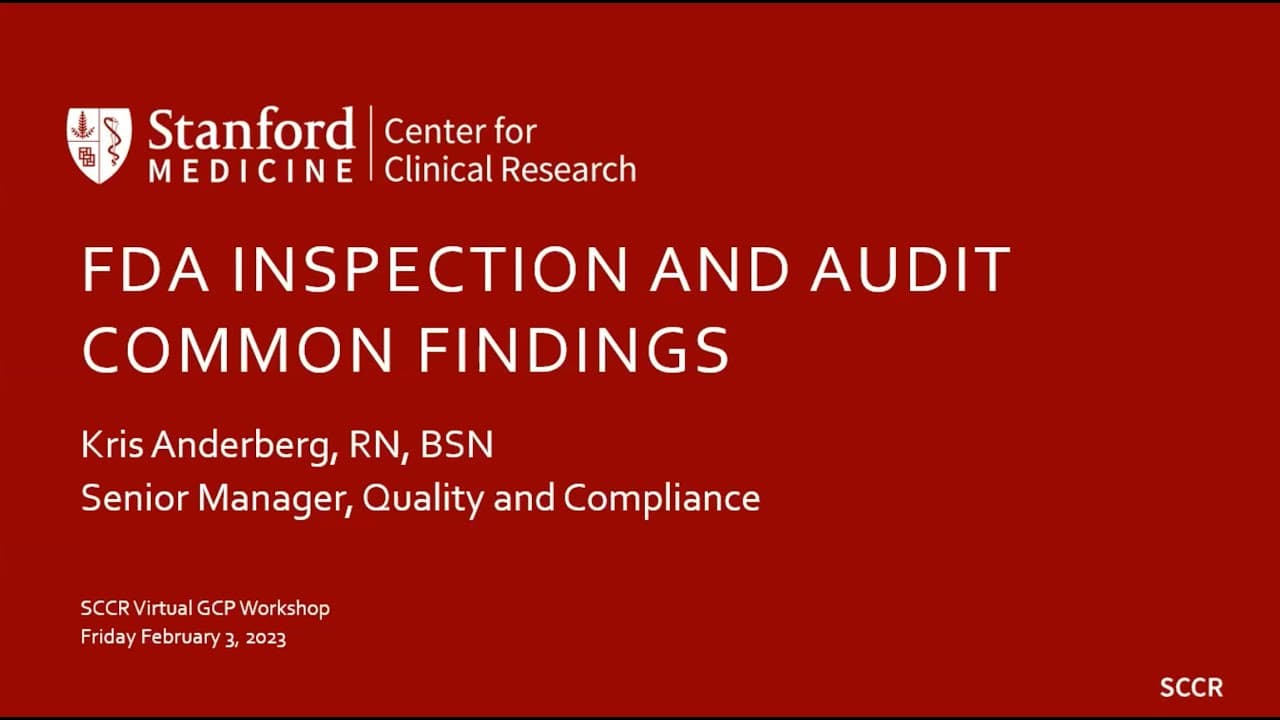
FDA Inspection and Audit Common Findings
TL;DR
This presentation discusses FDA inspections, common audit findings, and provides insight into warning letters issued by the FDA.
Transcript
starting going wonderful now I can introduce our speaker um so as I was saying Chris anderberg works at sccr as senior quality and compliance manager she has obtained her Bachelor of Science in nursing from Emerald University in Atlanta following her graduation she has worked in the pediatric cardiac unit ICU unit and she has over 30 years of resea... Read More
Key Insights
- ❓ FDA inspections are important for ensuring the quality, integrity, and compliance of clinical trials.
- 🌱 Common audit findings include failure to follow investigational plans, inadequate record-keeping, and safety reporting failures.
- 👋 Proper training, good documentation practices, and addressing burnout can help avoid pitfalls during audits.
- ❓ It is crucial to address protocol deviations and update protocols to ensure compliance.
- 🖐️ IRBs play a vital role in protecting human subjects and complying with regulatory requirements.
- ❓ External pressures and burnout can impact the quality and integrity of clinical trials.
- 🏬 Sufficient staffing and support from IT departments are essential for successful audits.
Install to Summarize YouTube Videos and Get Transcripts
Explore YouTube Video Summarizer or Get YouTube Transcript Extractor
Questions & Answers
Q: What is the purpose of FDA inspections?
FDA inspections are conducted to assess regulated facilities, ensure quality and integrity of data, and protect human subjects and animals involved in clinical trials.
Q: What are common audit findings related to informed consent?
Common audit findings related to informed consent include incorrect versions of consent forms, inadequate documentation of the consent process, and performing study procedures prior to obtaining consent.
Q: How can sites avoid common audit findings related to training?
Sites can avoid common audit findings related to training by ensuring that training is appropriate and well-documented, and by providing adequate training to staff members.
Q: What are the consequences of protocol deviations?
Protocol deviations can lead to audit findings and regulatory actions. It is important to document and report all protocol deviations and make necessary updates to the protocol to ensure compliance.
Q: What are some pitfalls to avoid during audits?
Some pitfalls to avoid during audits include lack of training, human errors, external pressures, and burnout. To avoid these pitfalls, proper training and education, adequate staffing, attention to good documentation practices, and addressing burnout are necessary.
Summary & Key Takeaways
-
The speaker, Chris Anderberg, discusses FDA inspections, common audit findings, and warning letters issued by the FDA.
-
FDA inspections are comprehensive assessments of regulated facilities to ensure quality, integrity of data, and protection of human subjects.
-
Common audit findings include failure to follow investigational plans, inadequate record-keeping, and safety reporting failures.
Read in Other Languages (beta)
Share This Summary 📚
Summarize YouTube Videos and Get Video Transcripts with 1-Click
Try YouTube Summary with ChatGPT & Claude or YouTube Transcript Generator
Explore More Summaries from Stanford Center for Clinical Research 📚
Summarize YouTube Videos and Get Video Transcripts with 1-Click
Try YouTube Summary with ChatGPT & Claude or YouTube Transcript Generator