Katherine, Cats and a Brush-tailed Bettong: SciShow Talk Show Episode 3
TL;DR
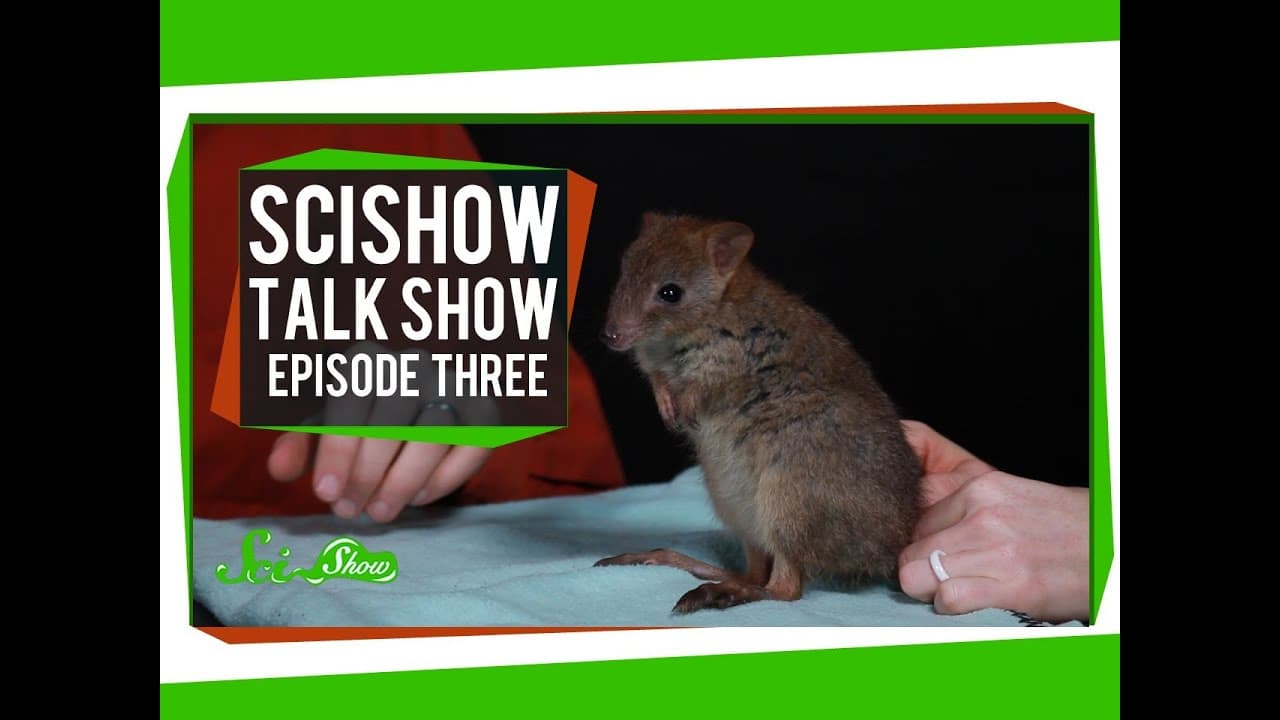
Katherine Green discusses wild cats and their unique characteristics, followed by a visit from a brush tailed bettong named Quigley.
Transcript
- Hello, and welcome to today's edition of the SciShow Talk Show. Today joining us in the studio is Katherine Green, who among other things, is our social media manager. She uploads the videos and goes on the Twitter and the Facebooks and all of those things. She is also my wife. Yes.
- I am also his wife. - Hi, thank you for doing this.
- You're ... Read More
Key Insights
- 😺 Wild cats have a long evolutionary history dating back 25 million years, with a majority of species originating in the last million years.
- 😺 Unique wild cat species like the Pallas's cat, caracal, and sand cat showcase diverse adaptations for survival in various environments.
- 😺 Conservation challenges for brush tailed bettongs in Australia stem from feral cat predation and the spread of toxoplasma parasites impacting their population.
- 😺 Efforts to protect endangered species like the brush tailed bettong involve conservation strategies and understanding the threats posed by feral cat populations.
Install to Summarize YouTube Videos and Get Transcripts
Explore YouTube Video Summarizer or Get YouTube Transcript Extractor
Questions & Answers
Q: How long ago did wild cats first emerge on Earth, and what percentage of cat species have originated in the last million years?
Wild cats emerged about 25 million years ago, and 60% of existing cat species originated in the last million years, showcasing continuous evolution within the Felidae family.
Q: What unique features do specific wild cat species like the Pallas's cat, caracal, and sand cat exhibit?
The Pallas's cat is known for its fluffy appearance and inhabits cold regions, the caracal boasts giant ear tufts for thermoregulation, and the sand cat thrives in desert environments with adaptations to extreme temperatures.
Q: How have human interventions and the introduction of predators like the red fox impacted the brush tailed bettong population in Australia?
Human interventions and predator introduction led to population declines for brush tailed bettongs, with efforts to control feral cats and address the spread of toxoplasma contributing to conservation challenges.
Summary & Key Takeaways
-
Katherine Green shares insights on wild cats, highlighting their evolution and diversity within the Felidae family.
-
The talk shifts to specific wild cat species like the Pallas's cat, caracal, and sand cat, each with distinct adaptations.
-
Jessi introduces Quigley, a brush tailed bettong from Australia, discussing their history, conservation efforts, and the threat posed by feral cats and a parasitic infection.
Read in Other Languages (beta)
Share This Summary 📚
Summarize YouTube Videos and Get Video Transcripts with 1-Click
Try YouTube Summary with ChatGPT & Claude or YouTube Transcript Generator
Explore More Summaries from SciShow 📚
Summarize YouTube Videos and Get Video Transcripts with 1-Click
Try YouTube Summary with ChatGPT & Claude or YouTube Transcript Generator