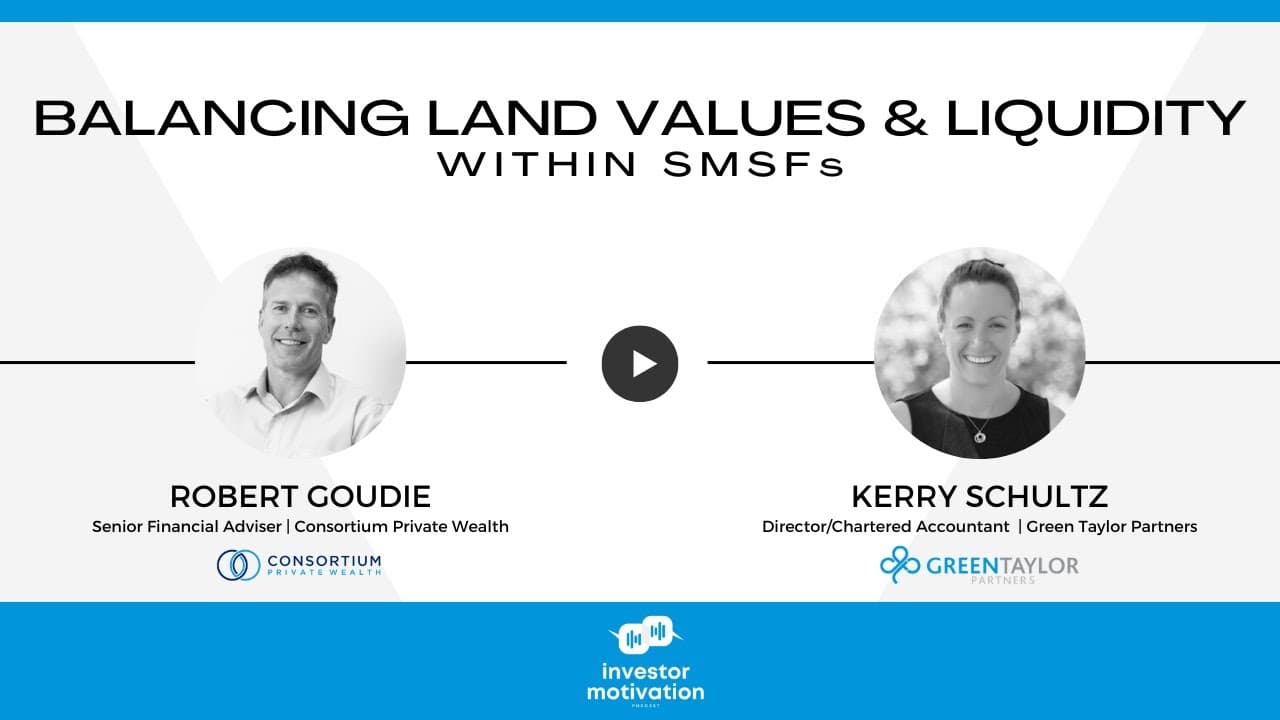
Balancing Land Values & Liquidity within SMSFs
TL;DR
Learn about the liquidity challenges faced by self-managed super funds, particularly those with lumpy assets such as farming land, in meeting minimum pension requirements.
Transcript
foreign to the investor motivation podcast g'day Amy again hello Rob haven't we been busy when it comes to podcasts you've been more busier than me but yeah chatting chatting to everyone good so really people are learning a lot yeah chatting to you next time yes you are chatting to me yes cool what are we chatting about at our next chat chat which ... Read More
Key Insights
- 🤳 Different auditors may have varying requirements for valuations in self-managed super funds.
- 🤕 The calculation of pension payments and minimums is based on the value of the member's benefit and their age.
- 🤣 It is possible to roll back from pension to accumulation phase and retain majority assets within the fund.
- 🆘 Coordination between professionals helps in planning and decision-making regarding liquidity challenges.
- 🦸 Conditions of release determine when individuals can access their super funds without penalties.
- 🖐️ Tax considerations and individual circumstances play a role in deciding between pension and accumulation phases.
- 💐 Death benefit options include commuting pensions back to accumulation and managing the cash flow within the fund.
Install to Summarize YouTube Videos and Get Transcripts
Explore YouTube Video Summarizer or Get YouTube Transcript Extractor
Questions & Answers
Q: How often do auditors require valuations for self-managed super funds?
Auditors typically follow a three-year cycle for valuations, but some may require more frequent valuations. Recent changes also require comparative sales in the valuation process.
Q: How are pension payments and minimums calculated for self-managed super funds?
The minimum annual pension is calculated based on the value of the member's benefit in pension phase at the previous year-end, with different percentages based on the member's age.
Q: Can funds with lumpy assets like farming land still maintain liquidity?
It can be challenging for funds with significant farming land assets to maintain liquidity, especially with increased minimum pension requirements. Planning and coordination with professionals can help navigate this issue.
Q: What happens with valuations and pensions when transferring assets from pension to accumulation phase?
Transferring assets from pension to accumulation phase involves a commutation, which resets the member's t-bar. This allows them to start a new pension with the total value of their benefits.
Summary & Key Takeaways
-
The podcast discusses the struggles faced by self-managed super funds in maintaining liquidity, especially for larger funds with farming land assets.
-
Valuations are an important aspect, with auditors often requiring valuations more frequently. The three-year cycle for valuations is common, but new regulations now require comparative sales in valuations.
-
The calculation of pension payments and minimums is explained, based on the value of the member's benefit and their age. With the return to normal minimums, liquidity becomes a challenge for funds with significant farming land assets.
Read in Other Languages (beta)
Share This Summary 📚
Summarize YouTube Videos and Get Video Transcripts with 1-Click
Try YouTube Summary with ChatGPT & Claude or YouTube Transcript Generator
Explore More Summaries from Investor Motivation 📚





Summarize YouTube Videos and Get Video Transcripts with 1-Click
Try YouTube Summary with ChatGPT & Claude or YouTube Transcript Generator