What Makes the Planets of Our Solar System Unique?

TL;DR
The planets in our solar system each possess distinct characteristics, influenced by their formation and proximity to the sun. Earth's unique stability and presence of water have allowed life to thrive, while Mars' atmosphere loss has rendered it barren. Jupiter and Saturn's interactions have played a pivotal role in shaping the orbits and features of all planets.
Transcript
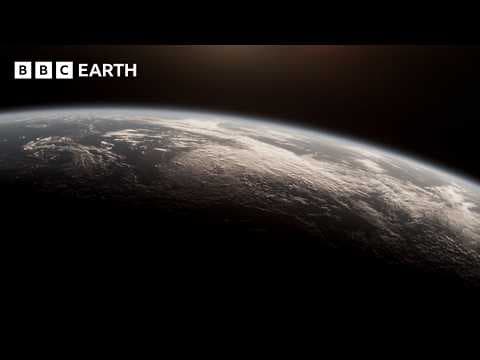
foreign the fate of the planets is intricately tied with that of the star that they orbit so for our own solar system the sun dictates Our Fate as our sun has changed so has the potential for life on our neighboring planets their history shows that habitability is a delicate balance doesn't always last there is only one planet that has retained its... Read More
Key Insights
- 💦 Earth's ability to maintain stable conditions and retain water throughout its history has supported the evolution of life.
- 😎 The sun's expansion will lead to the loss of Earth's atmosphere and the end of complex life.
- 🍃 Uranus and Neptune exhibit unique characteristics, such as bizarre ring orbits and powerful winds.
- 🚾 Mars lost its atmosphere and water, making it inhospitable for life.
- 😋 Saturn's rings are a result of material scattered by Jupiter's gravitational forces.
Install to Summarize YouTube Videos and Get Transcripts
Explore YouTube Video Summarizer or Get YouTube Transcript Extractor
Questions & Answers
Q: How has Earth's stability and water enabled the evolution of life?
Earth's ability to maintain oceanic conditions and a stable atmosphere over billions of years has provided a conducive environment for the evolution of life. Liquid water has been a crucial factor in the development of complex organisms.
Q: What will happen to Earth as the sun grows hotter in the future?
As the sun expands, Earth's temperature will rise, causing disruptions in weather patterns, severe storms, and devastating droughts. Oxygen levels will plummet, leading to the decline of complex life.
Q: What is unique about Uranus and Neptune?
Uranus has a tilted ring system and peculiar moon orbits, while Neptune exhibits powerful winds, including the fastest recorded winds in the solar system.
Q: How did Jupiter shape the formation of our inner planets?
Jupiter's migration and gravitational interactions with other planets cleared the asteroid belt, preventing the formation of super Earths and allowing the inner planets to develop. Jupiter's movement also delivered water to Earth.
Summary & Key Takeaways
-
Earth's stability and the presence of water have allowed for the development and evolution of life over billions of years.
-
The sun's expansion in the future will lead to the loss of Earth's atmosphere and the end of complex life.
-
Uranus and Neptune, the ice giants, possess unique characteristics such as bizarre ring orbits and powerful winds.
-
Mars, once potentially habitable, lost its atmosphere and water, leading to its current inhospitable conditions.
-
Saturn's rings are a result of material scattered by Jupiter's gravitational forces.
-
Jupiter's migration through the asteroid belt played a crucial role in delivering water to Earth.
-
Jupiter's gravitational pull shields Earth from potential asteroid impacts.
Read in Other Languages (beta)
Share This Summary 📚
Summarize YouTube Videos and Get Video Transcripts with 1-Click
Try YouTube Summary with ChatGPT & Claude or YouTube Transcript Generator
Explore More Summaries from BBC Earth Science 📚


Summarize YouTube Videos and Get Video Transcripts with 1-Click
Try YouTube Summary with ChatGPT & Claude or YouTube Transcript Generator