What Is Qualitative Research in Health Sciences?

TL;DR
Qualitative research is a systematic method for collecting, organizing, and interpreting textual information to gain insights into complex health phenomena that can't be easily quantified, like patient experiences and preferences. It emphasizes depth of understanding through thoughtful design, purposeful sampling, and iterative analysis, yielding valuable products such as recurrent themes, hypotheses, and conceptual models.
Transcript
welcome to fundamentals of qualitative research methods my name is Leslie Currie I'm a senior research scientist at the Yale School of Public Health a co-director at the Robert Wood Johnson clinical Scholars Program at the Yale School of Medicine and a lecturer at Yale College and in all these various roles I have the opportunity to teach and mento... Read More
Key Insights
- 👨🔬 Qualitative research in the Health Sciences enhances understanding of complex phenomena that cannot be easily quantified.
- 👨🔬 Qualitative research questions require thoughtful consideration of the broader context and limitations of qualitative methods.
- 👨🔬 Qualitative research involves purposeful sampling, data collection through interviews and observations, and iterative data analysis.
- 👨🔬 Qualitative and quantitative research methods exist along a continuum, and mixed methods can be used to complement each other's strengths and minimize limitations.
- 👨🔬 Products of qualitative research include recurrent themes or hypotheses, survey instruments, taxonomies, and conceptual models or theories.
- 👥 Recurrent themes can help identify patterns of behavior, understand group interactions, develop hypotheses, and predict relationships.
- 🤩 Qualitative data analysis involves organizing and interpreting textual information to identify key themes and patterns.
Install to Summarize YouTube Videos and Get Transcripts
Explore YouTube Video Summarizer or Get YouTube Transcript Extractor
Questions & Answers
Q: Why is developing a qualitative research question challenging?
Developing a qualitative research question is challenging because it requires thoughtful consideration of context and the limitations of qualitative methods. It involves moving away from preconceived hypotheses and instead focusing on generating novel insights from the data.
Q: How does qualitative research differ from quantitative research?
Qualitative research is inductive, starting with observations and generating theories, while quantitative research is deductive, starting with hypotheses and testing them. Qualitative research focuses on depth of understanding and occurs in natural settings, while quantitative research aims for generalizability and often takes place in controlled environments.
Q: What is purposeful sampling in qualitative research?
Purposeful sampling involves selecting participants based on specific characteristics related to the research question. It allows researchers to focus on individuals with experiences or perspectives relevant to the study, such as selecting only homeless patients in an emergency department study.
Q: How does qualitative data analysis differ from quantitative data analysis?
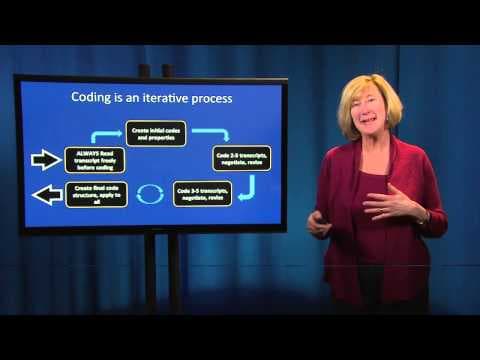
Qualitative data analysis is an iterative process that involves interpreting data as it is collected, while quantitative data analysis typically occurs after all data is collected. Qualitative analysis involves organizing and interpreting textual information to identify themes and patterns, while quantitative analysis focuses on statistical analysis and numerical data.
Summary & Key Takeaways
-
The video introduces the six modules in the series, including qualitative research question development, in-depth interviews, focus groups, qualitative data analysis, and scientific rigor in qualitative research.
-
The speaker emphasizes the importance of qualitative research in understanding phenomena that cannot be easily quantified, such as patient preferences and experiences.
-
The video explains the key characteristics of qualitative research, including its strategic and systematic nature, and its focus on generating depth of understanding.
Read in Other Languages (beta)
Share This Summary 📚
Summarize YouTube Videos and Get Video Transcripts with 1-Click
Try YouTube Summary with ChatGPT & Claude or YouTube Transcript Generator
Explore More Summaries from Yale University 📚




Summarize YouTube Videos and Get Video Transcripts with 1-Click
Try YouTube Summary with ChatGPT & Claude or YouTube Transcript Generator