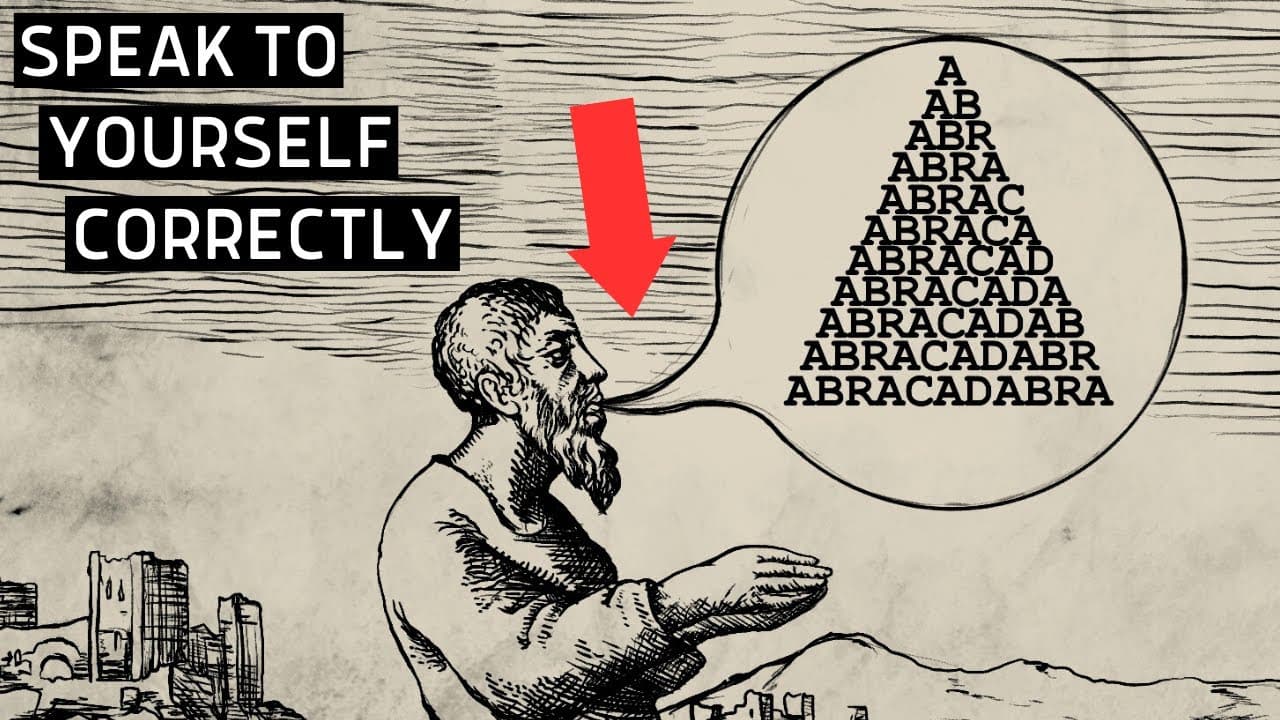
Speak like this and reality becomes yours
TL;DR
Childhood experiences shape our beliefs, but we can change them through positive self-talk.
Transcript
give me a child until he is seven and I will show you the man why is this quote from Aristotle so profound and what does it have to do with the power of words well the reason for this quote is because between the ages of 0 to 7 children are in what's called a Theta brainwave State and you can think of this as like a meditative or even hypnotic Stat... Read More
Key Insights
- 👶 Children in their early years are like sponges, absorbing beliefs primarily from parental figures and surroundings, shaping their future worldview.
- 🤯 The subconscious mind is heavily influenced during formative years, leading to established patterns that govern adult thought processes and emotional responses.
- 🖐️ The reticular activating system plays a crucial role in what individuals notice in their daily lives, often filtering for evidence that supports existing beliefs rather than objective truths.
- 🥹 Changing long-held negative beliefs requires conscious effort throughout adulthood, with techniques such as visualization, affirmations, and positive self-talk being effective strategies.
- 😮 Emotional connections to thoughts are vital, as they give rise to beliefs that are anchored deeply within one’s subconscious, influencing behavior and perspectives.
- 🥺 Awareness of one's self-talk and the ability to interrupt negative thought patterns can lead to the development of empowering beliefs and a more positive mindset.
- 🤔 Surrounding oneself with positive influences and consuming uplifting media can encourage the formation of beneficial beliefs and reinforce desired changes in thinking.
Install to Summarize YouTube Videos and Get Transcripts
Explore YouTube Video Summarizer or Get YouTube Transcript Extractor
Questions & Answers
Q: Why are childhood experiences crucial in shaping beliefs?
Childhood experiences are vital because, during the ages of 0 to 7, children are in a theta brainwave state. This state is akin to being in a meditative mode, allowing them to absorb information and beliefs effortlessly from their surroundings, particularly from authority figures like parents and teachers. These absorbed beliefs form the core of their worldview, influencing their self-perceptions and interactions throughout life.
Q: How does the reticular activating system (RAS) function in relation to beliefs?
The reticular activating system acts as a filter for information entering our consciousness. It prioritizes stimuli that align with our established beliefs, leading us to notice evidence that reinforces these beliefs. For instance, if someone believes they will always struggle with finances, their RAS will filter in information that supports this notion, potentially overlooking opportunities that contradict it.
Q: Can beliefs formed in childhood be changed later in life?
Yes, beliefs formed in childhood can be changed, although it may require more conscious effort in adulthood since individuals are no longer in the theta state. Techniques such as positive affirmations, visualizations, and changing one’s self-talk can help reprogram the subconscious mind, replacing negative beliefs with empowering ones that align with individual goals and identities.
Q: What role do emotions play in forming beliefs?
Emotions significantly impact belief formation because they provide the intensity and reinforcement needed for thoughts to transition into beliefs. When a thought is repeatedly paired with a strong emotion, it becomes entrenched in the subconscious as a belief. This emotional charge is crucial; without it, thoughts may not hold the same power or permanence in shaping our beliefs.
Q: How can individuals start to “brainwash” themselves positively?
To positive brainwash oneself, individuals can focus on maintaining a vision of who they wish to become and engage in practices that reinforce this vision. This can include positive affirmations, consuming uplifting media, and surrounding themselves with empowering influences. By consistently choosing thoughts and actions that align with their desired beliefs, they can alter their subconscious programming over time.
Q: What is the importance of self-talk in changing beliefs?
Self-talk serves as a tool for influencing one's subconscious mind. By consciously choosing positive self-talk and interrupting negative patterns, individuals can create new neural pathways in the brain. This practice helps reinforce desired beliefs and draw attention away from negative thought patterns, ultimately fostering a more positive self-image and outlook on life.
Q: How does the concept of "votes for beliefs" apply to personal growth?
The concept of "votes for beliefs" refers to the idea that individuals reinforce their beliefs through their thoughts and the attention they give to those thoughts. By focusing more on positive thoughts and affirmations, they effectively "vote" for those beliefs to take precedence. Conversely, allowing negative thoughts to dominate serves to strengthen and validate detrimental beliefs, which can hinder personal growth.
Q: Why is it necessary to have a vision for oneself when attempting to change beliefs?
Having a clear vision for oneself provides a goal and direction when altering beliefs. It serves as a reference point, helping individuals focus their energies on what they truly want to achieve. Without a defined vision, individuals may struggle to differentiate between supporting and contradicting beliefs, making it challenging to create a conscious shift towards empowerment and betterment.
Summary & Key Takeaways
-
From ages 0 to 7, children absorb beliefs from authority figures, forming their foundational worldview. This period shapes their subconscious mind significantly.
-
Our beliefs influence our reality, as the reticular activating system filters information based on those beliefs, reinforcing existing thought patterns.
-
To change negative beliefs established in childhood, we can use conscious self-talk, visualizations, and positive media to reprogram our minds and foster empowering beliefs.
Read in Other Languages (beta)
Share This Summary 📚
Summarize YouTube Videos and Get Video Transcripts with 1-Click
Try YouTube Summary with ChatGPT & Claude or YouTube Transcript Generator
Explore More Summaries from David McEwen 📚


Summarize YouTube Videos and Get Video Transcripts with 1-Click
Try YouTube Summary with ChatGPT & Claude or YouTube Transcript Generator