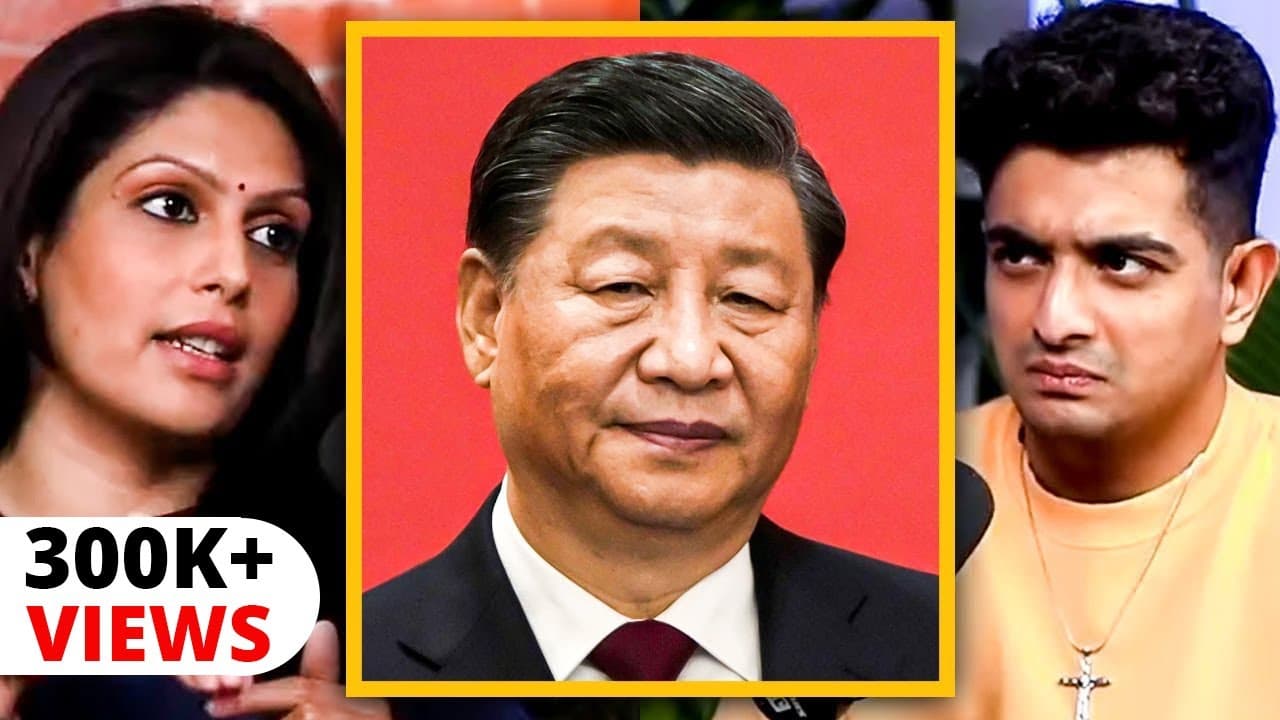
China’s Future Under Xi Jinping - Palki Sharma’s Geopolitical Prediction
TL;DR
China's political landscape is precarious under Xi Jinping, leading to economic and geopolitical challenges.
Transcript
you either use the internet for fun or you use the internet to grow you're here to grow welcome to TRS Clips what's up in China according to you like what's gonna happen if they don't get rid of that president of theirs they are in trouble okay uh he's just started his third term um again like we discussed there are some leaders who believe that th... Read More
Key Insights
- 🇨🇳 Xi Jinping's leadership style has transformed China into a more authoritarian regime, prioritizing loyalty over governance efficiency.
- 🥺 The lack of political freedoms and accountability in China has led to growing public discontent, which could pose significant future risks.
- 🌐 Economic mismanagement, particularly during the "zero Covid" policy, has severely impacted China's economic stability and global trade relationships.
- 🎖️ China's ambitious geopolitical expansion risks provoking significant military tensions, particularly in relation to Taiwan and India.
- 🤢 The notion of China as the "Middle Kingdom" reflects a deep-seated nationalist sentiment driving current foreign policy and territorial claims.
- 💗 Global diversification away from Chinese goods is growing, though developing alternative supply chains will take considerable time and investment.
- 🌐 The perception of China as a victim in international relations marks a shift in its diplomatic approach amidst mounting global tensions.
Install to Summarize YouTube Videos and Get Transcripts
Explore YouTube Video Summarizer or Get YouTube Transcript Extractor
Questions & Answers
Q: What are the risks associated with Xi Jinping's consolidation of power?
Xi Jinping's consolidation of power poses significant risks, as it has led to an environment where loyalty to the president is prioritized over governance and expertise. This results in poorly informed decision-making and reinforces authoritarian control, which may provoke internal dissent or unrest due to economic hardships and lack of political freedoms.
Q: How has China's historical context influenced its current political dynamics?
China's political dynamics are deeply rooted in its historical context, including periods of revolutionary changes under leaders like Mao Zedong and Deng Xiaoping. While historical leaders espoused various ideologies that shaped governance, Xi Jinping's rule emphasizes a return to a more oppressive, centralized power structure that threatens both civil liberties and economic stability.
Q: What impact does China’s increased spending on internal security indicate about its government’s stability?
China's increased spending on internal security over military expenditure reflects the government’s fear of domestic unrest and potential protests. It signifies a lack of confidence in the regime's stability and indicates that the leadership is more concerned about controlling the populace than engaging in external military actions or expanding influence abroad.
Q: How does the concept of "Middle Kingdom" relate to China's current geopolitical ambitions?
The "Middle Kingdom" concept suggests China's historical self-view as the centralized hub of civilization. Under Xi Jinping, this ideology has been twisted to fuel aggressive geopolitical ambitions, including assertive stances on Taiwan and heightened regional influence, stemming from a desire to reclaim what the leadership perceives as China's rightful position in the world.
Q: Why is Taiwan a critical issue for China's leadership?
Taiwan is pivotal for China’s national identity and political legitimacy under Xi Jinping. The leadership perceives reunification with Taiwan as essential for restoring national pride and consolidating internal support. The situation is escalating as the narrative surrounding Taiwan’s sovereignty is entwined with China’s broader geopolitical aspirations and the image of strength projected by its leaders.
Q: What strategies may China adopt to navigate its economic troubles?
To address its economic challenges, China may attempt to recalibrate its global economic relationships by promoting domestic production and consumption, diversifying trade partnerships, and softening its international diplomacy to foster better relations. Additionally, policies that stimulate domestic growth and reduce dependency on foreign markets could be part of a broader strategy for economic resilience.
Summary & Key Takeaways
-
Xi Jinping's consolidation of power has led to an authoritarian government where loyalty supersedes competence, endangering China’s political stability and economic future.
-
China's economy, once thriving, is now facing severe risks due to mismanagement, internal strife, and a failure to adapt its policies for the global market.
-
The looming threat of conflict over Taiwan and the deteriorating geopolitical relationships highlight the urgent need for China to reform and diversify its international dependencies.
Read in Other Languages (beta)
Share This Summary 📚
Summarize YouTube Videos and Get Video Transcripts with 1-Click
Try YouTube Summary with ChatGPT & Claude or YouTube Transcript Generator
Explore More Summaries from TRS Clips 📚





Summarize YouTube Videos and Get Video Transcripts with 1-Click
Try YouTube Summary with ChatGPT & Claude or YouTube Transcript Generator