Active vs. Passive Investing: Which Is Better for You?
TL;DR
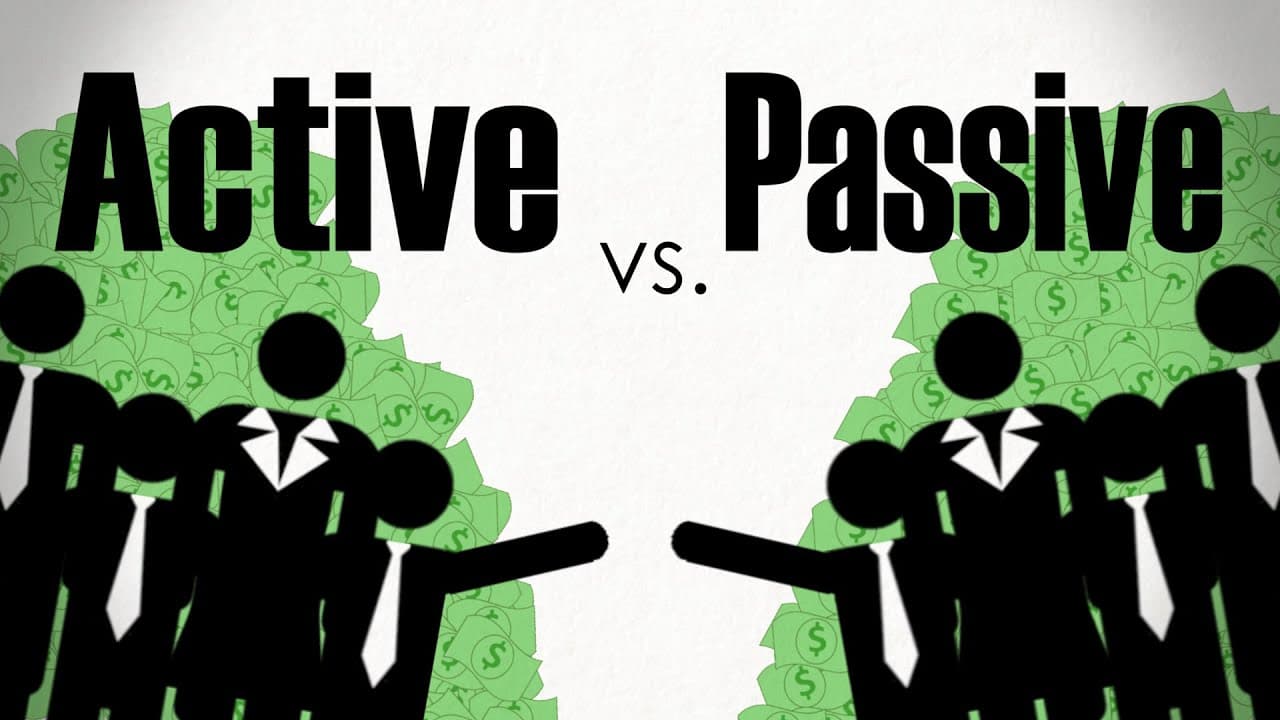
The active versus passive investing debate centers on whether it's better to actively manage investments through research and market analysis or to adopt a passive approach that emphasizes long-term holding and market mimicking. Active investors aim to outperform benchmarks but face higher fees and often underperform compared to lower-cost passive strategies. Understanding both philosophies can help you choose the best approach for your financial goals.
Transcript
this video is sponsored by Squarespace go to Squarespace comm sasch the plain bagel to save 10% off your first purchase of a website or domain using code the plain bagel bro are you an active investor you think you can invest better than the markets over time everyone knows that active mutual funds on average underperform index funds wait you inves... Read More
Key Insights
- 👨🔬 Active investing involves monitoring stock prices and conducting research, aiming to outperform a benchmark.
- 🍉 Passive investing focuses on long-term investment, diversification, and mimicking the performance of the stock market.
- 🧑🏭 The debate between active and passive investing is fueled by factors such as fees, performance, and beliefs about the efficiency of the market.
- ☢️ It is possible for investors to exhibit a combination of active and passive traits in their strategies.
- 🤱 Lowering fees, avoiding bias, diversifying, and focusing on the long term are essential principles for all investors.
- 🤱 Active investing charges higher fees, while passive investing has gained popularity due to its lower fees.
- 👨🔬 Research suggests that active mutual funds tend to underperform passive funds, but there are arguments against the fairness and completeness of these studies.
Install to Summarize YouTube Videos and Get Transcripts
Explore YouTube Video Summarizer or Get YouTube Transcript Extractor
Questions & Answers
Q: What is the main goal of active investing?
Active investors aim to outperform a benchmark through research, analysis, and buying/selling opportunities based on stock price fluctuations.
Q: How does passive investing differ from active investing?
Unlike active investors, passive investors focus on long-term investment and diversification, aiming to mimic the performance of the overall stock market rather than outperforming it.
Q: What is the efficient market hypothesis?
The efficient market hypothesis suggests that stock prices reflect all available information and trade at their fair value, meaning that no investor can consistently identify overpriced or underpriced stocks.
Q: Why are fees a factor in the active versus passive debate?
Active investing tends to have higher fees, while passive investing has lower fees. This difference in fees affects the performance and competitiveness of active funds.
Summary & Key Takeaways
-
The active investing strategy involves monitoring stock prices, conducting research, and aiming to outperform a benchmark.
-
Passive investing focuses on long-term investment, diversification, and mimicking the performance of the stock market as a whole.
-
The debate arises due to factors such as fees, performance, and beliefs about the efficiency of the market.
Read in Other Languages (beta)
Share This Summary 📚
Summarize YouTube Videos and Get Video Transcripts with 1-Click
Try YouTube Summary with ChatGPT & Claude or YouTube Transcript Generator
Explore More Summaries from The Plain Bagel 📚




Summarize YouTube Videos and Get Video Transcripts with 1-Click
Try YouTube Summary with ChatGPT & Claude or YouTube Transcript Generator